The Washington Institute for Near East Policy: Assad gives Biden ample reasons for putting Syria at the top of his priorities
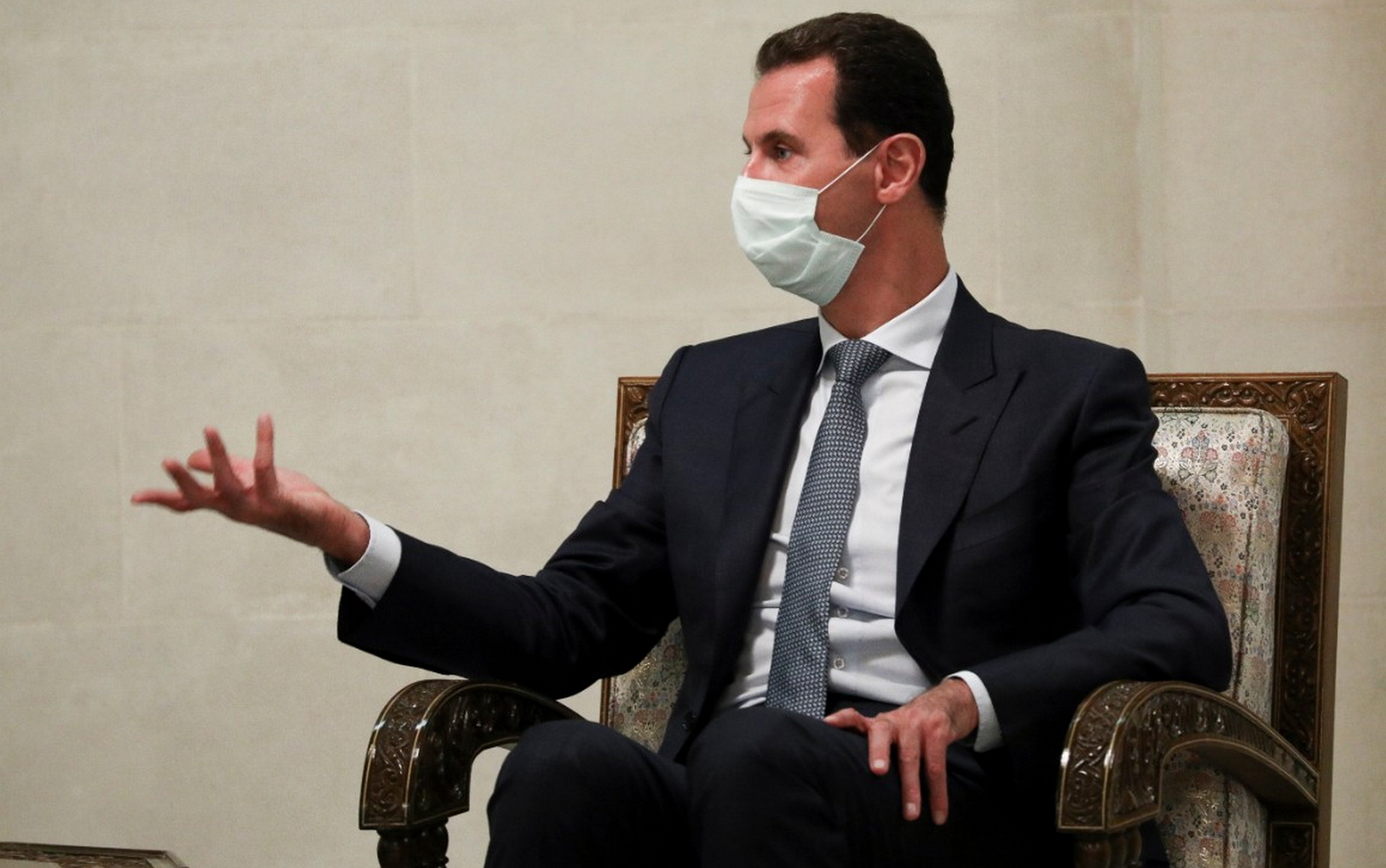
The Syrian president Bashar al Assad abdicated his responsibility as the legitimate ruler of Syria, failing his people in more comprehensive ways, including his human rights violations.
The neglect of the regime and its crimes in Syria provide ample reason to change Washington’s approach, even if the growing regional and geopolitical stakes are not sufficient in and of themselves.
While President Biden ponders Washington’s best approach to dealing with the Syrian problems that confused the two previous US administrations, he can confidently reach at least one conclusion, which is that Assad’s regime has abandoned its responsibility as a legitimate ruler at all levels.
Part of this conclusion stems from the massive file of the Syrian regime’s human rights violations.
As Stephen Raab, the former US ambassador-at-large for war crimes issues under the Obama administration, recently emphasized on “60 Minutes,” “We have better evidence against Assad and his cohorts than we had against Milosevic in Yugoslavia… even better than we had against the Nazis in Nuremberg”.
However, the regime has failed Syria and its people in more comprehensive ways as well, ensuring that destabilization, regional fallout, and exploitation by U.S. adversaries will only grow if the Biden administration adheres to status quo policies.
The inhumane military and diplomatic steps that Assad and his foreign allies have taken over the years have exacerbated the healthcare crisis in Syria.
First, the deliberate Syrian and Russian bombing of hospitals and other medical facilities destroyed the infrastructure needed to secure public health services for large segments of the population.
According to a 2020 report by Physicians for Human Rights, their forces have also killed nearly 1,000 healthcare workers since the war began.
As a result, millions of Syrians today depend on outside humanitarian aid to meet their health needs.
Here, too, the regime has let its people down, because any shortage of aid is now causing a major health challenge.
In a briefing by the United Nations in January 2021, officials noted that of the 13 million Syrians in need of such aid, only 7.6 million people are coordinated by the UN-coordinated humanitarian effort.
Much of the blame for this shortage falls on the shoulders of Assad and Moscow, which have further prevented the United Nations from reaching border crossings that do not even fall under the regime’s control.
Assad’s mishandling of the Coronavirus pandemic (“Covid-19”) exacerbated the health crisis in general.
As of March 2, the regime claimed that the number of cases in Syria was limited to 15,696 cases, while the number of deaths reached 1039 cases.
However, these estimates are underestimated – according to a report released by Syria Direct on January 14th, the campaign to suppress information and test challenges ensures that only 1.5 percent of deaths are reported.
The government has no plans to vaccinate more than 20 percent of the country’s population this year, and there is no doubt that these limited supplies will be limited to Assad’s inner circle and the main base of the Alawites.
Some observers blamed foreign sanctions for Syria’s economic problems, and this narrative forms an essential part of the regime’s propaganda campaign.
But Assad himself admitted on November 4 that when the banks in Lebanon were closed, we paid the price.
This is the crux of the problem such statements highlight the dangerous degree in which the Syrian economy is intertwined with the economy and the banking system in Lebanon, effectively ensuring that any cross-border financial instability will affect the situation in Syria.
Moreover, as a result of the epidemic, a UN report found that 45 percent of Syrian families had lost at least one source of income as of December 2020, which made the situation worse.
Poverty and unemployment remain extremely high, with the Red Cross reporting that 80 percent of the population lives below the international poverty line of $ 1.90 a day as of June 2020.
Inflation is also a big problem with the exchange rate hiking from 47 Syrian pounds to the US dollar before the war to 3,590 pounds last month, the inflation rate reached about 200 percent over the past year, making basic commodities more expensive for the average citizen.
The system’s deficiencies in terms of central control and state capabilities made it difficult to meet local environmental challenges.
Some of those failures began during the rule of Hafez al Assad, Bashar’s father, such as the poorly planned offer of food self-sufficiency that began in the 1980s but ended up in a crisis in the wheat sector, causing major environmental degradation, and contributing to the unrest that developed into the 2011 uprising.
However, the more recent challenges fall entirely on the shoulders of the Bashar regime, which has proven unable or unwilling to meet them – and in some cases deliberately exacerbated them.
The list is long and growing, last year, a report issued by the United Nations Office for the Coordination of Humanitarian Affairs blamed climate change for the intensification of wildfires in Syria, which led to the hospitalization of 80 people and the displacement of thousands in the month of October alone.
In Turkey, frequent and severe droughts have hit the agricultural sector and increased the risks of new dam construction projects – especially since Syrian groundwater reservoirs exceeded their maximum depths and reached a breaking point even a decade ago, according to a pre-war report by the Wilson Center.
The country has also lost nearly 20 percent of its already depleted forest cover since 2000.
According to Syria Direct, this is partly due to an increase in illegal logging in Idlib, Latakia and Aleppo, a trend that emerged after the regime cut off electricity as punishment collectively on the areas that rose up against his rule.
Assad remains the main obstacle to the return of millions of Syrian refugees to their homes from Turkey, Lebanon, Jordan and other countries.
Many fear that they will be arrested or killed in retaliation for their alleged connection to the uprising, or even simply for fleeing regime territory in the first place.
Moreover, the widespread destruction of infrastructure caused by the regime and Russian forces, along with the widespread appropriation of property by pro-Iranian and Iranian / proxy elements, left many Syrians without homes to return to.
Months before Antony Blinken was appointed Secretary of State in President Biden’s administration, he said on the “Face the Nation” TV program in May 2020 that he and other members of the previous Obama administration must admit that “we have failed.” It relates to US policy on Syria.
He concluded, “It is a feeling that I will carry for the rest of my life.
It is a strong feeling that I have.
If the new US administration is serious about compensating for these mistakes and restoring the global standing of the United States, then it must avoid the wrong strategic assumptions that led to these mistakes.
This includes the notion that US policy on Syria can be safely incorporated into the framework of nuclear negotiations with Iran – and that that policy is sacrificed primarily in the interests of the negotiations.
Instead, Washington should act on the opposite assumption, which is that Syria is the focal point of Iran’s policy in the region, and thus a more effective and subtle US policy in the country could provide additional leverage against Tehran.
Without the Assad regime, Iran’s entire foreign policy in the region would be weakened, because Syria is a central extension in the land bridge between Iran, Iraq and Lebanon that links the so-called “axis of resistance”.
To be sure, the neglect and mismanagement committed by the Assad regime inside the country, not to mention its criminality and lack of legitimacy, all provide sufficient and ample reasons in and of themselves to destabilize Washington’s approach.
Nevertheless, the revival of a serious US policy toward Syria is essential even from a purely realpolitik and power competition perspective, if only to halt the advance of America’s adversaries in Tehran and Moscow.