The War in Ukraine continue to put Russia on more economic challenges
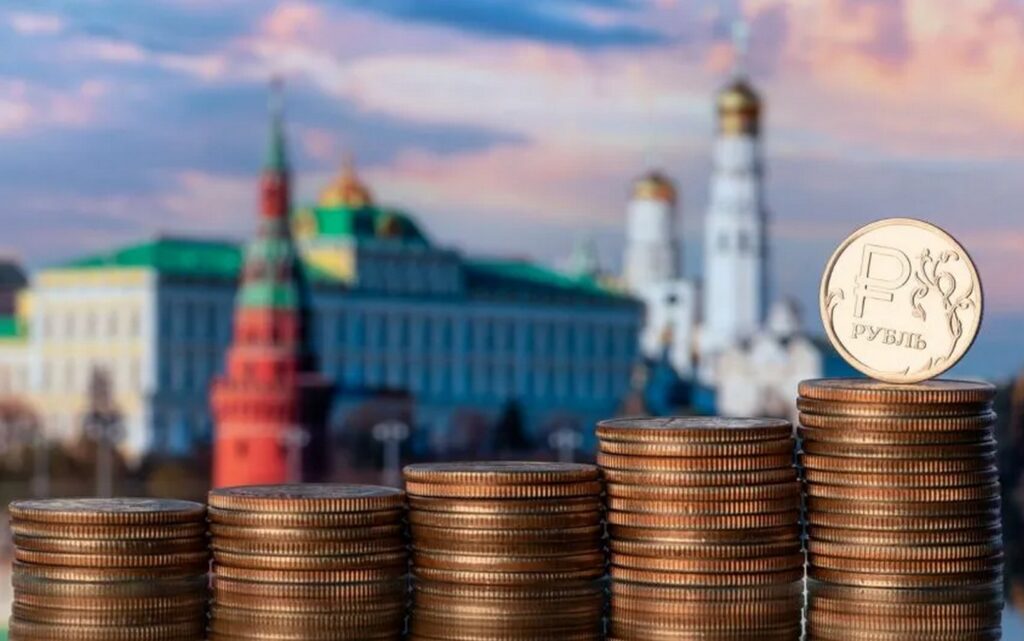
Russia’s economy faces a series of challenges including inflation, high borrowing costs, bankruptcy risks and slowing growth as the costs of the Ukraine war and Western sanctions rise.
Since Russia’s invasion of Ukraine in February 2022, Russian President Vladimir Putin has repeatedly spoken of the “failure” of sanctions and hailed strong growth in the face of unprecedented uncertainty, however, by 2025, that looks in doubt.
The latest setback for the Kremlin came last week, with inflation remaining at a high level of 8.5%, and against the backdrop of an expected slowdown in 2025.
Prices rose despite the Russian Central Bank raising interest rates to their highest levels in two decades, reaching 21%.
Russian media, which usually avoid reporting any sign of social discontent, are increasingly focusing on families in financial distress.
The price of butter, which has risen by a third since the start of the year, has become symbolic, with a series of reports of a rise in shoplifting.
Independent analysts say the war in Ukraine is the cause.
The Russian economy, mainly facing two major challenges, namely: The labor shortages and sanctions, thus its causing high inflation.
These factors are directly related to the war.
The labor shortage, which is being exacerbated by Russia’s demographic makeup, is making the economy even more vulnerable.
“This is hampering GDP growth,” says economist Yevgeny Nadorshin, a former adviser to the Ministry of Economic Development.
Russia is estimated to be short of about a million workers.
This has contributed to rising wages, which has pushed up prices set by companies.
So has the Kremlin’s massive increase in military spending.
Government spending is set to be 67.5% higher in 2025 than in 2021, before the Russian military offensive.
In the face of these huge sums, higher interest rates have so far had only a limited effect.
Central Bank Governor Elvira Nabiullina, who stressed the need to stop the disease of chronic inflation, indicated that she would raise interest rates again on Friday.
High interest rates have sparked protests from employers, including in state-owned companies, with borrowing costs in the market reaching 25-30%.
While Russian Railways announced that it will cut investment by 40% next year.
Even Russian leader Putin’s closest allies complained, as Sergei Chemezov, head of the military-industrial conglomerate Rostec and a close friend of the president, described interest rates above 20% as madness.
Analysts expect many companies unable to refinance to go bankrupt.
“The number of bankruptcies is about to rise sharply, especially among small and medium-sized companies, but there will be some bankruptcies among large companies as well,” Nadorshin explained.
The central bank expects growth to slow sharply next year, to less than 1.5%, from more than 3.5% this year.
The possibility of stagflation, low growth and high inflation, has been ruled out, however, this issue is increasingly being raised in Moscow.
The ruble’s decline to its lowest levels against the dollar and the euro since March 2022 adds to these concerns.
The Russian currency, which has been witnessing significant fluctuations for three years, has declined under the influence of new US sanctions targeting in particular Gazprombank, the financial arm of the Russian gas giant Gazprom.
But there are some positive aspects for the Kremlin.
Chinese companies filled many of the gaps left by Western companies that fled the market, and Moscow obtained sanctioned goods using friendly middlemen.
The budget deficit is also low by international standards, and tax revenues from sources other than energy exports are high.
“There is certainly no reason to panic,” Putin said last month amid the currency crisis.