The Wall Street Journal: Hezbollah’s huge arsenal awaits Israel in Lebanon
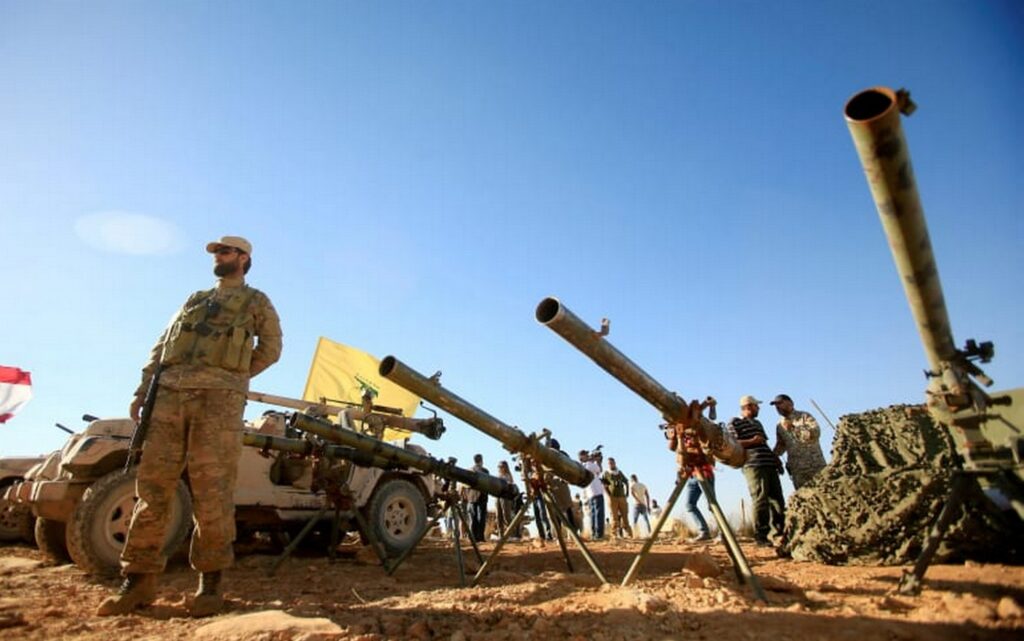
The Wall Street Journal, said that the Lebanese Hezbollah party maintains a huge arsenal of missiles, drones and anti-tank missiles that it can deploy to repel an Israeli ground invasion.
The Wall Street Journal added in a report titled that Israel has launched devastating attacks on Hezbollah in recent days with airstrikes and remote-controlled explosions, putting the Lebanese armed group on the defensive.
The report said that Tel Aviv has shown tremendous superiority in intelligence gathering and technology, adding that if a ground war between the two sides occurred, it would be a different story.
The Wall Street Journal also said that Hezbollah, which has been regularly striking targets in Israel for nearly a year, maintains a huge arsenal of weapons, and among its most dangerous new weapons is an Iranian-made anti-tank guided missile called “Almas,” which gives Hezbollah a much higher degree of accuracy in its strikes than it had when it last fought a war with Israel in 2006.
Military analysts widely believe, according to the Wall Street Journal report, that the Almas anti-tank guided missile is a modified version of an Israeli missile called the Spike, which Hezbollah likely captured in 2006 and sent to Iran.
The Almas missiles, which can be compared to other advanced anti-tank missiles such as the American Javelin missile, can allow Hezbollah to hit targets with greater accuracy than in previous years when it relied mainly on unguided rockets.
In Hezbollah’s first recorded use of the weapon in January 2024, video footage from the same missile documented it being launched from southern Lebanon and then crashing into a hilltop filled with radars and other military equipment in northern Israel.
The Wall Street Journal explained that as happened in the 2006 war that ended in a dead end, Israel will be forced to fight on the ground in southern Lebanon, where Hezbollah will benefit from its strengths, noting that the conflict may turn into a quagmire, just as happened in the war on the Gaza Strip.
“It’s a bit like saying to the United States in 1980: Let’s go back to Vietnam,” Daniel Byman of the Center for Strategic and International Studies in Washington and a former US official who co-authored a recent study on Hezbollah’s arsenal told the Wall Street Journal.
Those with knowledge of Hezbollah say the group has accelerated its preparations for war in recent months, expanding its network of tunnels in southern Lebanon, repositioning fighters and weapons, and moving in more arms.
US and regional officials said Iran has increased its supplies of small arms and rocket-propelled grenades, as well as long-range guided and unguided missiles.
A former Hezbollah military officer pointed out, referring to the military preparations, that the south is like a beehive now… everything the Iranians have, we have”.
Since the 2006 war, Hezbollah has received thousands of new missiles and drones from Iran, added guidance systems to its old, unguided rockets, and its fighters have gained greater experience and learned the fighting techniques used by conventional armies.
The Wall Street Journal confirmed that Hezbollah’s advanced drones have succeeded in striking Israeli military equipment in recent months, including a radar surveillance balloon called “Sky Dew” in May and a multi-million-dollar anti-drone system called the Drone Dome in June.
Hezbollah said on Sunday it attacked the headquarters of an Israeli defense company near Haifa, Israel’s third-largest city.
Tel Aviv didn’t confirm the target but said, Hezbollah has struck deeper than usual into Israeli territory.
Military analysts say Hezbollah could launch a barrage of missiles and swarms of drones to confuse or disable Israeli air defenses and hit military bases, ports and the country’s electricity grid, with Israeli officials predicting hundreds of people could be killed.
“It won’t be easy if a full-scale war breaks out,” admitted retired Israeli army officer Brigadier General Asaf Orion, adding, “There’s no way we won’t suffer heavy losses”.
According to the Wall Street Journal, it’s unlikely that Hezbollah will be able to defeat Israel or inflict a decisive defeat on it in a conventional war, but Israel nevertheless faces strategic flaws, as Hezbollah won’t seek to win a war with Israel in the conventional sense, but will instead aim to drown Israeli forces in a war of attrition, just as Hamas succeeded in doing.
The report explains that Israel possesses more advanced weapons, including F-35 fighter jets and multi-layered air defense systems, and Israeli air superiority would allow it to launch devastating air strikes and cripple civilian infrastructure in Lebanon, as it did in 2006.
In this context, retired Lebanese Army Brigadier General Elias Farhat says, “Israel is capable of causing destruction in Lebanon, and this is not debatable… There is a gap in the military balance, but Hezbollah possesses asymmetric weapons, and they have proven their skill in using anti-tank missiles in 2006, and they are well trained”.
Hezbollah is perhaps the most well-armed non-state paramilitary force in the world, military experts say, with tens of thousands of troops and an extensive missile arsenal.
In 2006, Israeli officials estimated that Hezbollah had about 12,000 rockets and missiles.
The Wall Street Journal concluded that some elements are almost impossible to intercept.
Since 2006, Hezbollah has added guidance systems to its unguided rockets using small GPS units that can be easily carried in a bag.