The Syrian transitional president launches a campaign against corruption and nepotism among those close to the new rule including his brother
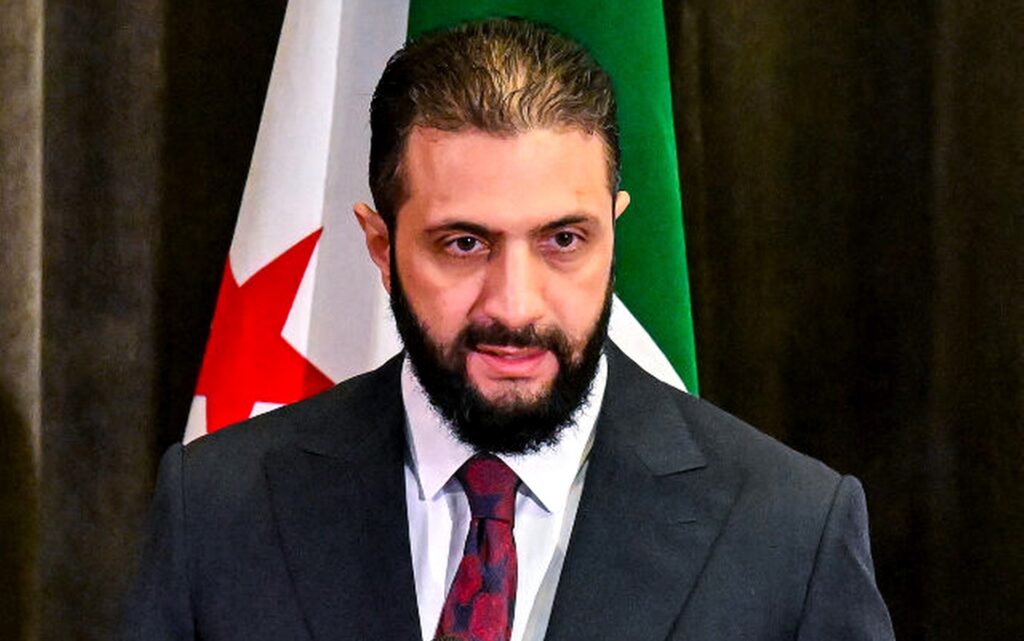
“I didn’t know the salaries paid by the government were this high!” This is what Syrian transitional President Ahmed al Sharaa jokingly said after more than 100 of his loyalists arrived at a former opposition base, many of them in luxury sports cars.
Sharaa rebuked the assembled officials and business leaders, asking them if they had forgotten that they were the sons of the revolution, pointing to the large number of Cadillac Escalades, Range Rovers, and Chevrolet Tahoes parked outside, then he asked them if they had succumbed to temptations so quickly.
The former opposition leader, who took over the rule of Syria, has faced turmoil for the past 10 months since the ouster of President Bashar al Assad after a 14-year civil war.
The country has witnessed occasional waves of sectarian violence involving former opposition factions linked to his new government.
This violence has resulted in the deaths of more than two thousand people, and there has also been a wave of forced evictions and confiscation of property.
The meeting, which had not been previously reported, took place at the Sharaa base in Idlib province in northwestern Syria, far from his official presidential residence in Damascus.
The president, a former leader of al Qaeda’s branch in Syria, was flanked by two senior security officials as he spoke.
According to the two sources and two government employees familiar with the matter, Sharaa ordered state employees who own luxury cars to hand over their keys or face investigations on charges of illicit enrichment.
According to sources who attended the meeting, a number of the cars keys were handed over as the attendees left at the end.
Syrian officials and analysts believe the message to loyalists highlights a major challenge facing the 43-year-old president: how to transition from armed opposition to a civilian government without repeating the corruption that plagued Assad’s police state.
The legitimacy that Sharaa has gained among many Syrians, as well as abroad, after the overthrow of Assad, faces a real test.
In another context, the Syrian president is trying to achieve balance even within his own family, where two older brothers hold senior positions in the new government.
Hazem oversees foreign and domestic business and investment in Syria, including the work of former opposition fighters tasked with reforming the Syrian economy.
As for Maher, a gynecologist who holds Russian citizenship, he is the Secretary-General of the Presidency and chairs official meetings and attends talks with prominent foreign figures, such as Sharaa’s meeting with Russian President Vladimir Putin in Moscow during his recent visit to Russia.
Several Syrian officials said that Sharaa’s reliance on relatives and close associates stemmed from his need to quickly fill gaps in his new administration following the sudden collapse of the Assad government.
Critics, however, see this as a worrying imitation of the Assad family’s rule, but according to six informed sources, including government officials and businessmen, his other older brother and businessman, Jamal, has been caught in the hands of the fledgling anti-corruption campaign led by Sharaa.
They said that after Sharaa took power, his other brother, Jamal established an office in the capital, Damascus, through which he managed various projects, including import, export, and tourism businesses.
He was frequently seen in the lobbies of upscale hotels and restaurants, which he frequented in a black Mercedes S-Class with windows that obstructed the view and no license plate.
Sharaa ordered the office closed in August and instructed government agencies not to deal with his brother.
The decision relates to accusations that Jamal exploited his relationship with the president to arrange dozens of meetings with government and business officials to further his personal interests.
The office sealed with red wax on October, as red wax is frequently used in countries in the region, including Syria, with properties that have been ordered to be closed pending the results of investigations into alleged violations.
The Syrian Ministry of Information confirmed the news, saying that, “Jamal al Sharaa isn’t permitted to operate as an investment or commercial entity,” adding, “The presidency has clarified since the formation of the government that Jamal al Sharaa doesn’t hold any official position”.
The Syrian Ministry of Information didn’t say whether the authorities had brought specific charges against the president’s brother, or the nature of the charges.
Shortly after Jamal’s office was closed, Sharaa held a meeting with family members, including his 79-year-old father, and warned them against exploiting the family name for personal gain, according to a relative who was at the meeting.
The warning issued by Sharaa to his loyalists in August followed complaints from Syrian citizens at a meeting with the president earlier that month about signs of extravagance displayed by some former dissidents now working in the civil service, according to one of the attendees.
Since then, Sharaa has repeatedly spoken publicly in Damascus about combating corruption.
In a video released on October 13 by state media, Sharaa instructed officials to disclose their current investments and prohibited them from engaging in new private projects.
He also urged them to avoid personal relationships with businessmen, warning them against repeating the pattern that prevailed under Assad.
But according to interviews with nine Syrian businessmen and former and current officials, corruption still exists in post-Assad Syria, including paying bribes to get out of jail or to recover homes, vehicles and other valuables confiscated by members of the new ruling regime.
One industrialist and two senior factory managers, all of whom asked not to be identified in order to speak freely, said they were forced to pay money to well-connected middlemen, without receipt or official documentation, to keep their businesses running or to secure the release of workers detained on suspicion of having past ties to the Assad regime.
One of them said he paid $100,000 to secure the release of a worker, only to be informed later that he would have to pay another $100,000 if he wanted the employee to be allowed to resume work, another said that he paid $25,000 to free an employee.
The Ministry of Information said that such practices aren’t widespread, and that some people suspected of receiving bribes in exchange for releasing detainees or for carrying out other official business have been referred for immediate investigation.
Those interviewed believe that the biggest source of concern for the Syrian business community is the opaque settlement deals struck by government officials with individuals accused of having ties to Assad.
These deals, in which business owners surrender assets in exchange for being allowed to resume their operations in Syria, began to take shape immediately after the recapture of Damascus.
According to six people, including government officials and businessmen familiar with the matter, the authorities are trying to channel all these settlements through an illicit gains committee formed last May before the assets are transferred to a new sovereign wealth fund that is still being created.
According to sources, the fund now includes hundreds of companies, office buildings, factories and other assets linked to people accused of having ties to the Assad regime, but the two emerging entities are also under scrutiny.
Meanwhile, two lawyers working for the fund were arrested in connection with investigations into corruption charges, and one of them has been detained for more than a month.
The Ministry of Information confirmed their arrest, saying the lawyers are under investigation for theft charges that haven’t yet been proven.
The Ministry of Information added that some members of the illicit gains committee, tasked with investigating corruption, were also detained for questioning regarding suspected offenses, although they were not formally arrested.