The return of Syrian workers prompts Turkish companies to consider production in Syria
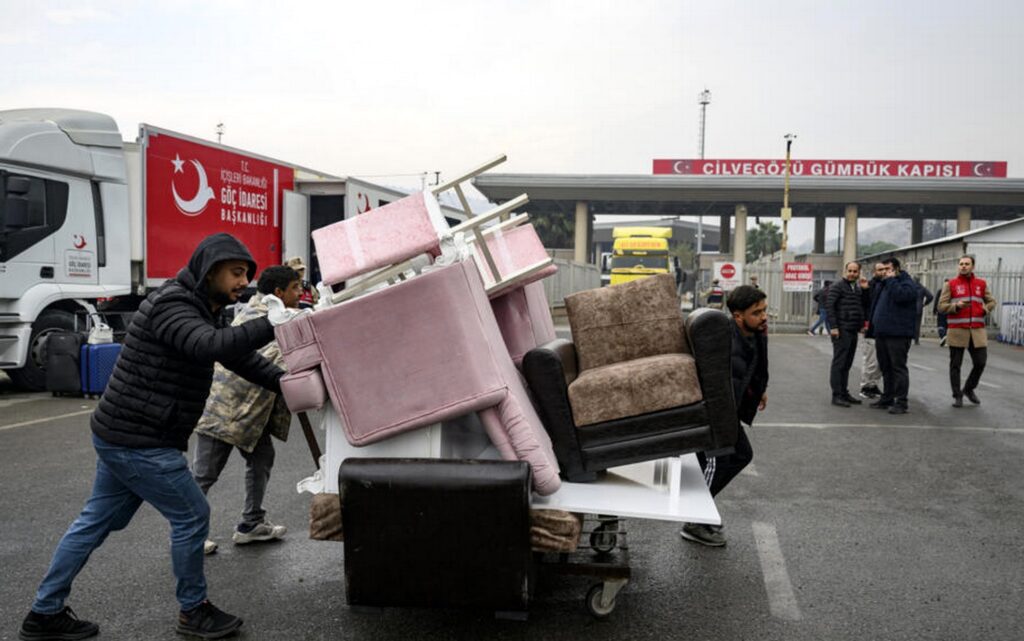
A growing phenomenon that is beginning to have tangible economic repercussions in Türkiye has started for a while, as the return of increasing numbers of Syrian workers started to return back to Syria from Türkiye, after being there for years as refuges and took a strong part in Turkish workforce.
Figures show demographic shift, as Turkish authorities confirm that nearly one million Syrian refugees have already returned to Syria out of a total of more than 3 million who were residing in the country.
This return is widely welcomed by the public and politically, with opinion polls indicating that a majority of Turkish citizens support the return of Syrians.
Another Face of the Crisis: is the labor shortage crisis in the Turkish Industrial sector in multiple cities came beyond the Turkish popular welcome of Syrian finally leave Türkiye back to Syria.
The actual reality of the true image shows in industrial cities such as Gaziantep, reveal a growing concern among thousands of Turkish business owners who for years have relied on Syrian labor as a key pillar for their economic survival.
Workshop Inside one of hundreds of small workshops and factories in Gaziantep, a group of workers sprays furniture in a dusty environment and long working hours.
“I can’t find workers from my community to work in this sector,” says Khalil Yarabay, a Turkish furniture production company’s owner in Gaziantep.
Yarbay explains the social challenge behind this crisis: “Young Turks are seeing manual labor in professions such as furniture or mechanics as inferior work, and see it as a social failure in the eyes of the family”.
Meanwhile there are concerns that pose serious economic threat, as with around 900,000 Syrians workers in factories and small workshops across Türkiye; Once these workers leave, Turkish employers warn of facing bankruptcy,
Adding to that, a deeper Turkish demographic crisis, as birth rate decreased to 1.5 (well below the replacement rate of 2.1).
Turkish President Erdogan calls on families to have at least 3 children, as nearly half of Turkish families don’t have children.
Direct economic repercussions of rising wages and production costs are already beginning to appear: Workers’ wages rise from 10,000 ($229) to 15,000 TL (343) per week.
Fierce competition among employers to retain the remaining workers, as many big Turkish companies are considering a new direction, which is “Moving Production to Syria”.
Big Companies Like Tat Holding are exploring radical options, as the executive director Saleh Balta says, “We’re considering moving part of our production to Syria… And that due to for the following reasons: Geographical proximity to Gaziantep, reduce production and export costs by up to 35%, benefiting from Arab Free Trade Agreements such with Arab Gulf countries as a primary market”.
On the other hand, the Turkish government has begun to take alternative measures by, easing visa and work permit restrictions, attracting workers from Turkish-speaking central Asian countries.
The widespread popular desire for Syrians to return could turn into a double-edged sword, as the economic pain that Turkish companies face from the loss of labor that has been their backbone for years mounts.
This story shows how political decisions and popular sentiment can have unforeseen economic consequences, and how migration and return always form a complex equation of gains and losses on both sides of the border.