The president-elect of Taiwan pledges to defend the island against China’s intimidation
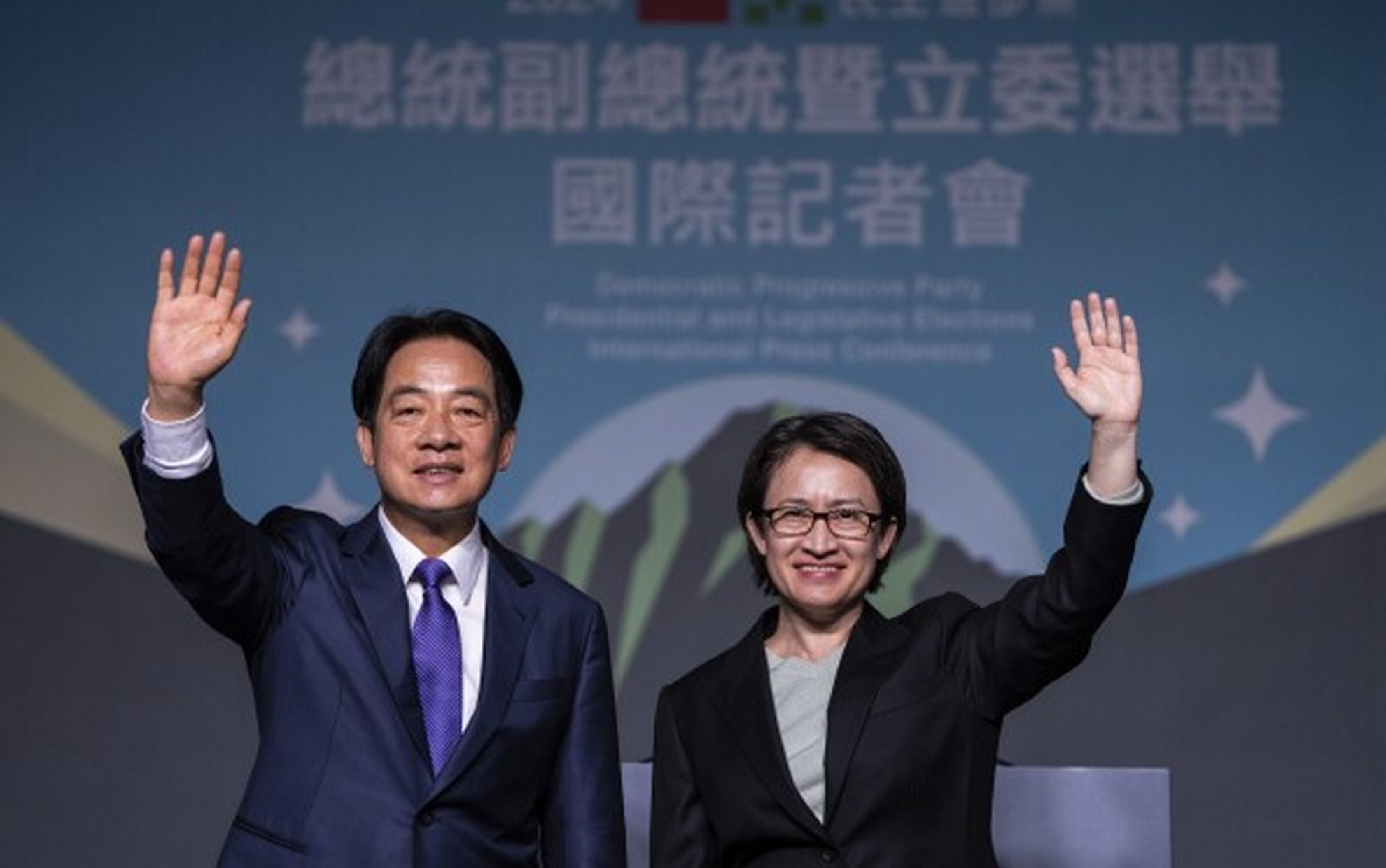
Lai Ching-te, Taiwan’s president elect, pledged on Saturday to defend the autonomous island in the face of threats from China, which insists that it’s an integral part of its territory.
“We’re determined to protect Taiwan from China’s continued threats and intimidation,” Lai Ching-te.
In a speech to his supporters, he congratulated the people on their “success in resisting the efforts of external forces to influence this election”.
“I want to thank the Taiwanese people for writing a new chapter in our democracy, because we are telling the international community that between democracy and tyranny, we will be on the side of democracy,” Lai Ching-te president-elect said.
He continued, “We’re convinced that the Taiwanese people alone have the right to choose their president, pledging at the same time to continue exchanges and cooperation with China”.
At the end of a campaign dominated by major diplomatic and military pressure exerted by China, Lai Ching-te won the presidential elections by winning 40.1% of the votes, and he will take office on May 20.
On the other hand, China considers Lai Ching-te, the vice president of outgoing President Tsai Ing-wen, a “serious threat” due to his positions in favor of Taiwan independence.
On Saturday, China stressed that reunification with Taiwan is inevitable.
The spokesman for the Chinese office responsible for relations with Taiwan, said that the vote won’t hinder the inevitable trend of reunification with China.
The spokesman also affirmed his country’s commitment to “the 1992 consensus, which enshrines the principle of one China and strongly opposes separatist activities aimed at ‘Taiwan independence’ as well as foreign intervention”.
China considers Taiwan part of its territory and has pledged to return it to its control, by force if necessary.
Beijing called on voters in Taiwan to make the “right choice,” while its army vowed to crush any intention of independence.
For his part, US President Joe Biden stressed that the United States doesn’t support Taiwan’s independence, commenting on Lai Ching-te’s victory, which US Secretary of State Antony Blinken congratulated and praised the solidity of the democratic system on the island.
The European Union welcomed the holding of elections in Taiwan and congratulated, in a statement, all voters who participated in this democratic entitlement.
Japanese Foreign Minister Yoko Kamikawa praised the smooth organization of the democratic elections and Mr. Lai Ching-te for his victory, pledging to work to strengthen relations between the two countries.
In turn, British Foreign Secretary David Cameron congratulated Lai Ching-te on his victory, calling on both side in the Taiwan Strait to resolve differences “peacefully”.
Santiago Peña, President of Paraguay, one of the few countries that maintains diplomatic relations with Taiwan, congratulated Lai Ching-te on winning the presidency in a video call.
In the call, Peña expressed his happiness to see Taiwan once again consolidating its values through democratic elections.
It worth mentioning that Lai Ching-te faced opponents at the elctions, as his main opponent, Hou Yu-ih (66), the candidate of the Nationalist Party (Kuomintang), which calls for rapprochement with Beijing, received 33.5% of the votes, according to figures announced by the Central Electoral Commission.
Hou Yu-ih has acknowledged his defeat to his supporters.
“I respect the final decision of the Taiwanese people… I congratulate Lai Ching-te and Siao Pi-chim (for the position of vice president) on their election, and I hope they won’t disappoint the expectations of the Taiwanese people”.
The third candidate, Ko Wen-je (64), from the small Taiwan People’s Party, which presents itself as anti-establishment, came in third place with 26.4% of the votes.
He also admitted defeat.
The Taiwanese also voted to renew the 113 seats in parliament, and the ruling Democratic Progressive Party lost the majority of them.
Long lines formed in front of the 18,000 polling stations.
A large number of Taiwanese returned to the country to vote because voting abroad is not available.
Taiwan has a population of 23 million people, is 180 kilometers from the Chinese coast, and is considered a Western model of democracy in Asia.