The New York Times: Syria is trying to rise with the sword at its neck
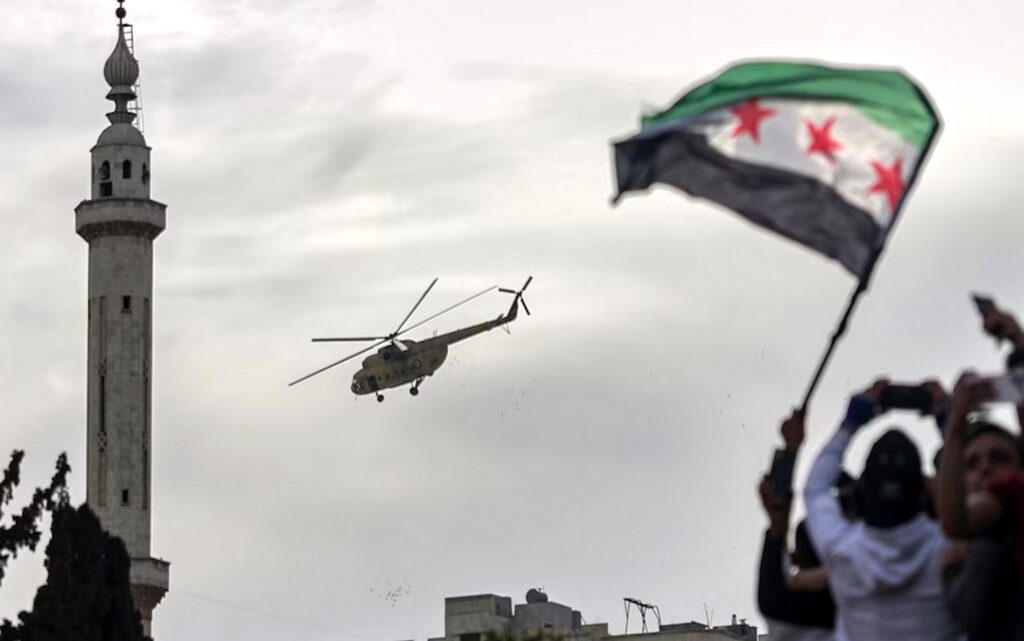
The New York Times published an article titled “Syria Tries to Rise with a Sword at Its Neck,” by Natasha Hall, as she wrote about Syria after four months of euphoria that accompanied the sudden overthrow of the Assad regime, the fragility of the country’s new reality is becoming clear.
She describes Syria as “awash with weapons and trauma, and almost completely lacking in funds for reconstruction, as its economy is in collapse, and 90% of its population lives below the poverty line… The state can only provide two hours of electricity a day, and half of the infrastructure is either destroyed or inoperable”.
The article cites a recent United Nations report that suggests that, at current growth rates, Syria won’t regain its pre-conflict GDP until 2080!
Hall also explores the risks facing Syria in this fraught environment, as ISIS for example, could re-emerge, Iran, the new Syrian regime’s enemy, could return to wreak havoc, and there are also threats from Lebanese Hezbollah and Russia, as well as Israel, which has clearly declared its distrust of Hay’at Tahrir al Sham, the rebel group that toppled Assad, launched hundreds of attacks, and invaded and occupied large areas of southern Syria”.
However, she believes that none of these risks are inevitable, pointing to the Syrian National Dialogue Conference, held last February, as a sign, despite its reservations, of Syrians’ quest for more inclusive representation in government.
“But trying to build an effective government and a disciplined army in a war-torn country, without humanitarian aid or sanctions relief, is like trying to rise with a sword at your neck,” hall indicates.
Hall notes that the United States was the largest provider of foreign aid to Syria, contributing more than $18 billion since 2011, however, this aid was eliminated as part of the dismantling of USAID, and several European countries are now cutting their foreign aid budgets to finance increased military spending.
The partial easing of US sanctions on Syria, decided upon by the Joe Biden administration and maintained by the Trump administration, is insufficient.
“The United States should lift its comprehensive sanctions on Syria’s financial and economic sectors, encourage investment, and reconsider designating the government as a foreign terrorist organization,” Hall says.
She adds that there are Gulf and European countries and companies that could provide support, but they fear violating US sanctions or that the US and other powers could punish those who attempt to assist or invest.
The author believes that there are legitimate concerns about Ahmed al Sharaa, the interim president, particularly his jihadist past as a leader of a rebel group allied with al Qaeda.
However, she believes that the smartest way to guide Syria toward a peaceful future is to cooperate with its government on concrete steps that guide the country toward recovery, security, and building a society that serves its people, not its rulers, with sanctions relief viewed as a means of enabling compliance, not a reward for it.
Hall believes that Washington can also curb the influence of its allies, who are working to divide and further weaken Syria, adding that even if Israel insists that dividing Syria is better for its national security, this isn’t in the United States’ interest.
Hall concluded her article by saying, “At this time, and at this delicate moment of geopolitical competition, Syria remains an opportunity for the United States to achieve stability in the heart of the Middle East”.