The new commander of the Russian forces admits the difficulty of the situation in Ukraine
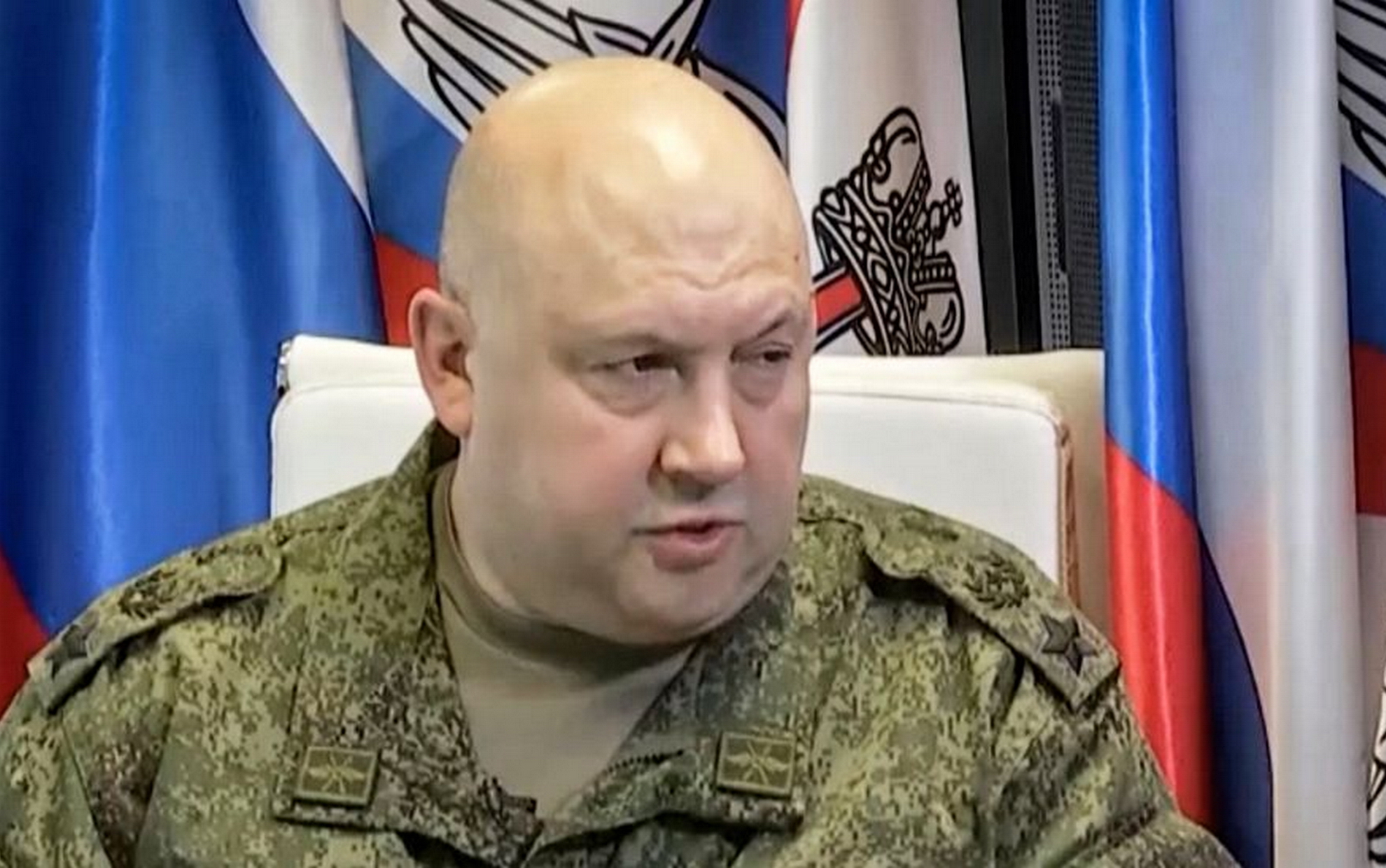
The new commander of the Russian forces in Ukraine has made a rare admission of the pressures on his forces as a result of the Ukrainian attacks aimed at regaining the southern and eastern regions that Moscow announced its annexation only weeks ago.
In another indication of Russian concern, the Kremlin-appointed head of the strategic southern Kherson region announced on Tuesday an organized and gradual exodus of civilians from four towns on the Dnipro River.
“The situation in the area of the special military operation can be described as tense,” Sergei Surovkin, an air force general who now commands the Russian invasion forces, told Rossiya 24 TV news channel.
Regarding Kherson, Surovkin said, “The situation in this region is difficult… The enemy deliberately bombed infrastructure and residential buildings in Kherson”.
Russian forces there have retreated 20-30 km in the past few weeks and are in danger of being trapped on the western bank of the 2,200 km long Dnipro River that bisects Ukraine.
Vladimir Rogov, a member of the council appointed by Moscow to govern Zaporizhia, also in southern Ukraine, said Kyiv’s forces have intensified their night bombardment of Russian-controlled Enerhodar, a city where many employees of the Zaporizhia nuclear plant live.
He added via the Telegram messaging app on Wednesday that artillery fire hit the outskirts of the town, and there were 10 strikes around a thermal power plant.
Reuters could not independently verify the battlefield reports.
International Atomic Energy Agency Director-General Rafael Grossi said he expected to return soon to Ukraine, amid negotiations to establish a security protection zone around the Russian controlled Zaporizhia nuclear plant, Europe’s largest nuclear plant.
The station is located in one of four Ukrainian regions that Moscow has declared annexation, but which it controls only partially.
The other three regions are Kherson, Donetsk and Luhansk, which lie on the eastern border and are known together as Donbas.
Sorovikin said that the positions of Russian forces in Kobyansk and Lyman in eastern Ukraine and in the area between Mykolaiv and Kryvyi Rih in Kherson are under constant attack.
He seemed to acknowledge the danger of Ukrainian forces advancing towards Kherson, which lies near the mouth of the Dnipro River on the west bank.
Russia captured the city in the early days of the invasion and it is still the only major Ukrainian city that Moscow forces captured without damaging it.
Russia-backed officials have warned that a Ukrainian attack may be imminent.
Vladimir Saldo, the Russian-appointed head of the Kherson region, said the threat of attack by Ukrainian forces led to the decision to evacuate some civilians from four towns.
“The Ukrainian side is mobilizing its forces to launch a large-scale attack,” he added in a video statement.
He added that the Russian army was preparing to repel the attack, and “where the army operates, there is no place for civilians”.
Last week, Russia launched the largest wave of missile strikes on Ukraine since the start of the invasion.
Putin described the air strikes, using missiles and drones, as retaliation for the bombing of a Russian bridge leading to Crimea.
Ukraine didn’t claim responsibility for the bridge bombing, but celebrated it.
Ukraine has invited UN experts to examine what it says are Iranian-origin drones used by Russia in violation of a UN Security Council resolution, according to a letter seen by Reuters.
Diplomats said the United States, Britain and France planned to raise the accusation over the transfer of Iranian weapons to Russia at a closed-door meeting of the Security Council on Wednesday.
Ukrainian President Volodymyr Zelensky said that Moscow’s reliance on Iranian-made drones revealed that it had “bankrupt both militarily and politically”.
Ukraine accuses Russia of using the Shahed-136 aircraft as “kamikaze” drones, a term referring to Japanese suicide pilots in World War II, and Iran denies supplying it to Moscow, and the Kremlin denies using it.
However, two senior Iranian officials and two Iranian diplomats told Reuters that Tehran had promised to provide Moscow with more drones and surface-to-surface missiles.
Zelensky said Russia had destroyed nearly a third of Ukraine’s power plants in the past week.
He added that Russia had targeted more than 10 regions in the past 24 hours, and urged Ukrainians to reduce electricity consumption in the evening.
On the other hand, Estonian Defense Minister Hanno Pevkor considered during a visit to Washington on Tuesday that Russia will likely need at least two years to restore its army to the level it was before the start of its invasion of Ukraine, calling for continued pressure on Moscow.
As the Estonian minister expected that the war in Ukraine would last a lot, he appealed to the West to stand with the Ukrainians until they achieve the victory of the “free world”.
At a time when Russia has resorted to targeting Ukraine with booby-trapped drones, which the West believes was bought from Iran, Pevkor said that his information indicates that the Russian military arsenal has shrunk to the extent that Russian forces are using S-300 anti-aircraft missiles instead of regular missiles.
He added that his information also indicates that some Russian missiles exploded before reaching their target due to their obsolescence.
During a round table with journalists in the US capital, the Estonian minister said that “there is an agreement, in one way or another, that it will take Russia between two to four years to restore some capabilities or even capabilities similar to those it had” before the war.
The minister pointed out that the sanctions imposed by the West on Russia after its invasion of Ukraine had a particularly negative impact on its ability to produce and maintain aircraft, because these sanctions deprived Moscow of key components involved in the manufacture of these aircraft.
“When we can find new ways to influence Russia through sanctions, of course we should,” Pevkor stressed.
In Washington, the Estonian minister met his US counterpart Lloyd Austin.
In a statement issued following the meeting, Austin praised “Estonia for its support of Ukraine’s forward looking forward”.
The US Secretary also announced that he “agrees with Minister Pevkor on the need to maintain strong support for Kiev in the future”.
In his panel session with reporters, Pevkor warned that Russia could still launch attacks, including against NATO member states such as his own, Estonia.
On the other hand, the Estonian minister played down the possibility that Russia would resort to using nuclear weapons against Ukraine, a scenario that Russian President Vladimir Putin hinted at when he announced the annexation of four Ukrainian provinces to his country.
Pevkor said Russia had “stoked fear in Ukraine” with attacks with its conventional weapons and therefore there was no “positive value-added for Russia” in launching a nuclear strike.
He stressed that if the Russians used atomic weapons, “they will lose their silent supporters, such as China or others”.