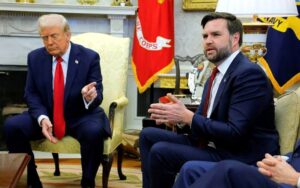
The fourth round of nuclear talks between Iran and the United States has concluded with progress
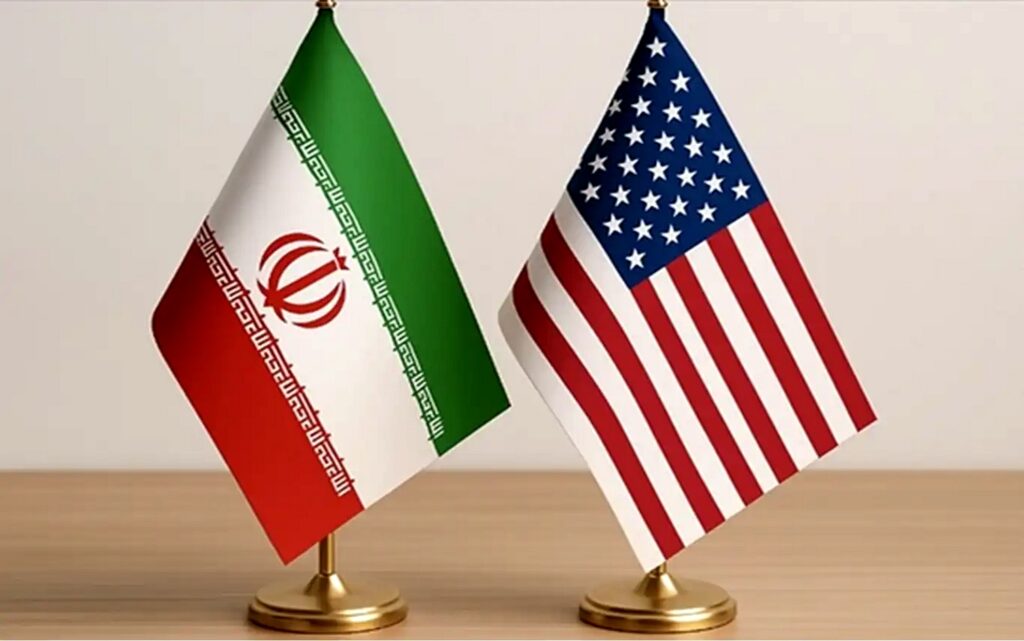
Iran and the United States concluded a fourth round of nuclear talks in Oman on Sunday without achieving a clear breakthrough, but both sides expressed satisfaction with the outcome.
The two sides began talks on April 12, mediated by Oman, which had also acted as a mediator in previous negotiations that resulted in an international agreement between Tehran and the major powers on the nuclear issue in 2015.
Iran said Sunday that the fourth round of talks was “difficult but useful,” while a US official described them as “encouraging”.
Iranian Foreign Ministry spokesman Esmail Baghaei wrote on X that “the fourth round of indirect Iranian-American negotiations has ended,” noting that they were “difficult but useful in understanding each other’s positions and finding logical and realistic ways to address differences”.
Iranian Foreign Minister Abbas Araghchi told Iranian television from Amman that “the negotiations were more serious and detailed than the previous three rounds,” noting that “more detailed issues” were discussed and confirming that the negotiations are “moving forward”.
A senior US official described the fourth round of talks as encouraging, noting that a new round would take place soon, without specifying a date.
He said the meetings were again direct and indirect and lasted more than three hours.
He added, “An agreement was reached to move forward with the talks to continue working on technical issues”.
Iran entered the negotiations insisting that uranium enrichment was a non-negotiable right, an issue Washington had previously considered a red lin.
Abbas Araghchi, who led his country’s delegation, told reporters before heading to Muscat that enrichment capacity is one of the Iranian nation’s prides and achievements, stressing that it’s “non-negotiable”.
Following the conclusion of the fourth round on Sunday, Araghchi stated, “Enrichment… must continue, and there is no room for compromise on this matter”.
However, he indicated a possible openness for Iran to reduce the level of enrichment to help build confidence.
For his part, Omani Foreign Minister Badr al Busaidi said that the fourth round included useful and innovative ideas that reflect the two countries’ desire to reach an agreement.
The Omani Foreign Minister wrote on X, “Another round of talks between Iran and the United States concluded today in Muscat… The discussions included useful and innovative ideas that reflect a shared desire to reach an honorable agreement… The fifth round of talks will be held after both sides consult with their leadership”.
The two sides have so far held three rounds of talks, split between Muscat and Rome.
The fourth round, scheduled for May 3 in the Italian capital, was postponed for logistical reasons.
On Sunday evening, the Iranian Foreign Minister’s office announced that Araghchi would travel to the UAE on Monday, days before US President Donald Trump’s anticipated visit to the Gulf state.
An Iranian Foreign Ministry spokesman said in a statement that Araghchi, who visited Saudi Arabia and Qatar, two stops on Trump’s tour, will hold talks with senior Emirati officials “on bilateral relations and regional and international developments”.
Western countries, including the United States, have long accused Iran of seeking to develop nuclear weapons, a claim denied by Tehran, which asserts its right to nuclear technology and that its program is exclusively peaceful.
Tensions over Iran’s nuclear program have escalated since Donald Trump withdrew the United States from the 2015 agreement Tehran signed with major powers in 2018 and re-imposed sanctions on Iran.
The agreement set a ceiling on uranium enrichment at 3.67%.
However, Tehran currently enriches to 60%, not far from the 90% required for military use.
US Special Envoy for the Middle East Steve Witkoff said in an interview on Friday that enrichment is a red line for Washington.
“This is our red line… No enrichment,” Witkoff said, explaining, “That means dismantling, it means no weaponization, and it means that Natanz, Fordow, and Isfahan, the three enrichment facilities (in Iran), must be dismantled”.
On Sunday, Iranian President Masoud Pezeshkian described US calls for Iran to dismantle its nuclear facilities as “unacceptable”.
The Iranian president said, “The discussion surrounding the dismantling of all Iranian nuclear facilities is unacceptable to us,” adding that “Iran won’t give up its peaceful nuclear rights”.
The 2015 agreement stipulated restrictions on Tehran’s nuclear activities in exchange for the lifting of sanctions.
Iran remained committed to the agreement for a year after the US withdrawal, before gradually withdrawing from it.
A report by the International Atomic Energy Agency, stated that Iran had increased its stockpile of enriched uranium by 60% in a very worrying manner.
Israel, which opposes negotiations conducted by its close ally the United States with its regional enemy Iran, has stressed that Tehran must be prevented from possessing nuclear weapons.
“Iran is the most dangerous country in the world… The most dangerous regime must be prevented from possessing the most dangerous weapon in the world,” Israeli Foreign Minister Gideon Sa’ar said.
Israel is the only country in the Middle East that possesses nuclear weapons, even if it hasn’t declared it.