The corruption of the Syrian regime left Syria with heavy burdens
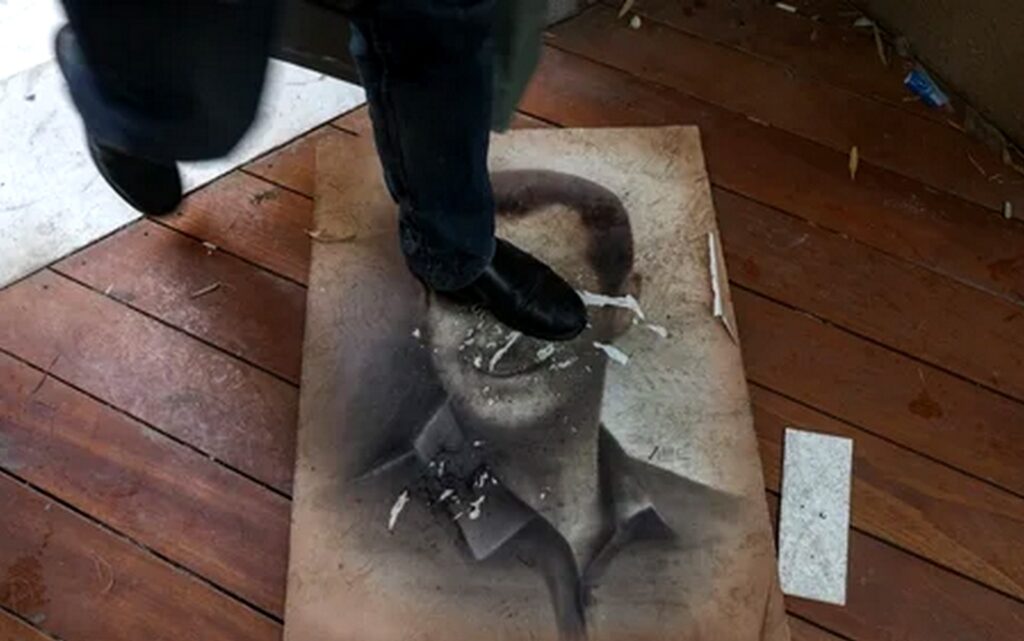
In the absence of accurate data on the financial situation in Syria, the next phase, following the success of the Syrian revolution in overthrowing the regime of Bashar al Assad, imposes huge financial challenges and burdens.
This comes after 13 years of severe deterioration in public services and the absence of the state’s role in fulfilling its social and economic obligations in many Syrian regions.
The financial crisis is clearly evident after the fall of the Assad regime, as stated by the caretaker Prime Minister, Mohammed al Bashir, who indicated that Syria is currently suffering from a lack of foreign currency, and that the only thing it has is the local currency, which has become worthless.
He also confirmed that Assad left behind a disastrous legacy of administrative corruption, which resulted in a very deteriorating financial situation.
These statements can be inferred from the financial vulnerability that Syria is suffering from, as Assad has failed to manage the national economy or the financial situation over the past years.
This failure includes a decline in the movement of commodity trade and the collapse of the tourism sector, which has exacerbated the economic crisis.
During this period, Assad’s primary reliance was on foreign aid and assistance, as confirmed by the recent event that indicates the return of a ship loaded with Iranian oil via the Red Sea, immediately after the announcement of the fall of the Assad regime, which reflects the fragility of reliance on foreign support to finance the country.
As Syria faced one of its most devastating natural disasters, a devastating earthquake, documents released by the Assad regime’s security services revealed a blatant exploitation of international aid.
According to a document issued by the Military Intelligence Division – Branch 235, dated February 9, 2023, orders were issued to Branch 227 to directly supervise the reception of international humanitarian aid arriving via Damascus International Airport.
What is striking in this directive is that the aid wasn’t directed, as expected, to the affected and afflicted, but was transferred to state warehouses and stores with the aim of offering it on the market commercially for the benefit of the regime’s treasury.
While the Syrians were facing a tragic fate under the rubble, losing shelter and food, the regime’s apparatuses directed international aid towards profitable purposes at the expense of the afflicted.
This behavior is a continuation of the Assad regime’s approach of politicizing humanitarian aid and exploiting it to enhance its economic and political influence.
It’s no secret that the Assad regime worked during the war years to monopolize humanitarian aid and deprive the people of it, at a time when this aid was a humanitarian right for all those affected.
This document confirms that at the February 6, 2023, when the devastating earthquake hit north Syria and Türkiye, where thousands lost their lives and thousands were displaced, the regime didn’t stop at depriving the people of aid, as the regime took advantage of the international aid by selling it in the markets to achieve financial gains.
Syria has a population of over 23 million, a figure that includes those who have fled the country as a result of the Assad regime’s practices, which have included torture and murder.
Syria’s geographical area is about 185,000 square kilometers.
The Syrian economy is characterized by its diverse sectors, including agriculture, industry, and services.
Before the outbreak of the revolution in 2011, Syria was self-sufficient in many basic commodities, despite its lack of modern technology due to the economic sanctions imposed.
However, the Assad regime’s policies against the rebellious areas, and the accompanying violence and bloody repression of the demonstrators, have had disastrous economic and social effects.
The gross domestic product declined from $61.3 billion in 2010 to $7.4 billion in 2023, according to World Bank data.
This decline led to a drop in the per capita share of the GDP from $2,748 in 2010 to only about $300 in 2023.
As a new phase emerges after the end of the Assad era, there is an opportunity to rebuild the Syrian economy.
If the new administration can establish security, restart various economic activities, and improve public facilities and infrastructure, estimates indicate that the GDP could increase to $20 billion or more by 2025.
These steps require intensive efforts to restore productivity to its previous levels and activate the main sectors of the economy, which may contribute to improving the living standards of the population and returning Syria to the path of economic growth.
The post-revolution government in Syria is expected to face major challenges regarding social support, which has been a major part of the state budget.
Therefore, the caretaker government is supposed to prepare a flexible budget for its term, which ends in March 2025, so that it includes:
- Inevitable expenses such as salaries and wages.
- Social support for families and key sectors.
- Managing aspects of economic activity.
- Allocating resources to restore the homes of displaced persons and migrants through assessment committees.
Experts believe that to achieve better financial performance, the government should: Merging public institutions that were established outside the control of the previous regime, especially financial and economic institutions, to achieve unity of revenues and expenditures.
Managing international aid according to a clear map of basic needs and ensuring fairness in its distribution.
If direct supervision is not possible, it’s delegated to civil society institutions under state supervision.
Purging government agencies of corrupt and bribed officials, while establishing a central information network to monitor the collection of public revenues and rationalize spending.
Customs exemptions on goods necessary for the state and individuals, and increasing fees on luxury goods to be an additional source for the state budget.
The new government can invest in the tourism sector because of its great economic potential.
Syria has natural and historical tourism potential, to which new sites linked to the revolution have been added, such as Assad’s palaces and the pillars of his regime, which can be called revolution tourism.
The tourism sector is linked to more than 90 economic activities, which contribute to:
- Revitalize the GDP.
- Providing new job opportunities.
- Bring in foreign currency.
Early planning is needed to ensure that the tourism sector relies on local resources and products to provide sustainable economic benefits.
It’s difficult to expect Syria to recover from its deep, multi-dimensional crisis in a short time, especially since the effects of the destruction have affected human and natural resources and infrastructure alike.
In this context, Commander Ahmed al Sharaa was keen to send reassuring messages to the local and international communities, stressing that the priorities of the new administration are to rebuild the country, while avoiding entering into any conflicts or wars.
There is no doubt that political and security stability constitutes the foundation upon which Syria’s successes in various social and economic fields will be built, and for this reason this task must be at the top of the priorities of the caretaker government, as well as future governments.
However, the international community continues to deal with the Syrian revolution with a degree of ambiguity, which places the revolutionaries before challenges that include external ambitions and attempts to impose influence, which may aim to weaken the Syrian national renaissance project or exploit it to achieve private agendas.
As the new Syria seeks to regain its position within the international community on the political and economic levels, and to lift the sanctions imposed on it, the Syrian leadership must take into account the specificity of the current situation, as it’s a country that emerged from a devastating war that lasted 13 years, and requires enormous efforts to rebuild and advance the country.