Sabah: Israel loses the Kurdistan card in Syria and is looking for alternatives
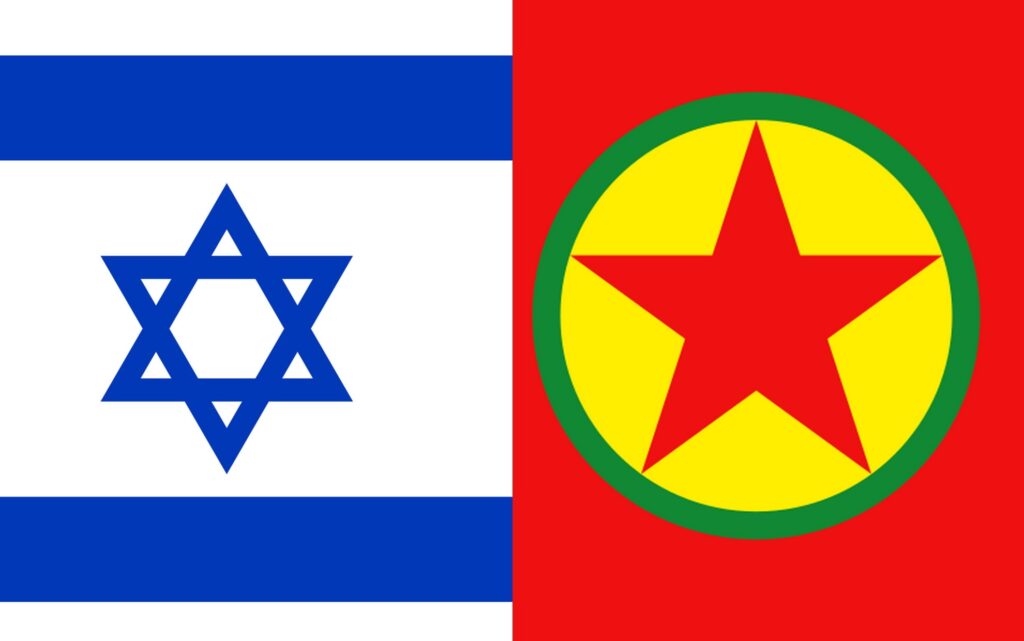
The Turkish Sabah newspaper stated that Israel is the secret supporter of the Kurdistan Workers’ Party (PKK), which Türkiye considers the main threat to the peace and security of the region, adding that Israel is currently feeling anxious and has begun to look for new alternatives to confront Turkish influence.
After the fall of the Assad regime, the separatist Kurdish militias have become the focus of recent developments in Syria, after their secret supporter, who was hiding in the shadows, was exposed.
The Kurdistan Workers’ Party (PKK), which lost areas such as Tal Rifaat, Shahba and Manbij in Syria, is trying to survive and maintain its existence through various negotiations and maneuvers.
Türkiye meanwhile, has a coordinated strategy with Damascus in this regard, which includes the withdrawal of the United States from Syria, combating ISIS, eliminating its presence, and integrating its remaining elements with the new regime in Damascus.
Türkiye’s position is very clear, which is to close the file of separatist militias in Syria in the near future through political or military means, as the ongoing talks in İmralı prison may play a role in facilitating the military elimination of this party from Iraq and Syria.
In that context, talking about Israel, the flow of news about the Kurdistan Workers’ Party organization began to increase significantly.
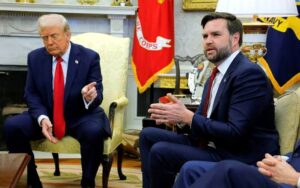
In the latest developments, news was circulated in the Israeli media that Trump is planning to withdraw US forces from Syria, and he has informed the Israeli government about this matter, but he also stipulated the normalization of relations between Türkiye and Israel.
There are two different assessments can be made of this news: the first is that Trump is indeed planning to withdraw his forces from Syria due to Turkish pressure and Ankara’s political style and regional approach, and that he is also seeking to bypass the pressure of the Zionist lobbies and related bureaucracies by alleviating Israel’s security concerns, even if only on paper.
The second is that Israel, while realizing Trump’s insistence on withdrawing troops, also believes that the organization will be eliminated and that Türkiye’s influence in Syria will increase, so it seeks to normalize relations with Türkiye at least, and establish a security mechanism between the United States, Turkey and Israel to reduce the potential threats it may face through Syria.
Israel considers the US withdrawal from Syria a major threat, as Israel feels uneasy about Turkish influence in Syria, especially after the fall of the Assad regime and the seizure of power in Damascus by forces loyal to Türkiye.
The fact is that Israel is taking advantage of the chaos that followed the liberation of Damascus, didn’t hesitate to adopt an aggressive approach; it launched hundreds of air strikes to destroy the remaining military equipment, ammunition and facilities of the regime.
It targeted military bases in several areas, including the capital Damascus, Aleppo, Homs and Hama, and also bombed naval bases in Tartus.
Israel has also strengthened its military presence in the occupied Golan Heights, expanding the separation zone to include the strategic Mount Hermon, bringing its forces closer to the capital Damascus, which is only 25 kilometers away from the mountain.
Recent field reports indicate that Israel is building military fortifications in the area, in a move that reflects a new escalation.
The escalation of Israeli support for Kurdish militias under the auspices of the US Central Command in the region (CENTCOM), while Israeli Prime Minister Benjamin Netanyahu and his ministers promote allegations against Türkiye.
Israeli Foreign Minister Gideon Sa’ar also called for a halt to Ankara’s operations in Manbij, stressing the international commitment to the Kurdish People’s Protection Units.
These statements reflect Tel Aviv’s annoyance with the moves of Türkiye and its allies against the organization in Tel Rifaat and Manbij.
Sa’ar made direct contacts with the leaders of the Labor Party in Syria, announcing his support for them, and they welcomed this step, adding that since 2014, Israel has played a major role in supporting the organization by influencing Washington, and has used its influence in Congress to prevent Trump from withdrawing US forces.
As for the Mossad, it has maintained its contacts with the organization for a long time and carried out covert operations, but has preferred to remain in the shadows until now.
In the same context, Israel considers the Kurdish card an important strategic tool.
After supporting the independence of the Kurdistan Region of Iraq, it sees the Kurdistan Workers’ Party as a more effective means of weakening and dismantling Syria to prevent the establishment of a strong, cohesive government, and sees the Kurdish presence supported by the United States and Israel as a guarantee for this.
It also considers the organization a means of limiting Türkiye’s growing influence, but it lacks the military capacity to protect this organization directly, and realizes that this could lead to a clash with Ankara.
Therefore, it focuses on influencing Washington to prevent its withdrawal from Syria, using the pretext of fighting ISIS to maintain pressure on Türkiye and impose conditions on it if necessary.
In conclusion, the author believes that Trump treats the Syrian issue as a personal test and an opportunity to ease the burdens of the United States in the Middle East.
Relations between him and Turkish President Recep Tayyip Erdogan, along with technical discussions, are likely to lead to a formula that satisfies Türkiye.
Cooperation between Ankara and Damascus in the fight against ISIS will also weaken the argument used by the Zionist lobby and opponents of Türkiye.
Ankara asserts that the new Syria won’t pose a threat to the region, while keeping its relations with Israel limited due to its aggressive policies.
Washington’s restraint on the Netanyahu government may also contribute to greater regional stability.