Possible way for China to seize Taiwan without Invasion
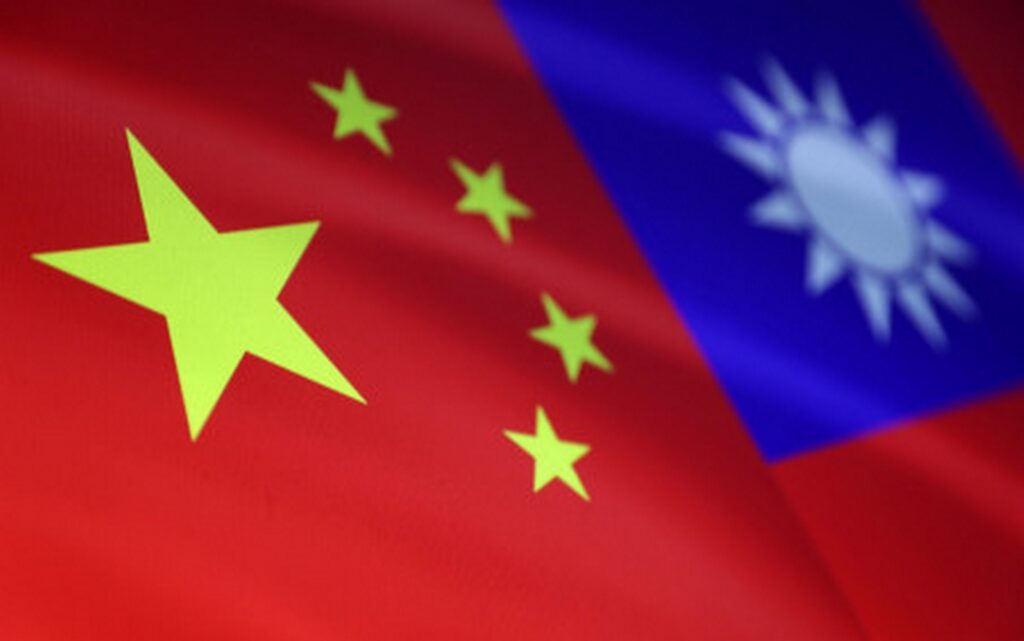
The conflict between China and Taiwan spans decades, with Beijing considering Taiwan part of its territory and intending to return it to Chinese control in the future, while many Taiwanese believe they form an independent state, whether or not their independence is formally declared.
Taiwan’s new president said, “the island would not give in to pressure from China”.
While tensions escalate through military drills and mutual statements, Taiwan remains on constant alert for the risk of a possible Chinese invasion.
However, a recent report from the Center for Strategic and International Studies in Washington suggested that China may be able to control Taiwan without the need for a physical invasion.
China could isolate Taiwan, crippling the island’s economy and forcing it to bow to the will of the Chinese Communist Party without having to fire a single shot.
This scenario relies on the use of “gray zone” tactics, which involve fewer measures than conventional hostilities, such as partial or complete restrictions on access to the island through the Chinese Coast Guard and other maritime safety agencies.
China could use the coast guard and naval militia to impose a quarantine on Taiwan, disrupting shipping and vital supplies to the island’s 23 million residents, according to the report.
Such tactics could weaken Taiwan’s position without the need for direct military confrontation.
China’s People’s Liberation Army, the world’s largest military force, could play a helpful role in this scenario, reducing the likelihood of direct military escalation.
Beijing has increased pressure on Taiwan in recent years, raising fears that tensions could spill over into armed conflict.
China has several options to force Taiwan to comply, including economic isolation without resorting to military force, which could make the United States and its allies difficult to legally justify military intervention.
The imposition of the quarantine by the Chinese coast guard differs from the traditional military blockade, in which the quarantine is legal measures to control maritime and air traffic, without constituting a declaration of war.
He noted that the quarantine could put Washington in an awkward position, as it would be difficult for it to justify international intervention to lift restrictions on Taiwan.
The report noted that the Taiwan coastguard, which has few large vessels compared to its Chinese counterpart, lacks sufficient capacity to cope with the quarantine measures.
The quarantine imposed by China could lead to economic strangulation of Taiwan, as many operators may avoid doing business with the island for fear of confiscating their assets.
Such measures could extend to flights, as air restrictions could significantly stifle air traffic to the island.
China can impose a quarantine without having to close the Taiwan Strait, which would deprive the United States and its allies of the pretext of international intervention to protect freedom of navigation, the report said.
Tensions between China and Taiwan have recently increased, making threats of quarantine part of China’s strategy to avoid direct military escalation.
Escalating tensions between China and the Philippines in the South China Sea were evident when Chinese coast guard vessels clashed with Philippine navy boats, reflecting rising tensions in the region in general.
China’s economic and military actions against Taiwan have also increased, increasing pressure on the island.
The Chinese Communist Party claims that Taiwan is part of China, although it was never under its control, and insists on reunification with it by force if necessary.