New York Times: Israel is mired in an existential crisis and underestimates the suffering of the Palestinians
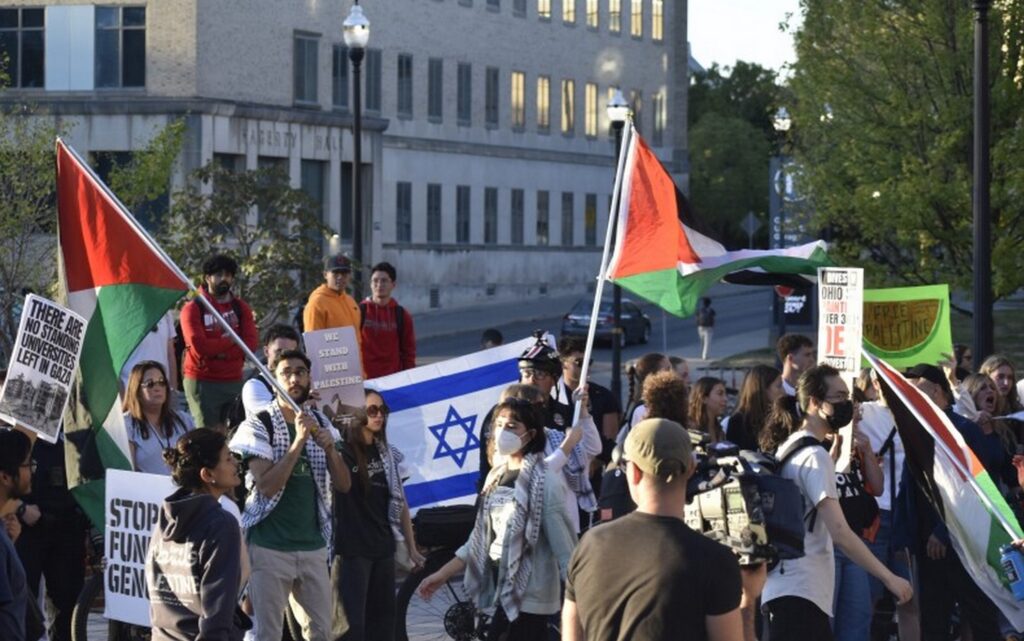
At a recent mass demonstration in Tel Aviv demanding a prisoner swap and early elections to replace Prime Minister Benjamin Netanyahu’s government, one protester held up a sign reading “Who are we without them?” in reference to prisoners held by the Islamist movement Hamas in Gaza.
Another sign read, “Give me one reason to raise children here”.
Mairav Zonszein, senior analyst for Israel at the International Crisis Group, wrote in an article in the New York Times that these messages encapsulate questions that many Israelis are asking themselves, a year after the longest war in Israel’s history, such as “What is the value of a Jewish homeland if its priority isn’t to save the lives of its civilians who were kidnapped from their homes?”
Zonszein continued – in her article from Tel Aviv – wondering, “Will I ever feel safe again? And what kind of future awaits me here if the only vision our leaders offer is endless war?”
She wrote that Israel is sinking into an existential crisis after October 7, 2023, describing it as a shrinking state: Tens of thousands of its citizens have been displaced from the northern agricultural towns and settlements and the southern border villages, while it’s fighting a multi-front war that is only getting worse.
Thousands of Israelis with means have left Israel since October 7, while others are considering or planning to emigrate.
Several thousand more have taken to the street’s week after week, engaging in civil disobedience since then and in protests against the judicial reform proposed by the Netanyahu government.
She explained that one aspect of the internal crisis was evident last month, when pictures showed former army chief of staff Dan Halutz being forcibly removed by police from the street, at a sit-in outside the prime minister’s private residence, and pictures of relatives of prisoners being abused by law enforcement officers.
Zonszein described the current war as a battle completely separate from the Israeli-Palestinian conflict, and from the Palestinians themselves in the West Bank, Jerusalem, and Gaza, as if they don’t breathe the same air that we breathe in Israel.
She pointed out that the anger simmering in the Israeli street is largely limited to the government’s failure to rescue the prisoners, not to the indiscriminate destruction of Gaza and the killing of more than 40,000 Palestinians, most of whom are civilians.
According to her article, few people protest Israel’s excessive use of force, and the Palestinians are fighting a battle for their existence.
The International Crisis Group’s chief Israel analyst criticized what she called Israel’s disregard for Palestinian suffering, whether conscious or not, describing it as one of the most tangible and disturbing features of life in Israel since the “Al Aqsa Intifada”.
Although this disregard or disdain existed long before, it has now become more evident and influential.
In her opinion, Zonszein continued, “It’s precisely this indifference that has enabled the extreme right to dominate Israeli politics without competition”.
She also said that the unifying principle in Israel today, as formulated by the right-wing parties in power, is Jewish control and hegemony, and living by the sword.
Zonszein concluded, “And I ended as I began: What does it mean, then, to live in a country whose leaders have made the well-being of its citizens secondary to their own political future and their exercise and consolidation of political power and excessive military force? How can Israelis explain the selective application of the law, where the police refuse to arrest settlers who attack Palestinians, and arrest those who demand a prisoner release deal despite their commitment to the law?”