Lula da Silva wins the Brazilian presidential elections
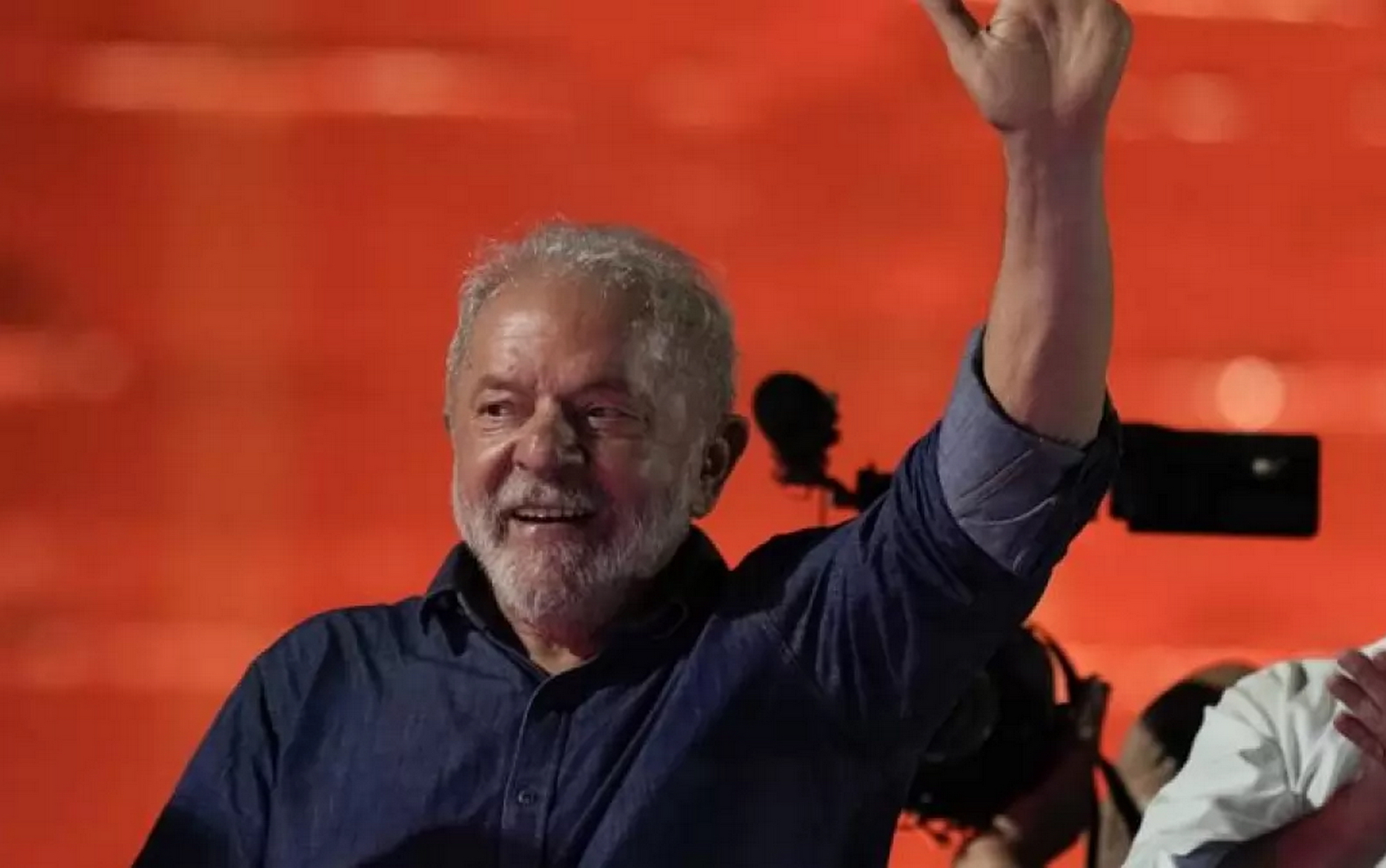
Brazilian leftist leader Luiz Inacio Lula da Silva narrowly defeated President Jair Bolsonaro in the run-off of the presidential race, but the far-right has yet to concede defeat, raising fears he may contest the result.
The Supreme Electoral Court declared Lula to be the next president after receiving 50.9 percent of the vote against 49.% for Bolsonaro.
Lula, 77, is due to be inaugurated on January 1st.
His victory is a stunning comeback for the former leftist president and a severe blow to Bolsonaro, the first incumbent not to be re-elected.
“So far, Bolsonaro has not called me to acknowledge my victory, and I don’t know if he will call or recognize my victory,” Lula told tens of thousands of jubilant supporters who celebrated his victory on Paulista Avenue in Sao Paulo.
In contrast to Bolsonaro’s silence, congratulations poured in from foreign leaders, including US President Joe Biden, Russia’s Vladimir Putin, France’s Emmanuel Macron and German Chancellor Olaf Scholz.
A source in Bolsonaro’s campaign told Reuters the president wouldn’t make public statements until Monday.
Bolsonaro’s campaign did not respond to a request for comment.
Bolsonaro last year publicly discussed his refusal to accept the results of the vote, and made unsubstantiated allegations that Brazil’s electronic voting system was vulnerable to manipulation.
“I promise I’ll be the biggest opposition Lula could ever imagine,” Representative Carla Zampelli, a close ally of Bolsonaro, wrote on Twitter, in apparent reference to the results.
Financial markets may have a volatile week in which investors await speculation about Lula’s government and the risk of Bolsonaro questioning the results.
The vote represented a rejection of the far-right populist Bolsonaro, who formed a new conservative coalition but lost support after Brazil recorded one of the worst death tolls from the Covid-19 pandemic.
Biden congratulated Lula on winning “a free, fair and credible election,” joining a wave of praise from European and Latin American leaders.
International observers who oversaw the elections said Sunday’s vote went well.
One observer told Reuters that the military auditors didn’t find any flaws in the integrity tests they conducted on the voting system.
On Sunday, truck drivers believed to be Bolsonaro supporters blocked a highway in four places in Mato Grosso state, a major grain producer, according to the highway operator.
In a video posted online, a man said truck drivers were plotting to block major highways, calling for a military coup to prevent Lula from becoming president.
Lula’s victory reinforces the new “pink tide” in Latin America, after the historic victories of the left in the elections in Colombia and Chile, to re-establish the regional political transformation that occurred two decades ago and introduced Lula on the world stage.
Lula has vowed to return to the state-led economic growth and social policies that helped lift millions out of poverty when he ruled Brazil from 2003 to 2010.
He also promised to combat the destruction of the Amazon rainforest, which is now at its highest level in 15 years, as well as make Brazil a leader in global climate talks.
After a night of jubilation in Brazil, world leaders welcomed the victory of Lula, who is preparing to assume a complex presidential term, as his opponent, Jair Bolsonaro, hadn’t yet conceded the two of them.
The outgoing president remained silent on Monday morning, before a transition period expected to last until January 1st.
In Washington, US President Joe Biden on Sunday congratulated leftist leader Luis Inacio Lula da Silva and said he “looks forward to working” with him “to continue the cooperation between our two countries”.
The same position was issued by Moscow, with President Vladimir Putin declaring his hope that “we will continue to develop constructive Russian-Brazilian cooperation in all fields through joint efforts”.
European Union foreign affairs Chief Josep Borrell Lula congratulated Lula on his victory in the Brazilian presidential election, writing in a tweet, “I look forward to working with you to advance EU-Brazil relations with your new government and parliament”.
French President Emmanuel Macron also congratulated Lula, saying that his election as President of Brazil “opens a new page in the history” of this country.
In Beijing, a foreign ministry spokesman confirmed that China is ready to raise the partnership between the two countries to a “higher level”.
But the resounding silence of Jair Bolsonaro, who was narrowly defeated in the second round on Sunday (49.1% of the vote against 50.9%) and who still has two months to rule, is full of threats.
“The worst that can happen is that the Brazilians on the same night don’t hear the position of their president Bolsonaro, which would cast doubts about his acceptance of the result” of the elections, Leandro Concentino, a political analyst at the private Insber University in São Paulo told AFP on Sunday evening.
However, the lights at Alvorada Palace went out early Sunday night, and according to Lauro Jardim, an informed columnist for Globo newspaper, the defeated president refused any visit after the results were released and fell asleep.
On Monday morning, truck drivers and other demonstrators blocked several roads in Brazil, apparently in protest of Bolsonaro’s defeat.
And crossing points were closed in the agricultural state of Mato Grosso (Central West), which voted mainly for the far-right president in the morning “by burning tires and various vehicles” such as trucks, cars and vans, according to the operator of one of the highways in this state.
It was not clear whether the movement was coordinated by a particular political group or spontaneously.
Many of the protesters were wearing the yellow and green T-shirts, the colors of the national flag that Bolsonaro’s supporters wore.
Also, local media reported road closures in at least five states, including a highway linking Rio de Janeiro and Sao Paulo, the country’s economic capital.
During the second round of Sunday’s presidential election, Luis Inacio da Silva, who predicted difficulties, expressed the hope that “the outgoing government will have an urban sense to understand that it is necessary that the transfer of powers go well”.
Lula will have to unite a country that experienced a turbulent administration during his predecessor’s four-year tenure, divided by the most polarizing campaign in its modern history.
“Lula will have to reach out to those who did not vote for him and assure them that he is the president of all Brazilians without exception,” Consentino said”.
Lula will have to establish calm in the country,” he said.
According to the president-elect, “there is no country in Brazil divided”.
“We’re one people, one nation,” he said Sunday.
“I’ll govern for about 215 million Brazilians, not just for those who voted for me,” Lula added. 58 million Brazilians voted against it.
He stressed that “the country needs peace and unity” because “no one wants to live in a family where differences prevail”.
Lula will also have to live with a parliament the results of the latest legislative elections on October 2 have tilted it even more to the far right, with Jair Bolsonaro’s Liberal Party becoming the first bloc in the House of Representatives as it is in the Senate.
With his candidacy, Lula brought together a heterogeneous coalition of about ten parties around the Workers’ Party.
Also, centrist Vice President Geraldo Alcumen chose his defeated former opponent in the 2006 presidential election, to attract voters and moderate business circles.