Israeli Press: The fall of the Assad regime may be bad news for Israel
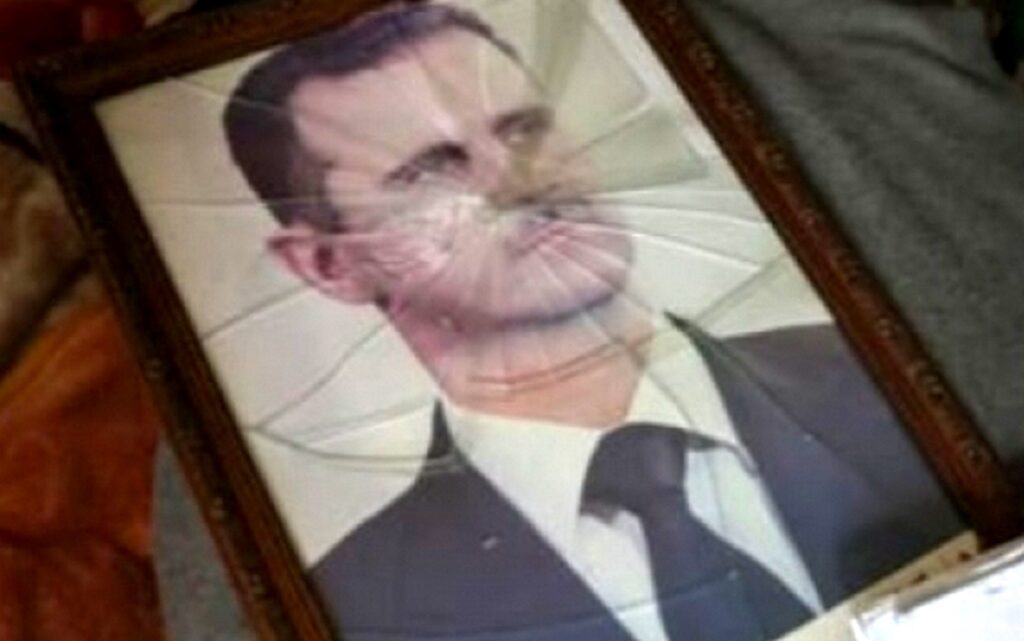
The Israeli newspapers shed a spotlight on the unprecedented events in Syria that led the opposition to topple Assad’s regime.
According to the Jerusalem Post and Yedioth Ahronoth newspapers, who spoke about the developments in Syria, and presented analyses in which they tried to see Israeli interests and the dangers that could threaten them from potential changes.
Despite the differences in their perspectives and some details, they agreed that the weak Syrian regime under the rule of the ousted president, Bashar al Assad, was in Israel’s interest.
The sudden eruption of the Syrian civil war has many Israelis asking, “My enemy’s enemy is fighting my enemy, so which one am I on?”
In other words, who does Israel not want to see on its border with Syria: Iranian-backed Shiite jihadists or Turkish-backed Sunni jihadists?
Because Israel doesn’t want either of them on its borders and would rather have a weak Syrian regime ruled by Assad than his downfall, the Israeli newspapers say, its approach to developments in Syria will be to stay out of the conflict unless its security interests are directly or immediately threatened.
As Former Israeli prime minister, Yitzhak Shamir said during the Iran-Iraq war in the 1980s, “Israel can wish success to both sides”.
The attack by the armed Syrian opposition was expected by few, although it was not entirely surprising, as it was clear that the Middle East war that Hamas began on October 7 with its attack on Israel would have wider regional implications, although it wasn’t clear what these implications and repercussions would be.
The October 7 attack led to the Lebanese Hezbollah opening a front against Israel and expelling 60,000 Israelis from their homes.
Eleven long months of war passed, ending with the explosion of alarms, the assassination of Hezbollah’s leadership, the severe deterioration of its capabilities, and the demonstration of Iran’s weakness and ability to penetrate.
After this sequence of events, the Syrian opposition decided to try to retake Aleppo and reignite the civil war at a time when three of the biggest allies of the ousted Syrian President Bashar al Assad were either very weak or busy.
Moscow was busy in Ukraine, and Hezbollah and Iran were at their weakest.
With Assad’s three allies far away, this opposition saw an opportunity that they had apparently been planning for, and pounced on it on the same day that Hezbollah and Israel announced a ceasefire.
The Syrian civil war that began in 2011 has drawn in a host of different actors with myriad ideological interests, and today’s renewed fighting is no different, the newspaper said, and it concerns the core interests of four major players in the drama: Israel, Türkiye, Iran and Russia.
Israel’s interests, whose actions in Lebanon and Syria have weakened the Iranian-Syrian-Lebanese axis and prevented Iran from using Syria to rearm Hezbollah and build its strength, noting that the civil war has removed Syria from being a threat to Israel.
Israel didn’t want Assad to fall because that would lead to chaos, which is rarely good for Israel, and because Tel Aviv likes predictability, and Assad in Syria provides that.
He is no friend, but Israel at least knows what to expect from him—what he can and cannot do, what he will and won’t do.
As for Türkiye, its interests are mainly summarized in resettling an estimated 3.5 million Syrian refugees who have flowed into its territory since the beginning of the civil war in northern Syria, and in further undermining Kurdish efforts in the region.
Iran’s interest, which is the biggest loser alongside Assad, is to maintain Syria as a weapons conduit to Hezbollah and as a platform for producing weapons for the Lebanese group and rebuilding its main proxy, so if Assad falls, this channel will be lost.
Russia had actively intervened in the Syrian civil war in 2015, thus tipping the scales in Assad’s favor.
This was due to several important interests: Russia, through Syria, could project its power throughout the Middle East and confront US influence in the region, and it would gain a port on the Mediterranean in Tartus, as well as an air base near Latakia.
Yedioth Ahronoth newspaper, by Israeli analysis Ron Ben-Yishai – the attack launched by the Syrian opposition, along with the clear inability of the Syrian regime’s army, led to a series of reactions among various ethnic and religious groups in Syria.
Ben-Yishai believed that there is an imminent threat to Israel from the “Sunni jihadists” and that it must, as a precaution, prepare for any such scenario, including conducting a large-scale military maneuver in the northern Jordan Valley and the southern Golan Heights.
With the Syrian opposition seizing the city of Palmyra in central Syria, where an Israeli strike killed at least 82 pro-Iranian militia fighters and Hezbollah leaders, it’s unlikely that pro-Iranian militias will establish a presence in the region.
In addition, the Biden administration has made efforts to support the Kurdish enclave in northern Syria and to wrest control of the Euphrates River strongholds from pro-Iranian Shiite militias.
For Israel, it’s important to influence the United States to continue supporting the Kurds and ensure that the US forces remain in the region.
At the same time, Israel seeks US influence over Turkish President Recep Tayyip Erdogan to prevent Syrian militants from advancing toward the Golan Heights.
Israel’s concerns about Syrian strategic weapons falling into the hands of the Syrian opposition were greatly alleviated after it targeted the main military-industrial complex in Syria near the town of Safira, where Iranian and Syrian missiles and production equipment were stored and Hezbollah was supplied with weapons.
Israel seemed pleased that the Syrian militants didn’t move west into the Alawite-dominated coastal region where other Syrian military-industrial facilities are located, but instead focused on controlling the main north-south highway, the one linking Aleppo, Hama, Homs and Damascus.
The newspaper concluded that Israel, in the wake of the October 7 attack, must remain on high alert in the Golan Heights, focusing on intelligence and air defense to respond to any unexpected developments in Syria.