Israeli army spokesman criticizes the controversial Feldstein law and ignites the government’s anger

Israeli army spokesman, Daniel Hagari, criticized, in a press conference held on Wednesday evening, the “Feldstein Law” that allows soldiers and state employees to hand over classified information to the prime minister or the minister of defense without the need to obtain prior permission, warning of its danger to Israel’s security.
His statements was met with angry reactions from officials in Benjamin Netanyahu’s coalition and ministers in the government, who accused him of exceeding his powers.
During the press conference, Hagari said, commenting on the bill that aims to protect the prime minister’s spokesman, Eli Feldstein, and Netanyahu’s close associates and officials in his office involved in serious security leaks, that the army doesn’t hide information from the political echelon, but rather works under its supervision for the sake of Israel’s security.
“The document in question was available to authorized parties in the Prime Minister’s Office, but it was stolen and passed to a newspaper in Germany (Bild) in a way that bypassed censorship… It exposed the enemy and harmed state security… This law is very dangerous because it will create a situation in which any low-ranking member of the military can steal intelligence on his own,” he added.
Hagari’s comments sparked anger in the government, including Defense Minister Israel Katz, who said that “the army spokesman’s criticism of the political echelon and a legislative process in the Knesset is a dangerous phenomenon and a blatant violation of his authority and what is expected of a person wearing a military uniform in a democratic system”.
Katz, who was recently appointed by Netanyahu as defense minister at the expense of Yoav Galant, continued, “I’ll work to conduct a disciplinary process against him soon to draw the necessary lessons”.
The Israeli army also issued a statement saying that the Chief of Staff, Herzi Halevi, reprimanded the army spokesman for answering a question that exceeded his authority.
The army statement said, “The Chief of Staff reprimanded the army spokesman for his answer to a question during a press briefing regarding the law on transferring classified information to the prime minister and ministers, in which he exceeded his authority”.
The statement added, “The IDF doesn’t criticize the legislative authority, but rather presents its position to the political echelon through the mechanisms followed for this purpose”.
Netanyahu said in a brief statement issued by his office that, “it was good that the IDF spokesman has been put on hold to ensure that such statements won’t be repeated”.
He added, “In a democracy, the army shouldn’t intervene in political issues, and certainly not criticize legislation”.
In turn, Knesset Speaker Amir Ohana, from the Likud party said, “In a democratic state, the army doesn’t criticize legislative processes in the Knesset during a press conference, but rather implements them as an arm of the executive authority, if they become part of the law”.
“The army can express its position in the Knesset during the committee that prepares the law, as do all government bodies subject to the Knesset or affected by legislation… What the army spokesman said is a serious crossing of red lines and is completely unacceptable, and must not be repeated,” he added.
For his part, National Security Minister Itamar Ben-Gvir said, “The spirit of the attorney general permeates the army spokesman… When Hagari sees that the attorney general doesn’t care about the government, he doesn’t care about the defense minister either… A deep state par excellence, but this time in public”.
Interior Minister Moshe Arbel said, “The army spokesman’s statements and his position on legislative processes are a very serious crossing of red lines… A person in uniform has no right to express a political opinion publicly on political issues, especially if it contradicts the position of the responsible minister”.
In the context of the attack on the army spokesman and on Ben Gvir’s approach, the Minister of Culture and Sports, Miki Zohar, exploited Hagari’s statements to attack the judiciary, and said that the position of the military level towards the political level doesn’t come out of nowhere, but rather stems primarily from the position of the judiciary level towards the elected government.
Hagari admitted, in a statement issued in his name, that he exceeded the limits of his authority in responding to one of the questions, noting that he “received a reprimand from the Chief of Staff”.
Hagari said, “Israel is a democratic state, and the army is subject to the political echelon”.
“Since October 7, and during hundreds of statements, press conferences and questions I have answered, I have maintained an official stance,” he added.
“The army presents its position to relevant parties on legislative issues only through approved channels, and not through any other means,” he continued.
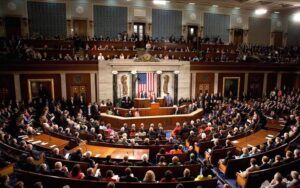
Earlier on Wednesday, the Knesset approved in its preliminary reading the “Feldstein Law,” which was introduced by Likud MKs Hanoch Melvidsky and Amit Halevy; the bill was supported by 59 out of 120 MKs, while 52 MKs opposed it.
This legislation comes after the security leaks case that was raised months ago, in which Eli Feldstein, a spokesman for Netanyahu’s security office, and his adviser, Yonatan Urich, face charges of leaking secret documents to the media from the Military Intelligence Division, after obtaining them from an army officer.
According to the charges, Feldstein tried to leak the classified material to a journalist from the Channel 12, but the military censor prevented its publication, so he ordered Urich to hand it over to one of Netanyahu’s senior advisers in the recent election campaigns, who in turn leaked it to a German newspaper, which published it.
According to reports, the aim of leaking the documents was to mislead public opinion that Hamas leader Yahya Sinwar was opposed to reaching a prisoner exchange agreement and a ceasefire in Gaza, while Netanyahu was accused of thwarting efforts to reach a deal.
The bill aims to protect Feldstein and the other defendants in the case from being convicted of charges against them, which include possession of classified information and obstruction of justice, crimes that could carry a life sentence.
According to the proposed bill, the provisions of the Military Justice Law regarding the provision of classified information would not apply to information provided without the permission of the prime minister or defense minister.
The bill is scheduled to be referred for additional review by a specialized parliamentary committee, in preparation for returning it to the Knesset plenum for a first reading vote.
After that, the bill will return to the parliamentary committee for final drafting in preparation for a second and third reading vote in the Knesset, to become an effective law if approved.