Iranian officials: There is some progress in the nuclear talks, and we might conclude an interim agreement
Iranian officials said on Monday that Tehran and world powers had made some progress toward reviving the 2015 nuclear deal that the United States withdrew from, and that an interim deal could buy time for a permanent settlement.
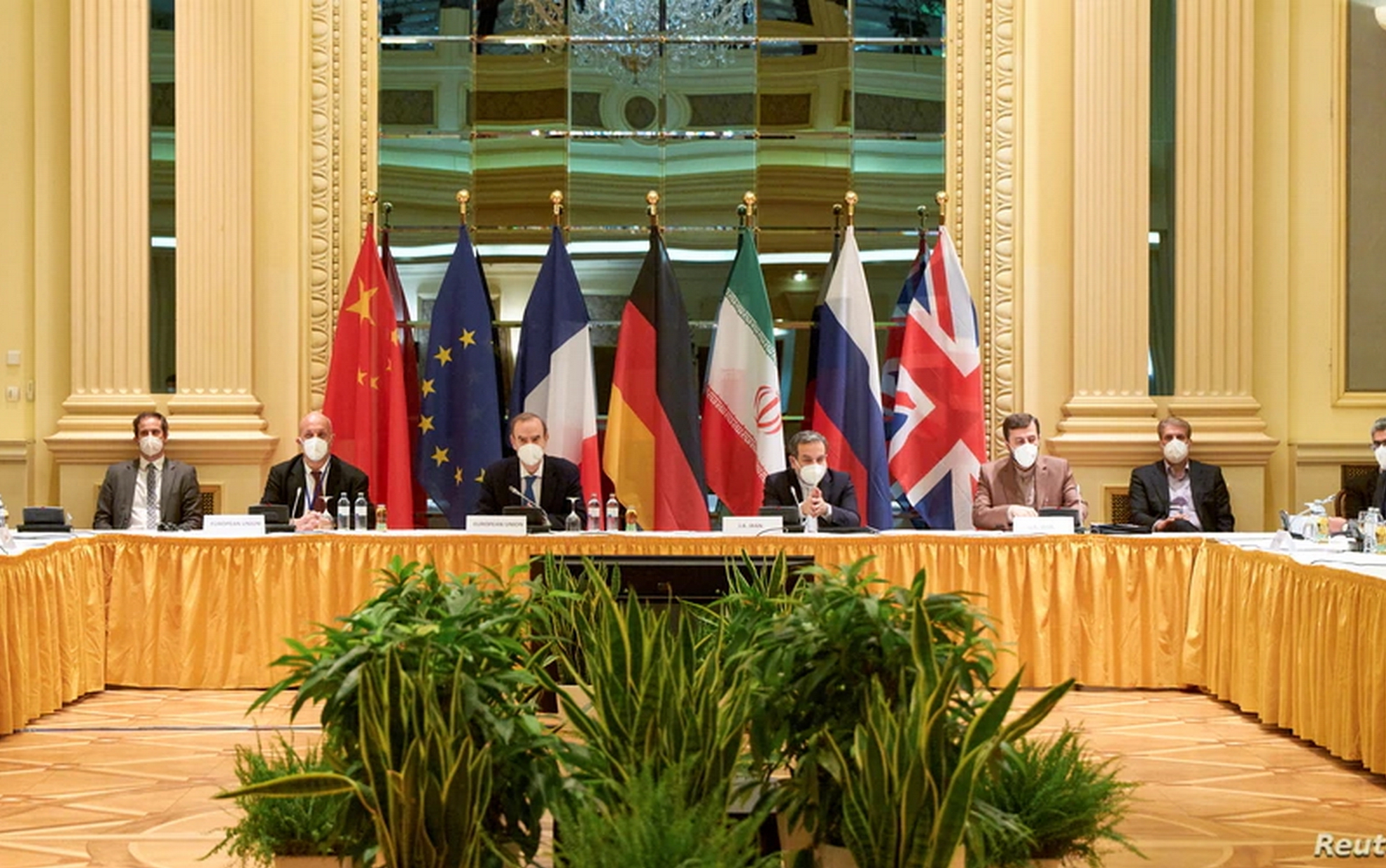
Iran and world powers have been meeting in Vienna since early April to work on steps to be taken to return Tehran and Washington to full compliance with the agreement, and the talks touched on US sanctions and Iran’s violations of the agreement.
“We are on the right track and there is some progress, but that does not mean that the Vienna talks have reached the final stage,” Iranian Foreign Ministry spokesman Saeed Khatibzadeh said at a weekly press conference in Tehran.
“Practical solutions are still elusive, but we have moved from public rhetoric to agreeing on specific steps toward the goal,” Mikhail Ulyanov, Russia’s representative to the United Nations’ International Atomic Energy Agency, wrote on Twitter on Monday.
The administration of US President Joe Biden, which took office in January and pledged to return to the agreement, said it was prepared to “lift all sanctions that are inconsistent” with it, but did not specify what measures meant.
The Iranian religious establishment has said that it will not return to strict adherence to the 2015 agreement unless all sanctions imposed or added by former President Donald Trump after he abandoned the agreement in 2018 are first lifted.
Diplomats say simultaneous steps from each side could provide a solution, while Iranian officials told Reuters that the Vienna talks could result in an interim agreement to allow diplomacy to seek a permanent settlement.
“The deadline in May is approaching… What is being discussed in Vienna for the near term is the main outline of an interim agreement to give all parties more time to solve complex technical problems,” an Iranian official said.
He was referring to a law passed by the Iranian parliament, which is dominated by ultra-conservatives, requiring the government to toughen its nuclear stance if sanctions are not lifted.
The law provides for the end of the UN nuclear inspections without long prior notice, effective February 21, but Tehran and the International Atomic Energy Agency have agreed to continue “necessary” inspections for a period of up to three months.
“There are no discussions on an interim agreement or the like in the Vienna talks,” chief Iranian nuclear negotiator Abbas Araghchi told Iranian state media.
But another Iranian official said that if a political agreement is reached on technical steps to lift all sanctions, Tehran may suspend uranium enrichment to a purity of 20 percent in exchange for the release of its funds held in other countries.
Iran says $ 20 billion of its oil revenues have been frozen in countries such as South Korea, Iraq and China under the US sanctions regime in place since 2018.
“The release of Iran’s funds is a good start,” said the second Iranian official. And the conclusion of an interim agreement will give us ample time to work on lifting all sanctions on Iran”.
Asked about the comment, a US State Department spokesman said that the talks are continuing in Vienna and that the US team is “exploring concrete means related to the steps that Iran and the United States should take to return to their mutual commitment”.
“The discussions are comprehensive and in-depth, even if they are indirect… There was no breakthrough, but we did not expect this process to be easy or quick”.
He expected delegations to return to their countries to consult at some point, but did not specify when.
European Union foreign policy chief Josep Borrell said he had sensed a desire to salvage the 2015 deal, citing progress in the Vienna talks.
He said, “I think that the two parties are really interested in reaching an agreement, and they are moving from general issues to more detailed issues, which are related to lifting sanctions on one side and related to issues of nuclear compliance with the agreement on the other side”.