Iran announced its refusal to resume negotiations on its nuclear program with Washington until the Israeli aggression stops
Iran on Friday refused to resume negotiations over its nuclear program with the United States until Israel halts attacks on its territory, shortly after the Israeli military chief of staff predicted a long war with Tehran.
In the evening, a series of explosions rocked Tehran, while the Iranian Fars News Agency reported the activation of air defense systems in the capital, a week after the outbreak of the conflict between Israel and Iran.
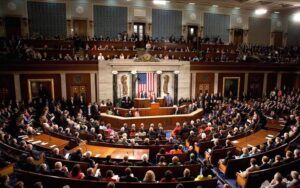
US President Donald Trump announced on Thursday that he would give himself two weeks to decide on a potential US military intervention alongside Israel, considering that there was a high possibility of negotiations with Tehran.
Amid claims that Iran was close to possessing a nuclear bomb, Israel launched a large-scale air campaign against the Islamic Republic, striking hundreds of military and nuclear sites, killing a number of the country’s senior military officers and nuclear scientists.
Iran responded by launching missile attacks and drones into Israel.
Tehran denies any intention of acquiring a nuclear weapon, but defends its right to develop a civilian nuclear program.
Director General of the International Atomic Energy Agency (IAEA), Rafael Grossi, confirmed that his organization didn’t provide any evidence in its latest report indicating that Iran is currently working to develop a nuclear weapon.
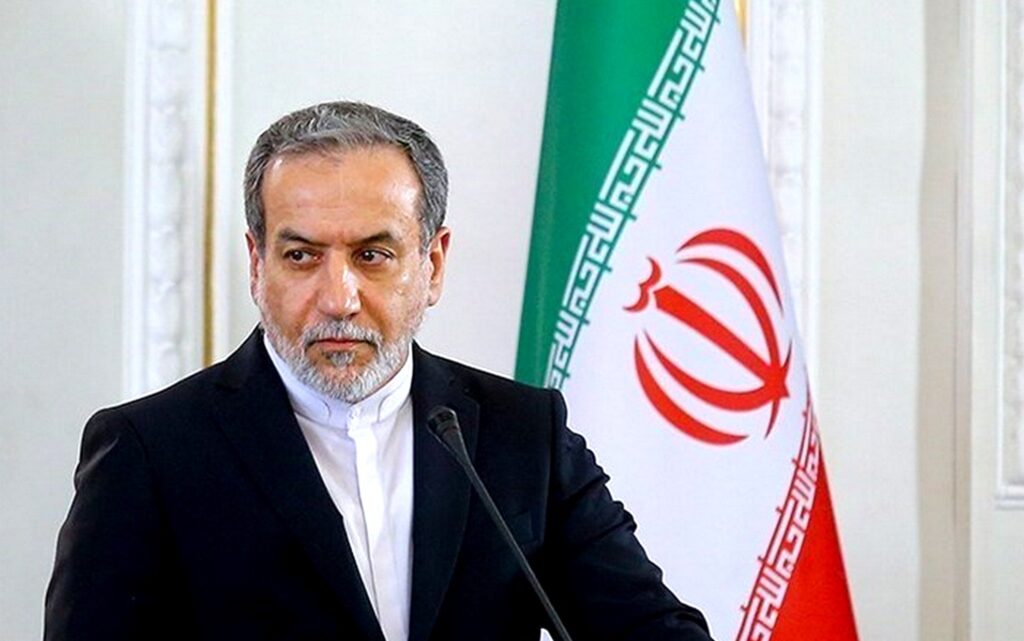
Iranian Foreign Minister Abbas Araqchi said that Iran is ready to reconsider pursuing the diplomatic path once the aggression stops, referring to the negotiations that began in April with Washington aimed at reaching an agreement on Tehran’s nuclear program.
Following his meeting in Geneva with his French, British, and German counterparts, as well as the European Union’s foreign policy chief, Araqchi explained that his country supports continuing negotiations with the G3 and the European Union.
For their part, Germany, France, and Britain urged Iran to continue the diplomatic process without waiting for the conflict to end.
German Foreign Minister Johann Wadephul said, “The positive outcome today is that we leave the room with the impression that the Iranian side is ready to continue discussing all important issues”.
French Foreign Minister Jean-Noël Barrot said, “We believe there is no definitive military solution to the Iranian nuclear issue… Military operations may delay it, but they cannot eliminate it”.
French President Emmanuel Macron announced that Germany, France, and Britain would present a comprehensive negotiating offer to Iran, covering nuclear issues, ballistic missile activities, and the financing of armed factions in the region.
The United Kingdom and several other countries, including Switzerland, which represents US interests in Tehran, announced they had withdrawn their diplomatic staff from Iran.
International Atomic Energy Agency Director-General Rafael Grossi warned the UN Security Council that an Israeli strike on the Bushehr nuclear power plant in southern Iran could have serious consequences and could release significant amounts of radiation into the environment.
He also stressed that his agency is capable of ensuring rigorous future inspections of Iran’s nuclear program to ensure that Tehran isn’t developing nuclear weapons, noting that a diplomatic solution remains possible if there is political will.
A previous agreement regulating Iran’s nuclear program, concluded in 2015 between Tehran and major powers, expired in 2018 following the United States’ unilateral withdrawal from it and the re-imposition of US sanctions on Iran during Donald Trump’s first presidential term.
In response, Iran abandoned some of its commitments, accelerating uranium enrichment.
Iran has enriched uranium to a high level of 60%, according to the International Atomic Energy Agency.
To build a nuclear bomb, enrichment would need to be increased to 90%, as the 2015 agreement set the enrichment limit at 3.67%.
While the Geneva meeting was underway, Israeli Chief of Staff Eyal Zamir said in a video message to the “citizens of Israel”: “We’ve launched the most complex campaign in our history… We must be prepared for a long campaign… Despite significant progress, difficult days lie ahead… We’re preparing for many possibilities”.
In the other hand, Iran launched a new barrage of missiles at Israel on Friday afternoon, wounding 19 people, according to a hospital in the northern coastal city of Haifa, where at least one building was hit.
An Iranian attack targeted Beersheba, causing material damage, as the Iranian Revolutionary Guards confirmed in a statement that it targeted “military centers, defense industries, command and control centers,” in addition to military bases in Israel.
From the Israeli side, the Israeli army, announced that it had bombed surface-to-air missile launch pads in southwestern Iran, after launching raids on targets in Tehran, Isfahan, and the west of the country.
Israeli airstrikes killed at least 224 people in Iran.
In Israel, Iranian missile and drone attacks killed 25 people.
In Tehran, thousands of people took to the streets, chanting slogans in support of their leaders and against Israel and the United States.
They also burned and trampled on Israeli and American flags.
One banner read, “I’ll sacrifice my life for my leader,” referring to Supreme Leader Ayatollah Ali Khamenei, who is under threat from Israel and its ally, the United States.