Hezbollah investigations: The pager explosions incident
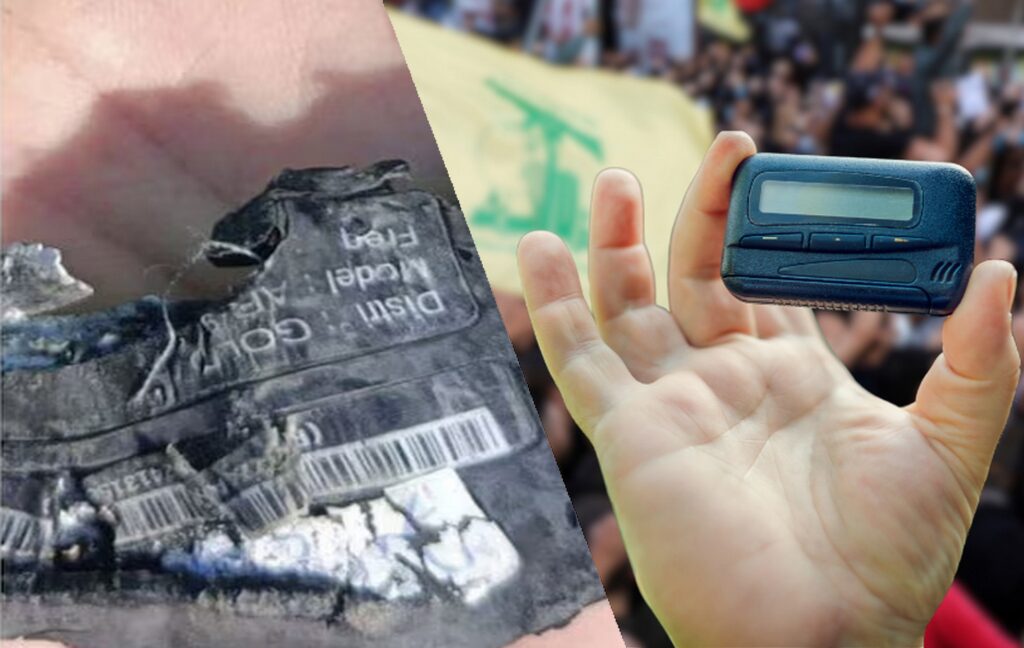
Hezbollah conducted a technical investigation, which started hours after the Pager devices were detonated, that there were explosive charges planted inside the devices, and that they determined the type of explosives used and the method of integrating them with technical elements in the device and its battery.
According to the special committees that Hezbollah established to investigate the incident, studied the technical mechanism that allowed Israel to penetrate the telegram transmission center to the relevant agencies, and send a message to activate the explosive charge at the same time.
According to the information, other security agencies in Lebanon are working to verify how small bombs were planted in pagers.
The investigations include identifying all human and logistical elements, local or foreign officials, who are involved in supplying this shipment of Pagers and new wireless devices that were on their way to Hezbollah.
The investigation focuses on specific issues, including the mechanism of action adopted by Israeli intelligence, whether in terms of falsifying data that allowed it to be an offer for sale, or an intermediary in the operation, or investigating the possibility that the enemy discovered the mechanism for purchasing the quantity and worked to intercept the shipment on its way to Lebanon, and replace it with other devices that had been booby-trapped earlier, or that the booby-trapping took place at the headquarters of the supplying company.
While the specialized units in Hezbollah and the Lebanese army detonated a number of devices that didn’t explode, Hezbollah worked during the past 24 hours to remove all the devices from their locations in warehouses and offices or from individuals and neutralized them.
In this regard, the New York Times quoted a US military and CIA sources, who indicated that the operation began years ago, and that in light of Hezbollah’s resort to using fake devices, the relevant authorities in Israel saw an opportunity, and Israeli intelligence officials established a fake company to manufacture international pagers.
The contract was signed between a company called BAC Consulting, based in Hungary, and the manufacturer Gold Apollo.
According to the report, steps were taken to conceal the real person behind the shell company by creating at least two other companies, which Israel invested millions of dollars in this operation.
The central company contacted regular customers to supply them with pagers, but the most important customer for it was, of course, Hezbollah.
The New York Times quoted three CIA officers, who said that the devices supplied to Hezbollah were manufactured separately, contained batteries that included explosive charges, and were sent to Lebanon in the summer of 2022 on a small scale, and thousands of them arrived in Lebanon last summer.
Following the alleged role of a Hungarian manufacturing company, Bulgarian authorities announced they would open an investigation into a Sofia-based company suspected of being behind the sale of the devices.
Several media outlets reported that Norta Global Ltd was responsible for the sale of the devices in cooperation with the Hungarian-based BAC Consulting, which acted as an intermediary.
The Hungarian news agency Telex reported that BAC was involved in the deal as a simple intermediary, didn’t actually carry out any activities, and doesn’t have an office.
Norta Global, owned by Norwegian Renson Jose, was founded in April 2022 and has an address in a house in the Bulgarian capital.
It’s registered with the “Corporate Headquarters Service” provider, which hosts 196 other companies.
The Bulgarian Security Agency said that it’s investigating the role of an unidentified company registered in Bulgaria in the attacks, noting that it hasn’t detected any shipments of the devices on Bulgarian territory.
On the other hand, the Taiwanese company Gold Apollo denied any role in producing these devices, explaining that it had granted the license for its trademark to BAC to market the products in specific regions.
The Taiwanese company also explained that BAC is responsible for designing and manufacturing the devices.
BAC, which is owned by Cristiana Arcidiacono-Barsony, (49), who holds Hungarian and Italian citizenship, also denied any involvement.
The company was registered as a limited liability company in May 2022 and is headquartered at a residential address in Budapest, Szőnyi út 33/A.
The investigation is now focusing on Norta Global Ltd, a Sofia-based shell company with its registered office at 48 Vitosha Street, ground floor, Sofia, Triaditsa district.
The Bulgarian company is similar to its Hungarian counterpart, as it’s also registered with a corporate domicile service provider.
Founded in April 2022, it’s officially a project management company and isn’t supposed to manufacture any products.