Germany puts Rosneft units under tutelage to ensure control of its oil assets
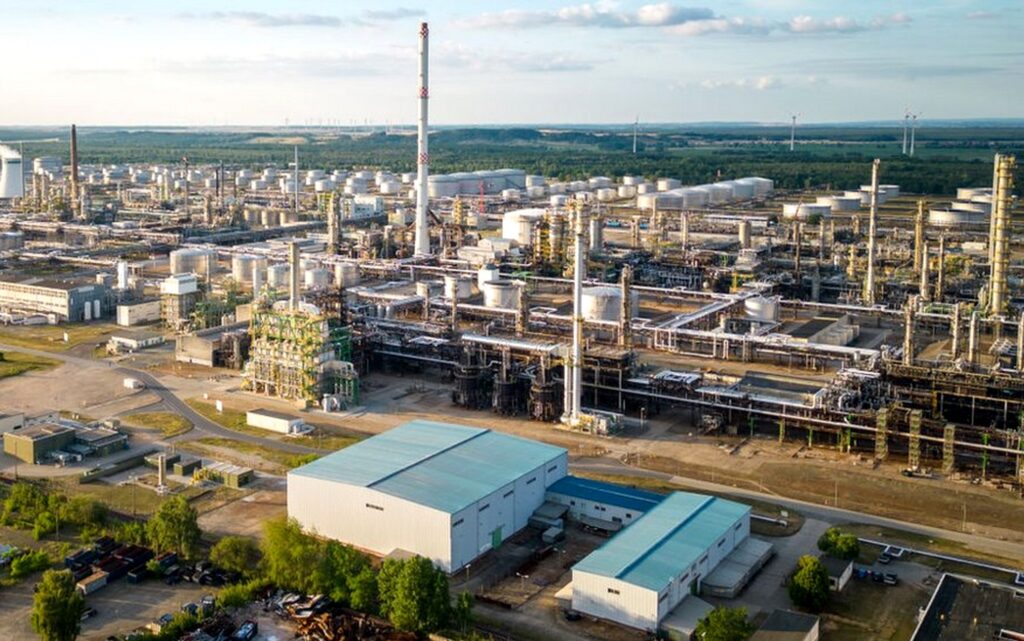
The German government has placed the local subsidiaries of Russia’s state-controlled oil company Rosneft under formal trusteeship, a move aimed at securing long-term oversight of critical energy assets and reducing uncertainty around fuel supplies.
According to the economy ministry, the decision formalizes Berlin’s control over Rosneft’s German operations, including its key share in the PCK Schwedt refinery — a facility that supplies a large portion of the fuel consumed in the capital region.
The assets were initially placed under temporary state supervision in 2022 following the war in Ukraine, which disrupted decades of German-Russian energy cooperation.
Until now, the trusteeship required renewal every six months, creating recurring uncertainty for refinery operations, suppliers, and regional fuel markets.
The new structure is intended to provide a more durable legal framework and ensure continuity of operations while Berlin evaluates long-term ownership options.
Under the latest arrangement, Rosneft Deutschland and Rosneft Refining & Marketing will remain under the authority of Germany’s federal energy regulator, Bundesnetzagentur.
The regulator will continue managing the companies’ stakes in the Schwedt, MiRO Karlsruhe, and Bayernoil refineries, overseeing corporate governance, supply contracts, and operational stability.
Officials emphasized that safeguarding energy security remains the government’s primary objective.
Rosneft Deutschland accounts for roughly 13% of Germany’s oil processing capacity, making its assets strategically significant for the country’s fuel supply chain.
The move also received clearance at the European level. Earlier this month, the European Commission approved the revised trusteeship framework, concluding it complies with EU competition and state-aid rules.
Berlin has been gradually reducing its dependence on Russian energy since 2022, seeking alternative crude supplies for refineries that were historically configured to process Russian oil.
The Schwedt refinery in particular has undergone logistical adjustments to receive crude via ports in Poland and Germany rather than through the Druzhba pipeline.
Analysts say the extended trusteeship signals that a quick return of Rosneft to full operational control in Germany is unlikely. Instead, the government appears to be buying time to maintain stable fuel flows, protect refinery jobs and regional economies, and explore potential divestment or restructuring scenarios.
While the ministry didn’t announce any immediate ownership changes, officials indicated they will continue working toward a structural solution that ensures long-term supply security.
Energy markets reacted calmly to the announcement, reflecting expectations that refinery operations will continue uninterrupted in the near term.
However, the future ownership of Rosneft’s German assets remains unresolved and could become a focal point in broader EU-Russia energy tensions.