German Economic Institute: The war on Iran threatens Germany’s economy with $46 billion loss
Germany’s economy could suffer losses of up to €40 billion ($46.4 billion) over the next two years if oil prices surge due to a prolonged escalation of the Israeli-US–Iran conflict, according to a new assessment by the German Economic Institute (IW Cologne).
The institute warned that rising global energy prices would place significant pressure on Europe’s largest economy, particularly on its energy-intensive industrial sector, which remains highly sensitive to fluctuations in oil and gas markets.
According to the report, if the price of Brent crude oil climbs to around $100 per barrel, Germany’s economic output could decline by 0.3% in 2026 and 0.6% in 2027.
In monetary terms, that would translate into a cumulative loss of roughly €40 billion in gross domestic product over the two-year period.
The impact could become significantly more severe if oil prices surge further; Should Brent crude reach $150 per barrel, Germany’s GDP could shrink by 0.5% in 2026 and 1.3% in 2027, resulting in losses exceeding €80 billion, the institute estimates.
Analysts say higher oil prices would drive up transportation and manufacturing costs across the German economy, adding pressure to sectors such as chemicals, automotive manufacturing, logistics, and heavy industry.
Germany’s export-oriented economy is particularly vulnerable to energy shocks because rising production costs can weaken global competitiveness and reduce industrial output.
Although Germany’s direct trade with Iran has declined significantly in recent years due to sanctions and geopolitical tensions, the IW report emphasizes that the country remains exposed to indirect economic fallout from instability in the Middle East, one of the world’s most important energy-producing regions.
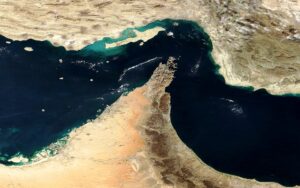
A broader regional conflict could also disrupt shipping routes and energy supply chains, particularly through strategic chokepoints such as the Strait of Hormuz, through which roughly a fifth of global oil supplies pass.
Economists warn that sustained energy price shocks could further slow Germany’s already fragile economic recovery following the energy crisis triggered by the Russian invasion of Ukraine and subsequent shifts in European energy imports.
The institute concludes that escalating tensions in the Middle East could have serious repercussions for Germany’s economic growth, investment climate, and long-term development prospects if energy markets remain volatile.