Formation of a new French government of politicians and technocrats
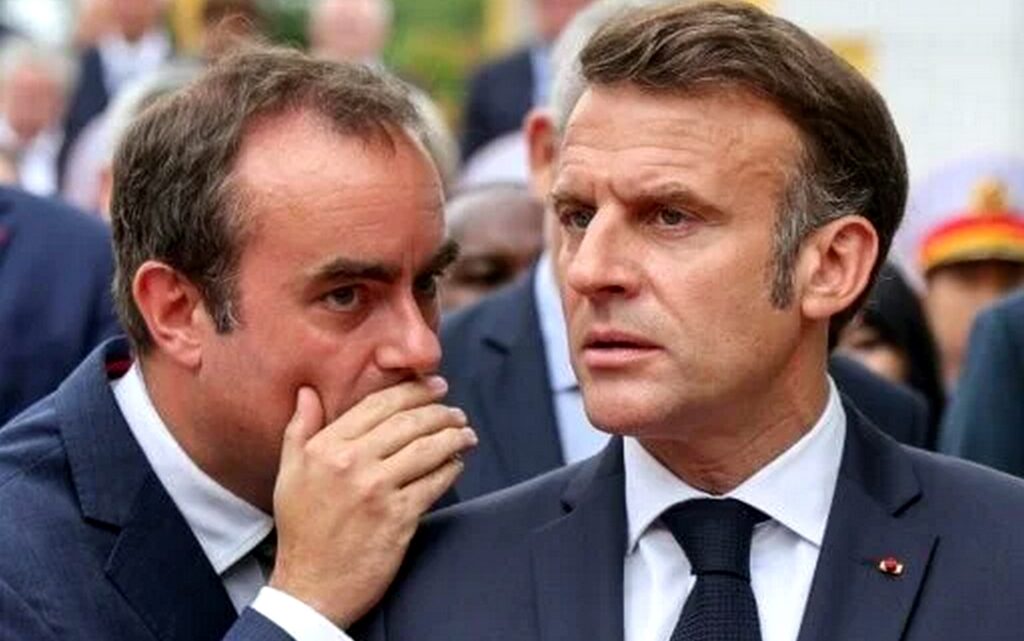
French Prime Minister Sébastien Lecornu on Sunday announced a government lineup that includes politicians, technocrats, and civil society figures, in an attempt to spare the country further political turmoil.
In what appeared to be an attempt to ward off the specter of an immediate no-confidence motion, Lecornu said the new government’s mission was to deliver a budget before the end of the year.
Roland Lescure, a member of Macron’s camp, is tasked with preparing a 2026 budget capable of gaining parliamentary approval, given that the country’s public debt has reached €3.3 trillion, or more than 115% of GDP.
The country has been experiencing a prolonged period of political instability since President Emmanuel Macron dissolved the National Assembly in June 2024, resulting in a parliament without a majority and divided between three blocs: the left, the right, the center, and the far right, with four successive prime ministers leading the government.
In the new government, which was “formed so that France would have a budget before the end of the year,” Lecornu assigned the Interior Ministry to Paris Police Chief Laurent Nunez, succeeding Les Républicains leader Bruno Rotaillon, and the Labor Ministry to Jean-Pierre Farandeau, the former head of the SNCV railway company.
The foreign affairs portfolio was reassigned to Jean-Noël Barrot, while the defense portfolio went to Catherine Vautrin, the outgoing minister of labor.
In a post on X, Lecornu emphasized that “the country’s interest is paramount,” thanking the ministers “who participated in this government with complete freedom, free from personal and partisan interests”.
Among the new government figures is Monique Barbut, Macron’s special envoy to the One Planet Summit, who was assigned the Environmental Transition portfolio, while Édouard Joffre was assigned the National Education portfolio, succeeding Elisabeth Borne.
The fate of the government team that Lecornu will lead will be seriously threatened.
With the exception of the Socialist Party, all left-wing forces have already called for a vote of no confidence against Lecornu’s second government, as have the far-right National Rally and the Union of the Right for the Republic, led by Eric Coty.
The Socialist group in the National Assembly, which comprises 69 deputies, is also threatening to do so, frustrated by fruitless deliberations on its demands over the past four weeks.
Lecornu resigned on Monday, 14 hours after his government was formed, citing the lack of conditions for its continuation. Macron reappointed him on Friday evening.
Lecornu confirmed that he would take the same step if the conditions no longer exist.
Macron is visiting Egypt on Monday to attend the Sharm al Sheikh Peace Summit in Gaza, and the text will be presented to the Council of Ministers on Tuesday morning.
The major problem is that France still doesn’t have a budget for 2026, and time is running out.
According to the constitution, Parliament must have at least 70 days to consider the draft budget before December 31.
With the exception of the Socialist Party, all left-wing groups called for an immediate no-confidence motion, a call also made by the far-right National Rally and its allies.
Only the Socialist group, with 69 seats, will be able to save Lecornu’s second government.
However, it has set high conditions, demanding significant concessions, including the immediate suspension of pension reform.
As for the Republican Party, it assured the next government of its support for each project in Parliament, meaning it will not withdraw confidence from it.
This major reform of Emmanuel Macron’s second term, passed in 2023 to raise the legal retirement age to 64, despite months of protests, is being strongly campaigned against by the left.
Olivier Faure, Secretary-General of the Socialist Party, told La Tribune Dimanche that suspending the reform “won’t end the debate on the budget and France’s future, but it will be a guarantee of good faith on the part of the government and a desire to open a new era”.
The Prime Minister, for his part, stressed, “There is no hidden deal… Either the vote of confidence is withdrawn and Parliament is dissolved, or it’s not”.
Opinion polls show that the far-right National Rally would be the primary beneficiary of the possibility of Macron dissolving the National Assembly again, and he hasn’t ruled out this possibility.