Erdogan continues with his offensive diplomacy despite its economic cost on his country

The foreign policy of Turkish President Recep Tayyip Erdogan, which has intensified since 2016, has led to a rift between Ankara and its Western allies and exacerbated the economic situation in his country, but analysts are unlikely to change his approach.
Erdogan is facing accusations from his critics of adopting offensive diplomacy to mobilize his nationalist Islamist electoral base, amid economic difficulties that are hurting his popularity.
However, the Turkish government affirms that it is defending the country’s interests in a region suffering from instability, and in the face of hostile forces such as the United Arab Emirates and Egypt.
With the intensification of the economic crisis, Erdogan issued in recent days’ calm positions directed at Europe, confirming that the future of Turkey is inseparable from the future of the old continent.
But the reality is that Ankara’s operations, which are deploying forces in various regions from Libya to Syria, and the eastern Mediterranean, are angering the West.
If these shows of power are popular in Turkey, they may turn away any potential investors, while Turkey is in dire need of external funds now.
Sinan Ulgen, head of the Edam Research Center in Istanbul, explained that Erdogan’s foreign policy had led to “a tense relationship between Turkey and its main economic partners, the European Union and the United States”.
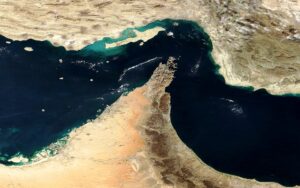
One of the main disputed issues between Ankara and the European Union is the gas exploration operations that Turkey unilaterally carries out in disputed areas with Greece and Cyprus in the eastern Mediterranean.
Brussels has threatened to impose sanctions if Ankara continues this approach, and the issue will be at the core of a European summit to be held on December 10 and 11.
It seems that the threat of European sanctions may push the Turkish economy into a precipice, and the defeat of US President Donald Trump, with whom Erdogan had a personal relationship, in the presidential elections, convinced the Turkish president to lower his tone in recent weeks.
To show his adherence to Europe, he promised in early November to undertake judicial reforms to “strengthen the rule of law”, seeking to reassure investors.
However, Democrat Joe Biden’s victory in the US presidential election may pose new problems for Ankara, which is subject to US sanctions for its purchase of Russian S-400 missile systems.
Likewise, Greece and Egypt hope Washington will throw their weight in the eastern Mediterranean to put an end to Turkish activities that did not seem to worry Trump.
And Anthony Skinner of the consulting office “Verisk Mayblecroft” said that “Turkish-American relations may decline to a new minimum in 2021”.
Sinam Adar, of the Center for Applied Studies on Turkey in Berlin, explained that after the 2016 coup attempt, Erdogan had the impression that “Western partners have abandoned” Ankara.
She added that the Turkish president felt that “he can no longer trust Europe and the United States to enhance Turkey’s security,” which prompted him to consider his unilateral initiatives.
In recent years, Turkey has spent hundreds of millions of euros to develop its military capabilities, which, in Sinam’s opinion, managed “a factor that enabled his increasing hostility”.
But this approach paid a high price.
The Turkish lira has lost about a quarter of its value vis-à-vis the dollar since the beginning of the year, and diplomatic tension has exacerbated its deterioration, especially with France a few months ago.
Ulgen said that “the increasing geopolitical risks are putting pressure on the lira” and has “an impact on the movement of direct investments coming from abroad”.
These investments, especially from Europe, which contribute specially to creating jobs, have decreased from 16 billion euros in 2007 to seven billion in 2019, according to United Nations figures.
Last year, the German car company, Volkswagen, suspended the decision to establish a factory in Turkey, expressing its “concern” about the military attack launched by Ankara on Kurdish fighters in northeastern Syria.
Ultimately, the German giant finally abandoned its project in July, officially citing the outbreak of the Covid-19 epidemic.