China competes with the International Monetary Fund in offering easy super-secret debts
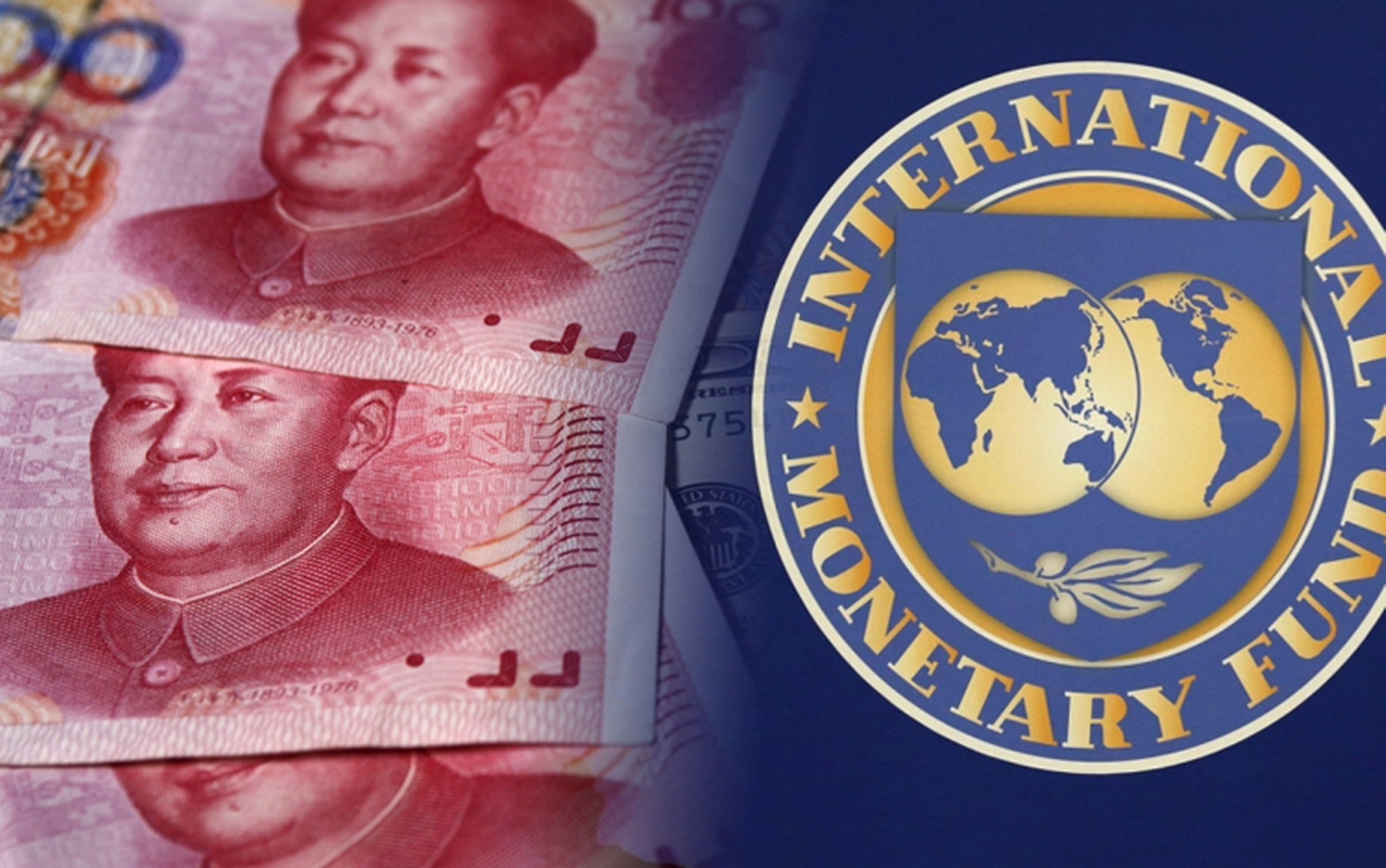
The Financial Times, in a newly published report, described China as a giant competitor to the International Monetary Fund, through its urgent loans amounting to $30 billion.
The Financial Times added in its report that “China has distributed billions of dollars in secret emergency loans to countries at risk of financial crises in recent years, which makes Beijing a formidable competitor to the Western-led International Monetary Fund”.
The financial bailouts are a major focus of the giant infrastructure loans that China has expanded aggressively in nearly a decade, as part of its $838 billion Belt and Road Initiative, a program that has overtaken the World Bank as the world’s largest business financier.
The report revealed some of those countries, explaining: “3 of the largest countries that obtain loans from China are Pakistan, Sri Lanka and Argentina, which together obtained $32.83 billion, since 2017, according to data released by AidData Research Center at the University of William and Mary in United State.
And report added: “There are other countries that receive rescue loans from institutions affiliated with the Chinese government, including Venezuela, Kenya, Ecuador, Angola, Laos, Suriname, Belarus, Egypt, Mongolia and Ukraine”.
Such funds help those countries to meet the repayment of their foreign debts and continue to import, and avoid the balance of payments crisis, which could develop into full-blown storms, such as the Asian crisis in 1997 and the South American crisis in the eighties.
The paper made the point: “Unlike the International Monetary Fund, which releases details of loans and debt restructuring programs for debtor countries, China operates in near-total secrecy.
Chinese financial institutions publish very little detail about loans, and don’t link these debts.
Restructuring or economic reforms, according to analysts.
In this regard, Bradley Parks, executive director of the AidData Center, says that China “tried to rescue these countries by providing urgent loans without asking debtor countries for economic policy measures or debt relief by coordinating a restructuring process with creditor’s principals”.
The Financial Times pointed out that the terms of these loans are far from concessions, and in most cases they are with a margin of about 3% more than the standard financing costs, and in addition to these loans, the Chinese Central Bank has concluded a currency exchange agreement with its Pakistani counterpart, allowing Islamabad to withdraw funds when needed.
Commentators said that Chinese lending operations threaten to prolong and exacerbate the debt crisis, and veteran expert at Oxford Economics, Gabriel Stern, believes that what China is doing is a major obstacle to resolving the crises, he says.
Many countries showed a positive view of Chinese money, and thought that they were almost free loans, but these loans were very costly economically and may work to handcuff these countries because of their connection to the Chinese economy and thus mortgage their future to Chinese companies.
Beijing also sometimes sends its own labor to compete for local jobs, and as a result, “these countries have become mired in the Chinese debt trap”.
“We don’t want a new version of colonialism,” former Malaysian Prime Minister Muhammad Mahathir said in the Chinese capital, Beijing, to his Chinese host, Li Keqiang, several years ago.
Pouring a lot of money, but in the inability of Kuala Lumpur to pay it.
While Andre Duvenhig, a professor at Northwest University in South Africa, stresses that “in the end, China will ask countries in default of other forms of repayment, such as ports and land”.
He believed that in the long run, China might begin to influence the economic and political decisions of certain African countries.
In turn, “China does not come to Africa for its development,” said Shadrack Goto, a professor at the University of South Africa, noting that the continent is weak-minded “when it thinks that other countries come to it to benefit it”.
He believed that China has its own strategy in dealing with Africa, so the continent should be careful when signing agreements with it.
“We’ve to work on our own interests to see how we can benefit,” he added.
According to the American research institute (Center for Global Development), the “Belt and Road” initiative, which some describe as the Chinese dream, significantly increases the risk of destabilizing the situation of eight heavily indebted countries, namely Mongolia, Laos, Maldives, Montenegro, Pakistan, Djibouti, Tajikistan and Kyrgyzstan.