China: A big jump in foreign exchange reserves
Official authorities revealed, Sunday, that China’s foreign exchange reserves rose more than expected last July.
China has been able to accumulate these huge reserves thanks to a large current account surplus.
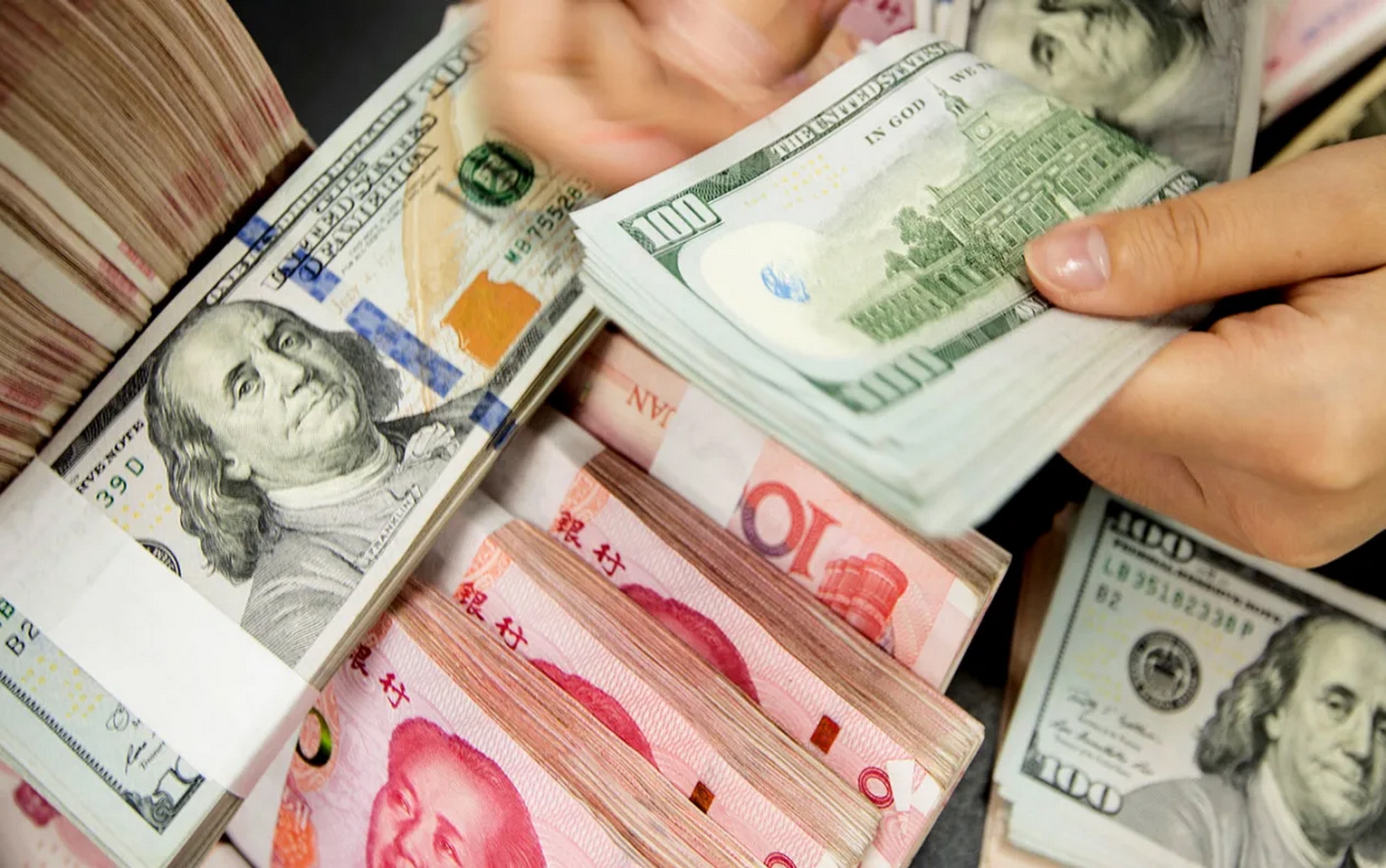
China’s foreign exchange stock, the world’s largest, rose by $32.8 billion to $3.104 trillion last month, compared to $3.071 trillion in June.
In parallel, the yuan fell 0.64 percent against the dollar last month, while the dollar rose 1.07 percent against a basket of other major currencies.
The value of China’s gold reserves fell to 109.84 billion dollars at the end of July from 113.82 billion dollars at the end of June.
This confirms that the increase in foreign exchange stocks was mostly due to dollar inflows.
It is mentioned that the cash reserve basket of countries may include different currencies and even gold, but it is often composed mainly of the US dollar, which controls more than 50% of the volume of cash reserves around the world.
China’s economy was on the verge of contraction in the second quarter amid widespread shutdowns, but top leaders recently indicated that a strict zero-total coronavirus policy will remain a top priority.
China’s economy grew at the slowest pace in two years, at 0.4 percent year on year in the second quarter, due to health restrictions and the real estate crisis that severely hampered activity.
All of this has happened since 2020, when China followed the “zero Covid” policy, which is to avoid new infections as much as possible thanks to impregnable isolation measures, extensive examinations, imposing quarantine on those who are found to be infected and monitoring their movements.
These measures, due to which important cities and factories were closed, constituted a severe blow to the economy, forcing a large number of companies, factories and companies to stop their operations.
It also put pressure on supply chains.
In any case, the hundreds of billions of dollars flowing into China annually, provide important protection against any future shocks in the global economy, and give giant internal companies immunity from cracking due to large debt problems, led by the “Evergrand” real estate group.
“The dollars mean that whatever economic challenges China faces in the future, there is little risk in terms of the balance of payments or the external debt problem,” says Alvin Tan, head of foreign exchange strategy in Asia.
The increasing foreign currency holdings are mainly owned by the private sector in China, not the public sector, said Beqi Liu, head of China macroeconomic strategy at Standard Chartered Bank, adding that the gradual increase in foreign currency assets by Chinese private sector entities It will help reduce market volatility.
An analysis by Stephen Jane, who runs Horizon SLG Capital, a London-based hedge fund and advisory firm, shows that China’s trade surplus runs close to $600 billion a year.
“The epidemic has caused huge distortions in the world, one of which is the very large trade surplus in China,” Jin wrote in a note, according to Bloomberg, adding that “long-term Covid” should mean that such a filled trade surplus must It takes time to fade.