Calcallist: Targeting Haifa energy facilities exposes the fragility of Israel’s supply
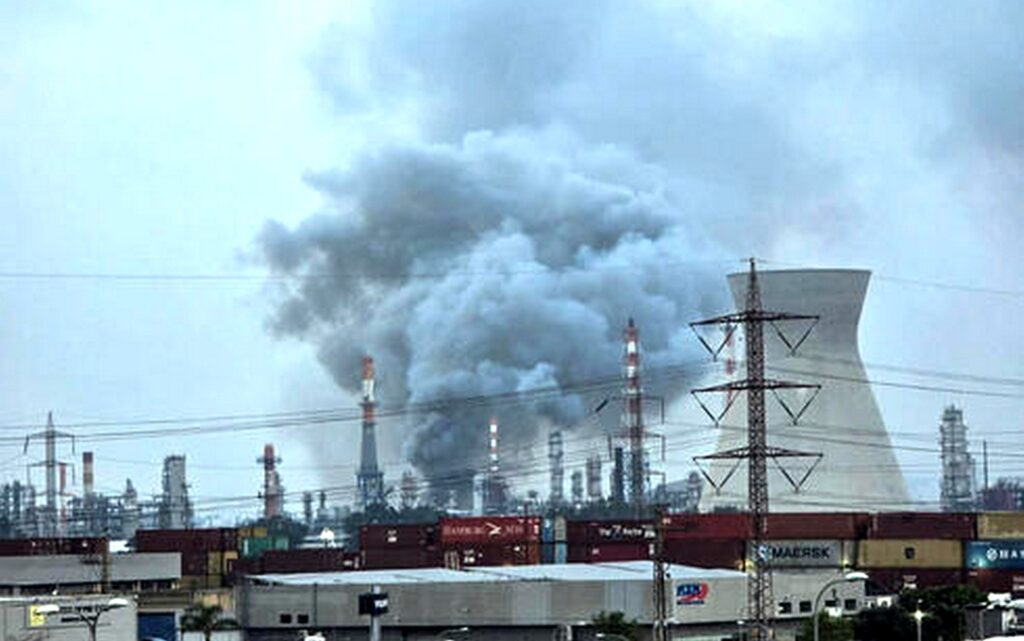
The repercussions of the war on Israel’s energy infrastructure are widening, with vital facilities in Haifa Bay being damaged, bringing to the fore the dangers of geographic concentration and the Israeli economy’s dependence on a limited number of facilities, at a time when pressure on the energy system is mounting.
The Israeli Economics newspaper Calcallist reported that the attack on Bazan’s facilities in Haifa exposed fundamental weaknesses in the energy sector, foremost of which is the high reliance on a single facility and natural gas flows as a major source of operation.
Fragments from an intercepted Iranian missile caused damage to sites inside the complex, including electrical infrastructure and operational facilities, while the gas transmission infrastructure, which is vital to the operation of production units, was also damaged.
Its estimated that the disruption of gas flow could push the facility to rely on liquefied petroleum gas (LPG), a more expensive alternative, opening the door to the risk of supply shortages for the industry and consumers.
The seriousness of the Israeli strike is highlighted by the fact that Bazan supplies about 45% of the fuel basket in the Israeli market, including diesel, gasoline, and jet fuel, making any disruption in its work have a direct impact on energy security.
“Determining the full damage and restarting facilities is a complex and uncertain process,” the Israeli newspaper quoted Bazan as saying, noting that it’s difficult to quickly restore full operation.
The report pointed out that in a previous war in 2025, the complex was subjected to Iranian missile attacks that led to the death of three employees and the destruction of a vital facility, with damage estimated at the time at about $200 million, reflecting the repeated targeting of a site described as one of the most sensitive sites in Israel.
In a related context, Calcalist pointed out that the main gas sites such as Karish and Leviathan have been closed since the beginning of the war, in a precautionary step to reduce the risks, and this resulted in daily losses estimated at about 2.3 million shekels (about $740,000) for the Karish platform and 5.2 million shekels ($1.7 million) for the Leviathan site.
The interruption of gas supplies has also increased reliance on coal, at an additional cost of about 2 million shekels per day (about $640,000).
Its estimated that the continuation of the crisis will lead to a rise in the prices of electricity, and then water, in light of the shift of the energy mix away from natural gas, which constituted between 70% and 75% of total Israeli consumption before the start of the war.
Energy sources said the continued fighting would increase reliance on higher-cost alternative fuels, putting pressure on production costs and increasing the cost of living.
In light of these developments, calls for the dismantling of the industrial complex in Haifa Bay have returned, with Calcalist quoting an environmental official as saying that the continuation of the current situation is like Russian roulette (a deadly and dangerous game of chance), warning that any further blow could be more serious.
On the other hand, a strategic dilemma is emerging for Israeli decision-makers, between reducing security risks by dismantling the existing structure and maintaining a central source that provides a large portion of its fuel needs.