BRICS the Growing power that outperforms the G7!

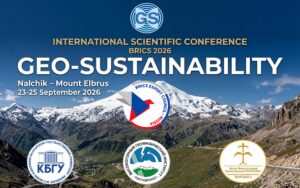
The Russian city of Kazan is hosting one of the most prominent international events of the year, the BRICS summit, with the theme of the summit being Strengthening Multilateralism for More Just Global Development and Security.
The 16th summit will conclude with a review of the results of Russia’s presidency of the group, which now includes 10 countries, including three Arab countries.
BRICS, which was founded in 2006, began with Russia, Brazil, India and China, and then South Africa joined in 2011.
As of 2024, five new countries have joined: Egypt, the UAE, Saudi Arabia, Iran and Ethiopia, increasing the group’s weight on the international stage.
Here are some indicators that highlight the economic strength of BRICS compared to the Group of Seven (G7):
In terms of area – BRICS countries cover about 33.9% of the world’s total land area, compared to 16.1% for the G7 countries.
The Population of BRICS countries make up about 45.2% of the world’s population, compared to only 9.7% for the G7.
As for the economy, GDP wise according to purchasing power parity, BRICS contributes about 36.7% of the global economy, compared to 29.6% for the G7.
Oil reserves of BRICS countries hold 45.8% of the world’s oil reserves, while the G7 only holds 3.9%.
The exports of BRICS members in total accounted for 24.9% of total global exports in 2022, compared to 27.9% for the G7.
In terms of strategic food goods:
Wheat production: In 2022, BRICS countries produced about 44.7% of the world’s total wheat crop, while the G7 accounted for about 19.7%.
Rice production: BRICS rice production accounted for about 54.8% of global production in 2022, compared to 2.4% for the G7.
And thus, these figures reflect the rapid growth of BRICS’ influence in the global economy, making them a strong competitor to the G7.