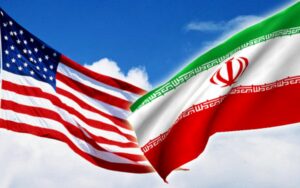
Bloomberg: Is Germany reconsidering its stance on the US and China after Trump’s tariffs?
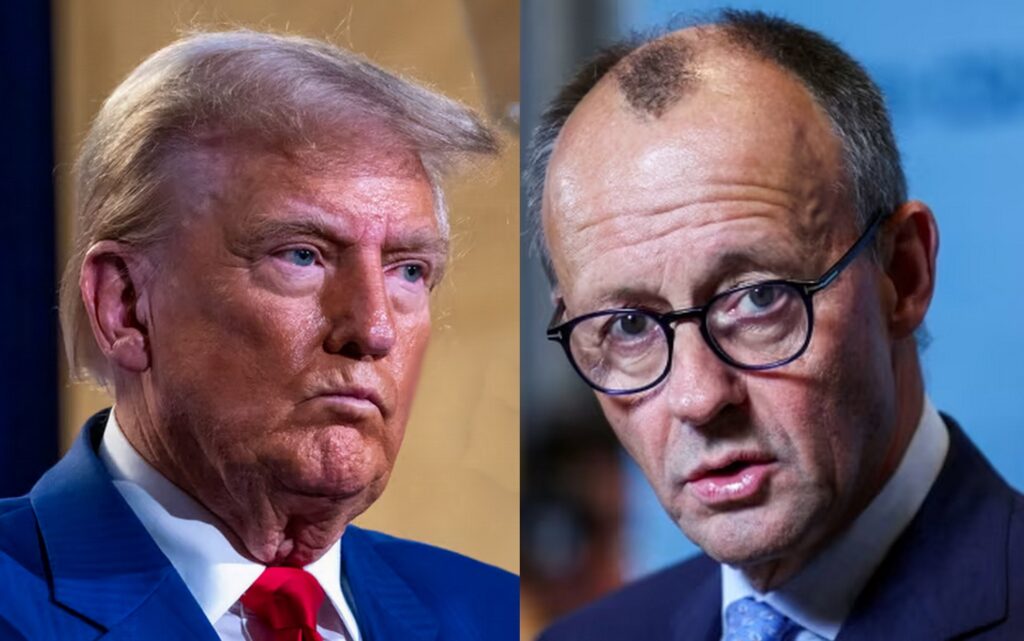
Germany’s incoming chancellor, Friedrich Merz is under pressure to adopt a new policy stance before he formally assumes office.
After Donald Trump imposed sweeping tariffs, including a 20% duty on imports from Germany and other EU countries, Merz’s previous confidence in the United States is under threat, and achieving a rapid economic recovery is difficult amid trade turmoil.
With coalition talks between the conservative CDU-led bloc and the center-left Social Democrats (SPD) stalling over tax policy and immigration, trade has been added to the negotiating agenda, leaving Merz with two options: either reconsidering his long-standing opposition to closer ties with China or developing other markets for Germany’s export-dependent economy.
Uncertainty grips the future of Europe’s largest economy, increasing pressure on Merz, especially after he lost the support of some conservative voters due to his decision to abandon German austerity policy and opt for a massive spending package that includes hundreds of billions of euros in debt to finance defense and infrastructure.
Merz who is the leader of the Christian Democratic Union (CDU) has remained conspicuously silent since the US tariffs were announced, but his potential government partners have made clear that relying on the White House’s goodwill is no longer an option.
“Trump has launched a trade war against the rest of the world,” Niels Schmidt, foreign policy spokesman for the Social Democratic Party, told Bloomberg.
He called for retaliatory tariffs against the United States, diversification of trade relations, and coordination with Canada and Mexico, as well as Asian partners.
The plan was supposed to be different, as Merz had repeatedly stated his intention for Germany under his leadership to take a tougher stance on China while strengthening transatlantic ties, but Trump’s tariff attacks have undermined Merz’s planned shift, raising questions about where Germany can sell its exports.
From his part, Robert Habeck, the outgoing economy minister from the Green Party, suggested that Merz wasn’t up to the task, calling on the next government to abandon the “assumptions of the 1990s”.
“We can no longer rely on the kindness of others… Full acceptance of reality is the new model the next government must follow,” Habeck said in Berlin on Thursday.
As Germany faces unprecedented uncertainty over its trade relations with the United States, Merz published a post about the late Chancellor Helmut Kohl, who would have celebrated his 95th birthday last Thursday.
CDU spokespeople declined to comment on Meretz’s China policy, saying it was currently focused on coalition talks.
Meanwhile, the ongoing Chancellor Olaf Scholz wrote on X, “For me, the US president’s decision on tariffs is fundamentally wrong… It’s a lose-lose situation for both sides—for us and the US… Germany and Europe support free trade, and we will defend our interests”.
Previously, Merz’s preference for the United States and his distrust of China were clear.
In a speech before the February 23 election, he warned business leaders against over-involvement with the Asian power.
He told the audience, including Chinese Ambassador Ding Hongbo, “The decision to invest in China carries significant risks… If you decide to take on these risks, do so in a way that doesn’t put the entire company at risk if you have to write off the investment within a year.”
People who attended the event and requested anonymity said Deng appeared upset and quickly left the venue.
The Chinese embassy did not respond to a request for comment; At the time, the Foreign Ministry in Beijing called on Germany to consider relations between the two countries objectively and rationally.
A few weeks later, Merz reiterated his preference for working with the United States, ignoring statements by Trump and his administration that questioned the importance of the transatlantic alliance.
“My conviction has been strengthened in recent weeks and months that the US market, including the South American market, is definitely a safe base for us,” the CDU leader said at a meeting hosted by a lobby group for the German auto industry in late January.
Under Scholz, Germany has sought to maintain positive relations with China, advocating for risk reduction rather than complete disengagement.
Although China fell behind the United States to become Germany’s second-largest trading partner last year, this decline wasn’t due to government policies from Berlin, but rather to declining demand from the world’s second-largest economy.
The tougher stance is reflected in a document that forms the basis of current coalition talks on Germany’s future foreign policy, which calls for reducing “dependencies on unilateral actors”.
“China has become a systemic adversary, and our desire for partnerships and fair competition is not met with equal support from the Chinese side,” the conservatives, led by the Christian Democrats (CDU) and the Social Democrats (SPD), said in a policy paper seen by Bloomberg. “However, we continue to seek cooperation in our interests”.
A separate document issued by the Christian Democratic Party’s parliamentary bloc highlighted the potential for disagreements, adopting a more hawkish stance, proposing scrutiny of foreign investments, localizing production and supply chains in Europe, and diversifying trade relations.
The overall message is clear: engagement with China will continue, but on a new, more cautious and independent basis.
Behind the scenes, Merz sees China as an existential threat to Germany’s security and intends to downgrade ties with it, signaling a potential radical shift in trade ties, which amounted to some €246 billion ($271 billion) in exports and imports last year.
According to data from the German central bank, there is also €107 billion in cumulative investment in manufacturing operations within China, by companies such as Volkswagen and BASF SE, along with hundreds of smaller industrial companies.
Merz’s hardline stance on China stems in part from his time outside political life.
At a recent closed-door dinner, he said that over more than a decade working as a corporate lawyer, he had developed a distrust of his Chinese partners, according to one attendee who requested anonymity due to the confidentiality of the discussion.
The prospective German chancellor initially hoped that his tough stance on China would strengthen his relationship with the Trump administration, according to a person familiar with Merz’s orientation.
The conservative politician has also repeatedly expressed his willingness to strike a political deal with the US president.
Now, Merz finds himself facing the challenge of leading Germany in a geopolitical environment that is far from his convictions and is putting pressure on the country.
Alexander De Brindt of the Christian Social Union (CSU), the sister party of the Christian Democratic Union (CDU) in Bavaria, was one of the leading conservatives who publicly commented on Trump’s tariff attack.
Dobrindt told reporters in Berlin that this attack would put pressure on trade relations around the world, adding that stable growth is a cornerstone for Germany.
He concluded, “Then we can also withstand the threats posed by the United States… but this task has now become greater than before”.