BBC: The military college that trained opposition forces before Assad’s overthrow
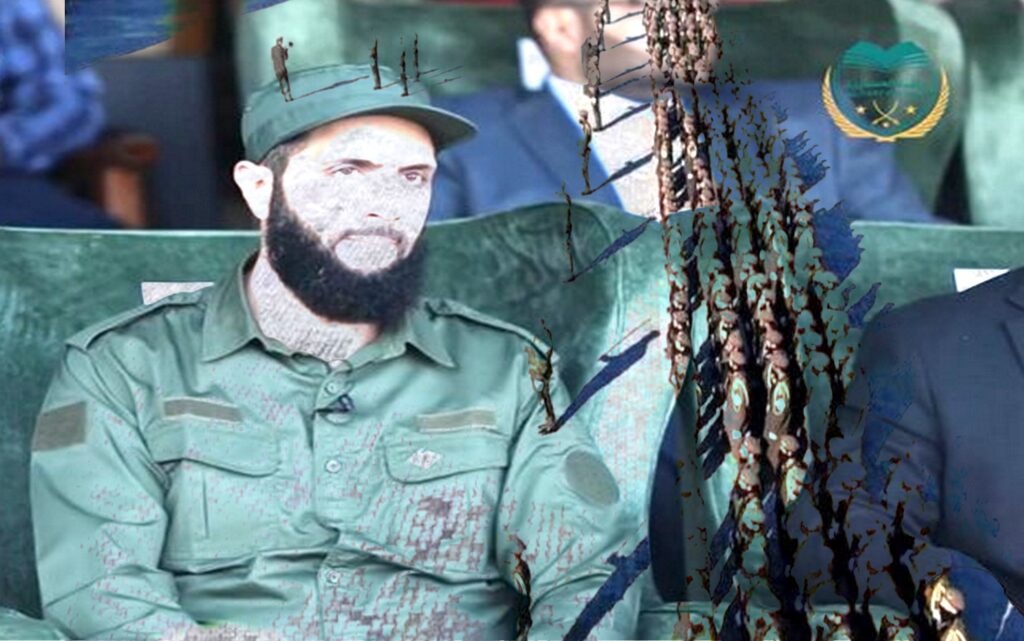
The BBC presented a report where it analyzed Social media posts and satellite images of members of the Syrian opposition forces underwent military training at an opposition-affiliated college in northern Syria during the three years leading up to the overthrow of President Bashar al Assad.
Assad’s rule collapsed on December 8 of last year following a lightning military campaign led by Hay’at Tahrir al Sham, whose leader, Ahmad al Sharaa, currently serves as president of Syria’s transitional period.
Videos posted on Telegram showed Ahmad al Sharaa, formerly known as Abu Muhammad al Julani, delivering a speech at the military academy’s first graduation ceremony in 2022.
In his speech, he emphasized that the college was an essential element of the organization and discipline that the opposition needed.
Although the college contributed to the training and organization of opposition factions, experts who spoke to the BBC said its political symbolism outweighed its military significance.
The academy, known as the “Military College,” was established in 2021 by the “Salvation Government,” supported by Hay’at Tahrir al Sham, and is headquartered in Idlib Governorate in the north of the country.
Colonel Ahmed Abdullah, head of the academy’s training department, told the BBC that the academy played a prominent role in unifying opposition factions in the years leading up to Assad’s overthrow.
The new administration in Damascus, led by Ahmad al Sharaa, has refused to reveal the exact location of the academy, however, the BBC was able to identify its training sites by analyzing social media videos and satellite imagery.
The academy’s celebration grounds, where the graduation ceremony was held, are located 18 kilometers northwest of Idlib city center.
Colonel Abdullah, a former defector from the Syrian army, said that more than 1,300 fighters from nine opposition factions completed their training there, which included both theoretical and practical aspects.
He added that the academy was essential in preparing fighters to operate under a unified command and within joint operations rooms.
Satellite images reveal that the academy’s parade ground was covered with trees and plants in 2020.
Ground leveling and road construction work began between fall 2021 and summer 2022.
By late 2022, the ground had been leveled, and construction work had begun on and around the site.
Videos and photos posted by the Military Academy on Telegram and YouTube since 2021 show dozens of recruits participating in field military training and classroom lectures.
The BBC was able to locate a training site in Al-Basel Forest, 5.5 km west of Idlib city center.
Photos from 2022 show men performing physical exercises and shooting at a shooting range.
The BBC compared the tree patterns in the images with satellite images from Google and Bing to confirm the location.
Earlier that year, Abu Muhammad al Julani, as the leader of Hay’at Tahrir al Sham, appeared in a video delivering a speech at the college’s first graduation ceremony for what he called army officers.
He said at the time, “Victory belongs to those who are most disciplined,” describing the graduates as the nucleus of an army that would continue to liberate Syria.
The Academy’s President, Colonel Abdul Rahman al Sheikh, echoed these messages during the same event.
Hay’at Tahrir al Sham appears to have intensified its military training in the weeks leading up to the campaign to oust Assad in December.
In October, the organization’s media outlets began highlighting joint training exercises and graduation ceremonies, in which affiliated factions, most notably Ahrar al Sham, participated, along with small units comprising foreign fighters.
Videos and photos showed live ammunition training exercises, including mock buildings bearing Syrian regime flags, and exercises to evacuate wounded from the battlefield.
The BBC has tracked a series of training videos posted since mid-November on pro-ISIS social media accounts.
A series of videos showed fighters wearing night-fighting gear and performing exercises using sniper rifles equipped with silencers.
Hay’at Tahrir al Sham has roots in al Qaeda and has controlled the last opposition-held areas in northwestern Syria since 2017, ruling through what is known as the “Syrian Salvation Government”.
According to Aaron Y. Zelin, a fellow at the Washington Institute for Near East Policy, as he told the BBC, “The military college was part of HTS’s efforts to professionalize and organize its work”.
Zelin, author of “The Age of Political Jihad: A Study of Hay’at Tahrir al Sham,” added that the college “helped consolidate various armed groups under one umbrella”.
For his part, Jerome Drevon, a senior analyst at the International Crisis Group, who met with officials from the organization’s military academy as part of previous field research, said, “The opposition didn’t need to form a full-fledged conventional army… It simply needed to be more professional than the regime, and that was enough”.
He explained that training at the college was based on specialization, with fighters being trained in specific areas such as artillery or drones, rather than being prepared as general fighters.
Drevon noted that Hay’at Tahrir al Sham hasn’t relied on permanent military camps since 2020, due to the constant threat of Russian airstrikes and aerial surveillance.
He said that training was organized in various locations, changing depending on the circumstances.
However, Drevon said the military academy wasn’t the decisive factor in the success of the opposition campaign to oust Assad.
He added, “Hay’at Tahrir al Sham was able to establish a civilian local government in northwestern Syria and presented a real alternative, which resonated with both Syrians and the international community”.
Syrian researcher, Orwa Ajoub, believes that the college’s political value outweighed its military role.
“It was primarily a political move, to demonstrate the existence of an organized military institution”.
He added, “After al Shara dismantled, weakened, or absorbed most of the rival factions, he wanted to appear as the primary military decision-maker”.
Ajoub said the scale and timing of the campaign that toppled Assad were still astonishing.