BBC: Germany has decided to abandon its history and has begun preparing for the next war

A rocket launcher flies across a field toward the firing line, leaving a cloud of brown dust in the air… After the launcher is in position, a soldier counts down from five to one until the word “Launch!”
Then a rocket soars into the sky.
Military training continues, with explosions and noise emanating from it, causing the residents of the small, nearby town of Munster to disappear, barely noticeable.
However, life here will become more hectic, as the German army’s training increases.
The German military, the Bundeswehr, recently received the green light to massively increase investments after parliament voted to exempt defense spending from strict debt rules.
The German military’s top general told the BBC that they urgently need this cash boost because he believes “Russian aggression” won’t stop in Ukraine.
“Russia threatens us, Putin threatens us, and we must do whatever is necessary to deter that threat,” Defense Chief General Karsten Brouwer told the BBC.
General Brewer warns that NATO must prepare for a possible attack (from Russia) within the next four years.
The German defense chief added bluntly, “The situation isn’t about how much time I need (to prepare for war), but rather how much time Putin gives us to prepare… The sooner we prepare (for war), the better”.
Russia’s full-scale invasion of Ukraine has radically changed thinking in Germany.
For decades, people here have been raised to reject military force, always remembering Germany’s former role as an aggressor in Europe.
“We started two world wars,” explains Markus Ziener, of the German Marshall Fund in Berlin.
“Even though 80 years have passed since the end of World War II, the idea that Germans should stay out of conflicts remains deeply rooted in the people”.
Even now, some remain wary of any move that might represent a militaristic tendency, and the German armed forces suffer from chronic underfunding.
“There are voices warning: Are we really on the right track? Is our perception of the threat correct?” Ziener added.
But when it comes to Russia, Germany takes a special approach.
When countries like Poland and the Baltic states warned against getting too close to Moscow and increased their defense spending, Berlin took a different path under former Chancellor Angela Merkel, emphasizing the importance of boosting trade.
Germany imagined it could transfer democracy by osmotic pressure to Moscow, but Russia seized the money and invaded Ukraine anyway.
This shocked Germany and prompted Chancellor Olaf Scholz, in February 2022, to announce a national shift in priorities, known as the “Zeitenwende” speech.
In his speech, Sholto pledged a massive $108 billion to bolster the military’s capabilities and curb “warmongers like Putin”.
However, German Defense Chief General Breuer says this amount “wasn’t enough”.
“We’ve narrowed the gap a little, but the situation is very bad,” he added.
He pointed out, however, Russia’s massive spending on weapons, equipment, and stockpiles, as well as on the front lines in Ukraine.
It also highlights Russia’s hybrid warfare against German military sites: through cyberattacks, sabotage, and the launching of unidentified drones.
In addition to Vladimir Putin’s aggressive rhetoric, General Brewer sees a “very dangerous mix”.
He explains that Russia, unlike the Western world, “doesn’t think in a closed-door way… It’s not a matter of peace and war, but rather an ongoing process: we start with hybrid warfare, then escalate, then retreat,” stressing, “This is what makes me believe we face a real threat… Germany must move quickly”.
The defense minister’s scathing assessment of the current state of German forces is consistent with a recent report by the German parliament, which concluded that the German military has too little of everything.
Armed Forces Commissioner Eva Högl, author of the report, revealed severe shortages of ammunition and soldiers, including dilapidated barracks.
The budget for renovations alone was estimated at approximately €67 billion ($72 billion).
General Brewer says that raising the debt ceiling, and allowing the military to borrow, theoretically without a specific limit, would give it access to a stable funding line to begin addressing this situation.
The hasty, historic step taken by Friedrich Merz, the expected successor to Chancellor Scholz, raised eyebrows among some.
He submitted a proposal to raise the debt ceiling for the military to parliament just before it was dissolved following the February elections.
Perhaps he did this because the new parliament, with its anti-military left and pro-Russian far right, was less inclined to support such a move.
But the transformation that Germany began in 2022 gained new momentum this year.
A recent YouGov poll revealed that 79% of Germans still consider Vladimir Putin a very or somewhat threat to European peace and security, but now 74% of Germans see the same thing about US President Donald Trump.
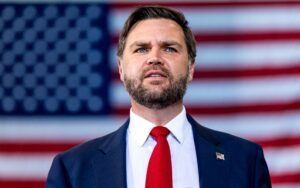
The latest poll results came after a speech delivered by Trump’s vice president, J.D. Vance, at the Munich conference, in which he attacked Europe and its values.
“That moment was a clear signal that something had fundamentally changed in the United States,” says Markus Ziener.
He added, “We don’t know where the United States is headed, but we now know that, as far as our national security is concerned, the possibility of relying on 100 percent American protection is now over”.
In Berlin, the traditional caution of Germans toward all thing’s military seems to be fading fast.
Charlotte Kreft, 18, says her views on pacifism have “changed”.
Charlotte explains why, “For a long time, we thought the only way to atone for the atrocities we committed in World War II was to ensure they would never happen again, and we thought we needed to disarm”.
“But now we are in a situation where we must fight for our values, our democracy, and our freedom… We must adapt”.
Ludwig Stein agrees, saying, “Many Germans still feel strange about the large investments in our military… but I think that given what has happened in the past few years, there is no real other option”.
Sophie, a young mother, believes that investing in defense has become “essential in today’s world”.
But Germany needs soldiers as much as it needs tanks, but it’s not very enthusiastic about recruiting its son into the army.
The German army has only one permanent reception center for soldiers, a small unit located between a pharmacy and a shoe store next to Berlin’s Friedrichstrasse station.
The center displays mannequins in camouflage military clothing and slogans like “Cool and Sexy,” aiming to attract men and women to military service, yet it receives only a handful of callers per day.
So far, Germany has effectively failed to achieve its goal of increasing its troop strength by 20,000, to 203,000, and reducing the average age to less than 34.
But General Brewer’s ambitions are much greater; He told us that Germany needed an additional 100,000 troops to effectively defend itself and NATO’s eastern flank, bringing the total to 460,000 troops, including reserves.
That’s why the general insists that a return to compulsory military service is very necessary.
“We won’t reach this number of soldiers (100,000 soldiers) without one form or another of compulsory conscription,” the German defense chief said.
He added, “We don’t have to decide now what model we’ll get them in… For me, the only thing that matters is that we send the soldiers”.
The discussion on this topic has already begun; General Breuer clearly positions himself as the leader of the current efforts to advance and accelerate Germany’s turn.
With his easygoing and engaging style, Breuer likes to visit German municipalities and regions and pose the question to the audience: Are you ready for war?
One day, a woman accused him of intimidating her… He recalls his response, “I told her, ‘It’s not me who’s intimidating you, it’s the other party!’” referring to Vladimir Putin.
The general defends his position, warning that the double alarm bells of the Russian threat and the United States’ move toward isolationism are now ringing loudly in Germany and cannot be ignored.
He concludes by saying, “Now it’s clear to each one of us that we must change”.