Baghdad seeks to end semi-independence of Kurdistan region
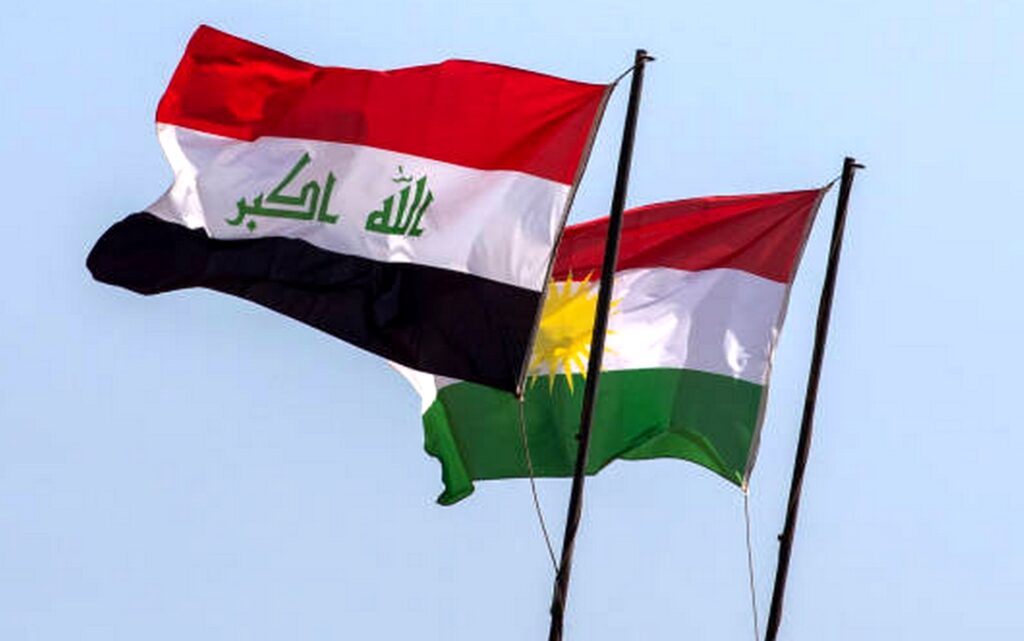
Baghdad is actively working to end the semi-autonomous status of the Kurdistan Region of Iraq, and aims to fully integrate it through legal and economic measures, including a new unified oil law, according to Simon Watkins on Oil Price website.
Watkins points out that external powers such as Iran, Türkiye, Russia and China are supporting these efforts, seeking to reduce Western influence in the region and control its resources.
Russia and China have increased their investments in the Iraqi oil sector, while the lack of Western support has weakened Kurdistan’s ability to seek independence.
He added that the parliamentary elections held on the 20th of last month bear witness to the courage of the Iraqi Kurdish people, as many of them participated in the vote, and at the same time bear witness to the continued failure of the region’s politicians on many levels, as the election results won’t make a difference in what Baghdad, Tehran and Ankara are planning for the people of the region.
Watkins explained that for oil markets, the only sustainable solution to ending the ban imposed since March 25, 2023 on independent oil sales from Iraqi Kurdistan to Türkiye would be to end any meaningful process to achieve the region’s independence.
Simon Watkins recalled that after the results of the referendum in 2017, elements of the Iranian military forces entered the Kurdistan region, including oil-rich areas.
High-ranking officials from the Iranian Revolutionary Guards made it clear to a number of Kurdish politicians that continuing to seek independence wouldn’t be in their interest.
Meanwhile, Turkish President Recep Tayyip Erdogan threatened to cut off the Kirkuk-Ceyhan pipeline that carries oil from Kurdistan to the Turkish port.
At the time, it was producing about 600,000 barrels of oil per day, the mainstay of the Iraqi region’s economy.
The Russian intervention in late 2017 had a major impact, as Moscow took effective control of the oil sector in Iraqi Kurdistan.
Despite this control, the historical relationship between Kurdistan and the West has been an obstacle to Russia and China’s plans, as the West, including Britain and the United States, have promised the Kurds full independence at earlier stages.
As China entered 2020 to support Russia, efforts to remove the semi-autonomy of the Kurdistan Region have increased, by reducing revenues from oil sales.
These efforts include making budget payments from Baghdad unreliable, accelerating litigation against foreign oil companies, doing nothing to remove the ban on independent oil sales from Kurdistan to Türkiye, and implementing a unified oil law that runs everything from Baghdad.
Accordingly, Iraqi Prime Minister Mohammed al Sudani stated that the unified oil law will govern oil and gas production in Iraq and Kurdistan, representing strong factors for the unity of Iraq.
Ultimately, whether the new Kurdistan Regional Parliament remains the same or changes, leaders in Baghdad, Tehran, Ankara, Moscow and Beijing see no significance, as they will continue their efforts to eliminate the semi-autonomy of Iraqi Kurdistan.