Ansar al Sunna an organization emerges to threat al Sharaa’s regime
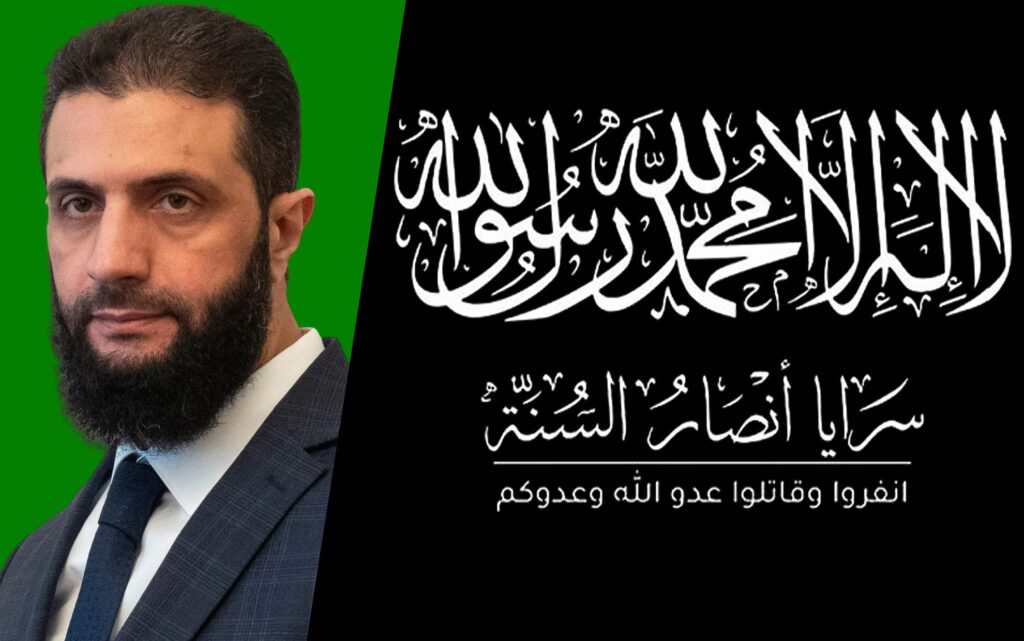
In early February, a group with a Salafi-jihadist ideology began making its public appearance in Syria, taking advantage of the security vacuum and political turmoil that followed the fall of the Assad’s regime.
The group announced itself via a statement on Telegram, beginning with accusations that the new transitional government was corrupt and tolerant of “Nusayris and Rafidis,” referring to Alawites and Shiites.
This is an explicit sectarian discourse that closely resembles ISIS’s rhetoric.
In the statement, the group threatened to launch “lone wolf attacks” and described itself as a “decentralized force” capable of “killing, displacing, and forcibly displacing” at any time and place.
Although Saraya Ansar al Sunna initially denied any coordination with ISIS, it did not rule out future cooperation, explicitly stating that it would be announced when it occurs.
ISIS has already begun its security operations against the new government.
According to a research conducted by, Aaron Zelin, a researcher at the Washington Institute for Near East Policy, ISIS carried out its first deadly bombing against the new government since the fall of Assad in the town of Midan al Sharqiya on May 18, killing five people.
This attack coincided with another clash between government forces and an ISIS cell in Aleppo, bringing the group back to the forefront of the armed conflict in Syria.
According to Zelin, “Although ISIS’s presence at the local level is no longer as strong as it once was, indicators show that the threat persists to a degree that cannot be ignored”.
Hence, the emergence of Saraya Ansar al Sunna, with its ISIS-inspired ideology, may be linked to the return of ISIS to the scene.
This poses a serious challenge to the new Syrian government and President Ahmed al Sharaa, who has declared his commitment to expelling foreign terrorist fighters and ending the ISIS threat in Syria.
Because the group’s stated goals and ideology are largely aligned with ISIS, this suggests that the group’s ideology makes it open to receiving foreign fighters similar to ISIS.
However, there is no conclusive evidence to suggest that they currently exist within its ranks.
According to a research paper published by the Institute for the Study of War, the new group refuses to recognize the Syrian state within its existing borders, the transitional government, or any secular laws.
Instead, the group calls for the establishment of an Islamic entity governed by its strict vision of Sharia law.
According to the research, it excommunicates all those who fought ISIS, considering them ‘apostates,’ including its opponents in the Syrian opposition and the interim government.
Ansar al Sunna meanwhile, is working to destabilize the transitional period by targeting supporters of the former regime and igniting sectarian conflicts aimed at thwarting any political settlement.
Its threatening minorities and recruiting members from other Islamist groups that haven’t been integrated into the new government.
According to the Institute for the Study of War, the new extremist group is exploiting the near-total absence of transitional justice to justify extrajudicial killings.
What is striking about the institute’s conclusions is that, although there is no direct evidence to date of Iranian support for Saraya Ansar al Sunna, the group’s activities, according to the institute, “serve Iranian interests in disrupting the transitional phase”.
This is a strategy Iran has previously employed, cooperating with Salafist jihadist groups such as al Qaeda to achieve its goals in conflict zones, particularly when it serves its strategy against US influence.
Saraya Ansar al Sunna may be the new name for the Islamic State in its “Syrian Transitional” phase, or simply a sectarian front to attract extremists seeking revenge and bloodshed.
In either case, this mysterious new movement poses a dual security and political threat that could undermine Ahmed al Sharaa’s efforts to ensure the success of the transitional phase and unify Syria, with all its groups and minorities, under the authority of a central government in Damascus.