Ali Larijani: America doesn’t want a new war with Iran and the use of violence against us will be met with a response
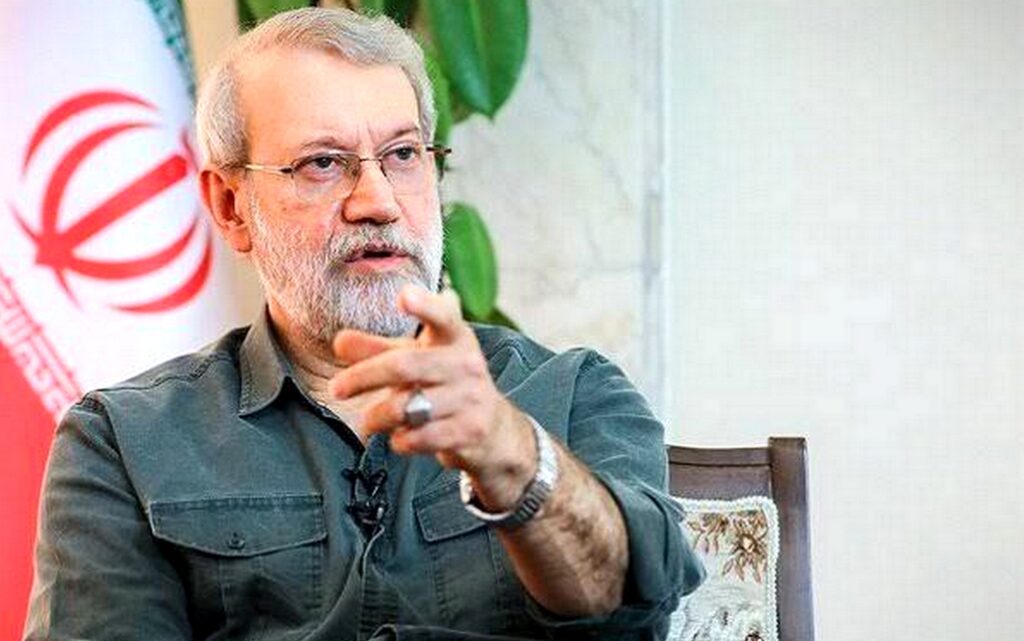
Iran’s Supreme National Security Council (SNSC) Secretary General Ali Larijani said on Sunday that the United States can assess its interests separately from Israel’s during the negotiations.
Larijani explained in statements that the negotiation process between Iran and the United States is still ongoing, and that the countries of the region are making efforts to make the negotiations a success.
He spoke about a message he recently sent to Washington by Omani Foreign Minister Badr bin Hamad bin Hamoud a Busaidi, noting that Iran hasn’t yet received an official US response.
Larijani added, “It’s possible that the United States will evaluate its interests in the negotiations separately from those of Israel, and Iran is open to cooperation in the negotiations”.
Regarding a possible US attack on Iran in the event of the failure of negotiations, Larijani said, “Given its past experiences, I don’t think the other side (the United States) is looking for a new war, but if violence is used against us, it will be met with a response”.
“We’re not warmongers, but we are ready… We’re negotiating with the United States, while Israel is trying to sabotage these negotiations… Today our greatest enemy is Israel”.
Larijani accused Israel of playing an adventurous role in the region and seeking to create pretexts for war.
According to Larijani, “Officials of the countries of the region know that Israel is planning to provoke unrest. Iran is ready to cooperate with Saudi Arabia, Egypt and Türkiye in order to achieve regional stability in the face of Israel”.
On February 6, Oman hosted a new round of nuclear negotiations between Tehran and Washington, after they were suspended following attacks by Israel and the United States on Iran in June 2025.
On Saturday, Axios website revealed intensive preparations to hold a second round of indirect negotiations between the United States and Iran, next Tuesday, in the Swiss city of Geneva.
US President Donald Trump has confirmed that his country wants to reach a deal with Iran, but warned Tehran of the repercussions of failing to do so.
For its part, Tehran believes that Washington and Israel are creating pretexts for intervention and regime change in it, and it vows to respond to any military attack, even if its limited, while insisting on lifting Western economic sanctions in exchange for imposing restrictions on its nuclear program.
In return, the United States demands that Iran completely stop uranium enrichment activities, transfer highly enriched uranium out of the country, and seek to include Tehran’s missile program and support for armed groups in the region on the negotiating table, which Iran rejects, stressing that it will only negotiate on its nuclear issue.