Algeria officially announces its accession to the BRICS Economic Group Bank
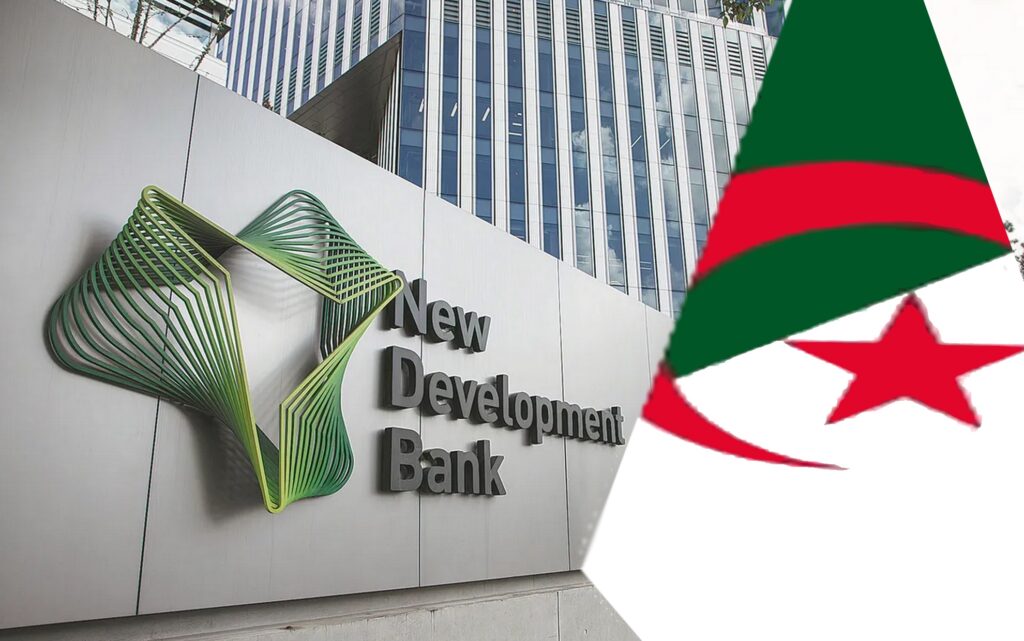
Algeria officially announced on Saturday its accession to the New Development Bank, affiliated with the BRICS economic group.
The Algerian Finance Ministry said in a statement published on Saturday evening that the official approval for the country’s accession to this international financial institution came at the conclusion of the ninth annual meeting of the Board of Governors of the New Development Bank (NDB), which was held earlier on Saturday in Cape Town, the capital of the Western Cape Province, South Africa.
The bank’s president, Dilma Rousseff, confirmed the decision during a press conference held after the end of the Board of Governors’ work.
The Algerian Finance Ministry considered this joining of this important development institution, which is considered the financial arm of the BRICS group, as a major step towards integration into the global financial system, making Algeria the ninth country to join the membership of the New Development Bank.
The Algerian Finance Ministry explained that this accession came as a result of a strict evaluation, and is largely due to the strength of macroeconomic indicators, which reflects the strength of the Algerian economy.
The statement added that the distinguished performance of the Algerian economy in recent years in terms of growth rates, driven by reforms that included several sectors, made Algeria a reliable and effective partner within this institution.
The statement of the Algerian Finance Ministry believes that joining the BRICS Economic Group Bank will open new horizons to support and enhance the country’s economic growth in the medium and long term.
Algerian authorities say the country’s economy has jumped to third place in Africa, overtaking Nigeria, with a gross domestic product of more than $266 billion.
The New Development Bank was established in 2015 by the BRICS economic group, which at the time included Brazil, Russia, India, China and South Africa, and aims to mobilize resources to finance sustainable development projects in emerging markets and developing countries.
Algeria was absent from the list of new members of the BRICS group during the summer of 2023, which are Saudi Arabia, the UAE, Egypt, Iran, Ethiopia, in addition to Argentina, which officially refused to join BRICS at the end of last year.
Over the past year, Algeria has thrown all its political and diplomatic weight behind securing a seat within the BRICS group, coinciding with the organization’s summit held in South Africa at the time.
Algeria still didn’t join the group despite previous statements by the country’s President Abdelmadjid Tebboune, in which he confirmed that China and the rest of the active countries in BRICS, such as Russia, South Africa and Brazil, support Algeria’s accession to this new pole, without highlighting India’s position.
Tebboune didn’t confirm that his country would join the bloc during the summit, indicating that the first step might be to accept it as an observer member.
Observers consider BRICS to be a parallel organization to the US-led G7, which includes France, Britain, Germany, Italy, Canada and Japan.
BRICS members are seeking to strengthen the bloc as part of efforts to establish a new multipolar global economic order.
The BRICS summit is scheduled to be held in Kazan, the capital of the Republic of Tatarstan in the Russian Federation, next October.
BRICS is a bloc founded in 2006, and includes China, Brazil, Russia, India, and South Africa, before Egypt, Ethiopia, Iran, and the Emirates join it in early 2024.
This bloc is economically oriented, and also aims to give developing countries, which resist the dominance of Western countries, especially the United States, more representation in international issues.