After the meeting with Trump how will Ahmed al Sharaa deal with Trump’s five demands?
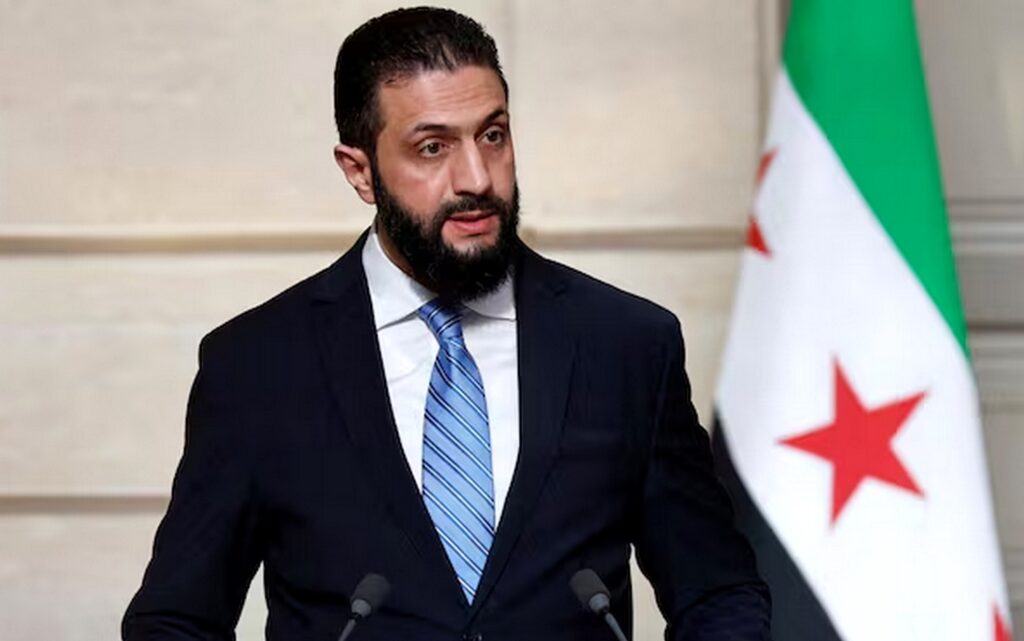
When White House Press Secretary Caroline Levitt published a statement on X outlining five key demands made by US President Donald Trump to his Syrian counterpart, Ahmad al Sharaa, it wasn’t just a passing diplomatic stance.
Rather, it represented a clear roadmap for Syria’s return to the international fold after years of isolation and war.
As for lifting Sanctions, which is a sign to a “Conditional New Beginning” as with support from Saudi Arabia and Türkiye, the decision to lift US sanctions on Syria opened the door to a potential political and economic transformation.
However, this transformation will not be achieved without the implementation of fundamental steps, which require not only intentions but decisive action.
According to Levitt’s statement, the Trump administration has presented President Sharaa with five issues that are essential to the country’s future.
Normalization with Israel through the Abraham Accords
The first point concerns Syria’s accession to the Abraham Accords and normalization of relations with Israel.
If achieved, Damascus would be the first country in the traditional “axis of resistance” to take this radical step.
Despite the sensitivity of this issue domestically, its acceptance among the public has become more likely after the fall of Assad’s regime.
Deportation of Foreign Fighters
The second issue concerns the expulsion of foreign fighters who previously fought with the opposition and who are accused by the international community of committing war crimes.
Although al Sharaa has previously asserted that these fighters “deserve appreciation” for their contribution to the overthrow of the former regime, dealing with them currently poses a major domestic challenge, especially given their association with ideologies classified as terrorist.
Ending the presence of Palestinian armed factions
The third point focuses on the deportation of Palestinian militants, particularly members of Hamas and Islamic Jihad, both designated as terrorist organizations by Washington.
Since last April, the Syrian authorities have already begun taking action against some Islamic Jihad leaders, reflecting initial steps in this direction.
Combating the return of ISIS
The fourth point is Damascus’s commitment to support the United States in preventing the return of the terrorist organization ISIS to Syrian territory.
This step is pivotal in the framework of counterterrorism efforts, especially with the persistence of some extremist hotbeds in the eastern part of the country.
Handing over the ISIS prison issue from the SDF
The last issue concerns the management of prisons housing ISIS detainees, which are currently under the control of the Syria Democratic Forces (SDF).
The Trump administration is demanding that the Syrian state assume full responsibility for this issue, which could open a new chapter of tension between al Sharaa and the SDF.
Ahmed al Sharaa is between Opportunity and Challenge
In parallel with these demands, the transitional Syrian president expressed openness to foreign investment, particularly American, in the oil and gas sectors, and affirmed his respect for the 1974 disengagement agreement signed with Israel.
These statements represent a radical shift in Syrian foreign policy, which has long been characterized by hostility toward the West and bias toward the Iranian axis, however, indicators alone aren’t enough.
The US administration is treating these demands as serious conditions for engagement in the new political process, not merely flexible proposals.
In the coming months, President Ahmed al Sharaa will face a real test: either implement the US roadmap and open up to a period of peace and stability, or fail, which would mean Syria returning to the state of international isolation.