After foiling an assassination attempt… Türkiye requests MI6 assistance to protect the Syrian president
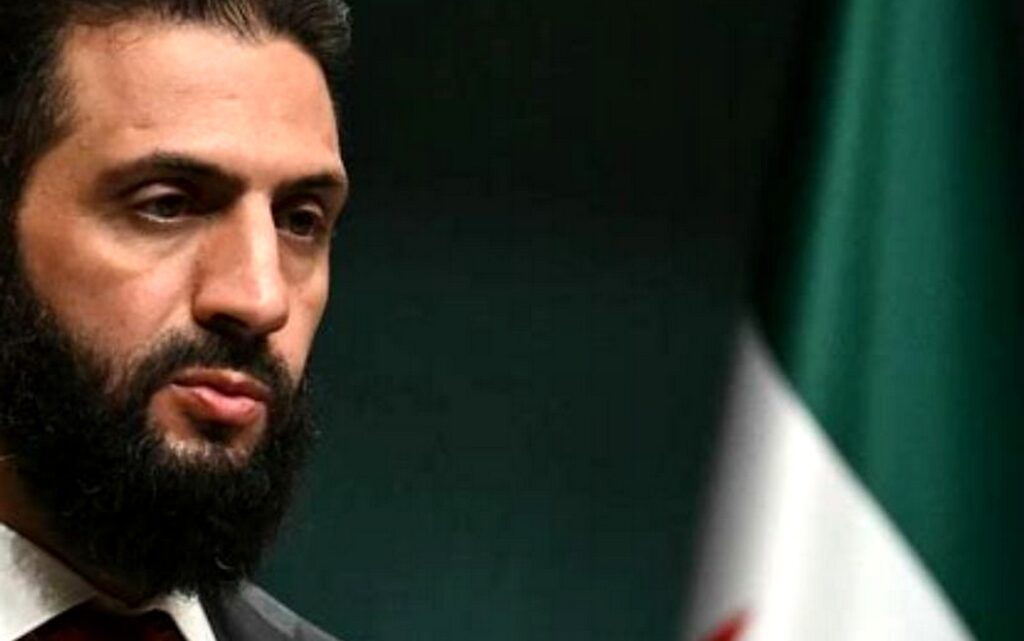
In a significant escalation of regional security efforts, Turkish intelligence has requested that Britain’s MI6 take on a greater role in protecting Syrian President Ahmed al Sharaa following a series of sophisticated assassination plots.
Turkish Intelligence officials, Britain, and the United States have increasingly viewed the current Sharaa-led administration as a critical barrier against a return to the sectarian infighting and civil war that displaced millions over the past 14 years.
These allies fear that a leadership vacuum would allow the Islamic State (ISIS) to regain control over large swathes of the country.
This concern is heightened by the fact that ISIS has declared Sharaa their number one enemy, intensifying attacks on military and security forces across Syria in what the group calls a new phase of operations.
The move toward deeper British involvement follows what a senior Syrian security source described as a “very serious assassination plot”.
The United Nations Office of Counter-Terrorism recently revealed that ISIS targeted Ahmed al Sharaa and two of his senior ministers in five failed attempts last year alone.
In November, reports surfaced that Syrian authorities had successfully foiled two of those plots.
Most recently, Damascus publicly admitted for the first time that it was coordinating closely with Turkish intelligence to thwart an imminent bombing in the capital.
Turkish security sources confirmed they identified a three-member cell planning to use remotely detonated devices, allowing Syrian forces to intervene.
While the exact nature of the requested role for MI6 remains under discussion, Western intelligence sources suggest that Türkiye is seeking a Western presence in Damascus to act as a strategic buffer between the currently competing interests of Turkish and Israeli intelligence.
While joint planning and technical operations are expected to increase, a Syrian security source cautioned that a physical British presence on the ground would be fraught with great risks.
This delicate issue was a central topic of a February 26 meeting in Damascus between a British delegation led by special envoy Anne Snow and Syria’s Deputy Interior Minister, Major General Abdelkader Tahan.
The current geopolitical alignment represents a total shift in international relations for the region.
Ahmed al Sharaa, who led the al Nusra Front before severing ties with al Qaeda in 2016 and ousting Assad in late 2024, is now described by some diplomats as the “guardian” of the global coalition against ISIS.
In support of this transition, both London and Washington have lifted the majority of sanctions previously imposed on the Syrian state and the Sharaa-led Hay’at Tahrir al Sham.
Domestically, the Syrian Ministry of Interior has characterized these recent security successes as the culmination of joint efforts between local intelligence and regional partners.
On Thursday, officials confirmed the dismantling of a major terrorist cell in the Damascus countryside that had been responsible for previous attacks in the Mazzeh area.
The Syrian Ministry of Interior emphasized that these preemptive strikes reflect a new era of high vigilance and international coordination aimed at pursuing any network attempting to destabilize the country.