A Republican congressman who shuffled the cards regarding lifting sanctions on Syria!
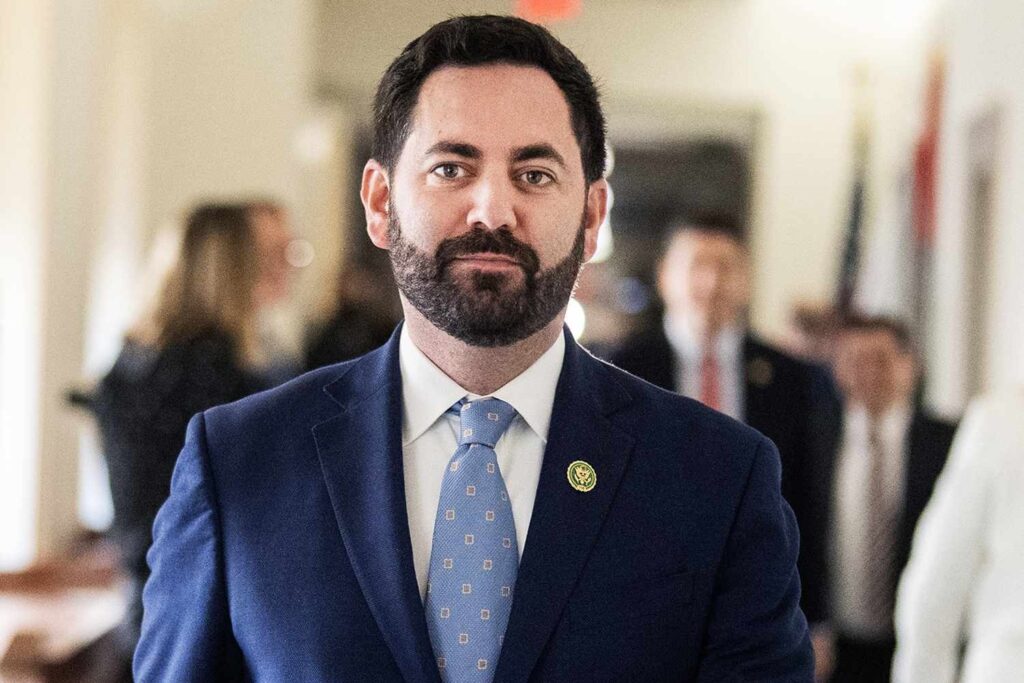
Republican Representative Michael Lawler, representing New York in the House of Representatives, stands out as one of the most prominent American decision-makers regarding the post-Assad Syria.
Lawler joined Congress in 2023 and quickly assumed a pivotal role as chairman of the Subcommittee on the Middle East and North Africa.
A cautious vision and an effective role on the Syria issue, as Lawler is distinguished by his cautious stance against any hasty US withdrawal from Syria.
In 2023, he strongly opposed a draft resolution to withdraw US forces, warning of a repeat of the Afghanistan scenario.
He believed that a limited US presence remains necessary to prevent the resurgence of ISIS and to support regional stability, including strengthening the Abraham Accords between Israel and Arab states.
He also stressed the need to counter Iranian influence in Syria, supporting US strikes against Tehran-backed militias in early 2024, describing them as a “stark message” to Iran.
He called for tightening sanctions on Iranian oil exports, which fund military activities in the region.
Lawler was a supporter of the Anti-Normalization with the Assad Regime Act of 2023, passed by Congress to prevent the Biden administration from recognizing any government led by Bashar al Assad.
After the fall of the Assad regime in December 2024, Lawler led legislative efforts to support the new Syrian government, provided it committed to reforms and human rights.
In July 2025, Lawler introduced the Syria Sanctions Accountability Act of 2025, updating US sanctions on Damascus.
The bill aims to balance support for the new leadership while maintaining pressure against remnants of the former regime, drug networks, and abuses.
The bill stipulates strict conditions for sanctions relief, most notably: halting attacks on civilians, ensuring access to humanitarian aid, releasing political prisoners, and allowing human rights organizations to inspect prisons.
If Damascus makes tangible progress for two consecutive years, some sanctions could be gradually lifted; otherwise, they would be extended until the end of 2029.
In addition to sanctions, Lawler’s bill calls for strengthening financial oversight by reviewing exemptions for the Commercial Bank of Syria and regulating reconstruction operations to ensure that neither the former regime nor its Iranian and Russian allies benefit without serious reforms.
The bill has been approved by the Financial Services Committee and now awaits additional legislative approval in Congress.
Lawler’s approach intersects with the positions of pro-Israel lobby groups, which view a robust US presence in Syria as a guarantee of Israeli security and a check on Iranian expansion.
On the other hand, Syrian-US organizations have criticized him, arguing that his bill complicates reconstruction opportunities and prolongs the suffering of the Syrian people.
However, he defended his bill as a compromise that balances support for the new government and ensures commitment to a genuine reform process.
Lawler succeeded in garnering support from moderate Democrats, reflecting the bipartisan nature of his vision, despite opposition from two wings: a conservative wing demanding the immediate lifting of sanctions, and a progressive wing that fears that the strict conditions will slow the Syrians’ recovery.