A losing war… What is the situation with Ahmed al Sharaa regarding the recent events in Sweida?
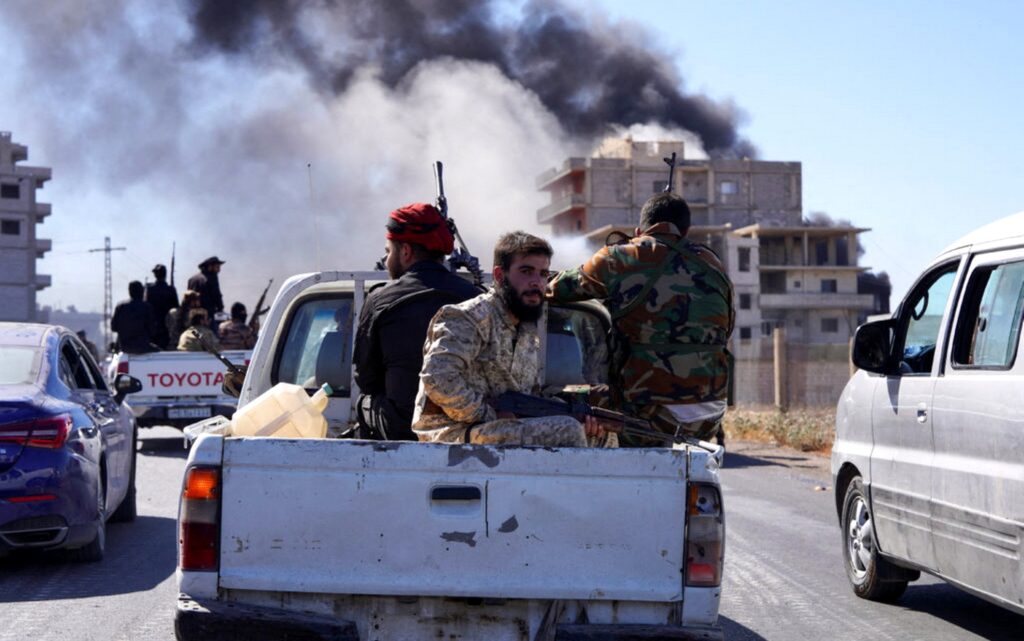
Sweida Governorate, which until recently was considered one of the most stable regions in Syria, has witnessed dramatic transformations that have reshaped the military and political landscape in southern Syria.
After years of relative calm, the governorate has become an arena for a complex confrontation between the Syrian transitional authority, local Druze factions, and direct Israeli intervention through airstrikes and harsh official statements.
The most prominent feature of this phase is the reshaping of the “rules of engagement” in the region, whereby local geography is no longer merely a space on a map, but rather part of a complex regional and international game.
According to field testimonies, the recently announced ceasefire agreement has failed to maintain calm.
Violence has continued between forces loyal to the transitional authority and local factions, with increasing instances of assassinations and arrests.
Many sees the current situation as a replica of the Assad regime’s practices, but with a new twist.
The imposition of force won’t lead to stability, as Sweida refuses to be an arena for military conflicts not based on understanding or negotiation.
As for the population, they are suffering from the repercussions of the crisis, which has transcended the political dimension to encompass real humanitarian suffering, with power and water outages and escalating violence between Druze factions and Bedouin tribes, amid accusations of official complicity.
Regionally, Israeli intervention has escalated, with Defense Minister Israel Katz announcing that “the signals have ended in Damascus” and that painful strikes have begun on targets in Sweida to eliminate “aggressive forces”.
A Western diplomatic source confirms that Israel is closely monitoring the situation and views the formation of the new army as an attempt to alter the balance of power on the Golan Heights border, prompting it to send a clear message that it won’t allow new lines of contact without its approval.
The Druze factions in Sweida aren’t seeking secession or the involvement of foreign forces.
Rather, they are demanding the withdrawal of all foreign and local military forces, and are prepared to negotiate without compromising the dignity of the mountain’s inhabitants.
Sweida is currently a test case for the future shape of the Syrian state, the transitional authority’s handling of minorities, local armaments, and decentralization issues—all of which are of particular interest to Israel.
In contrast, the transitional authority has so far failed to present a clear vision or unified political discourse to justify its security intervention, leading observers to describe its behavior as improvised and resembling the previous regime’s approach to crisis management through repression rather than dialogue.
In short, Sweida today isn’t merely an arena for local conflict, but rather the focus of a regional battle in which interests and agendas overlap, rewriting the rules of the game in southern Syria.