A new US intelligence assessment of the absent Iranian Supreme leader and his role within
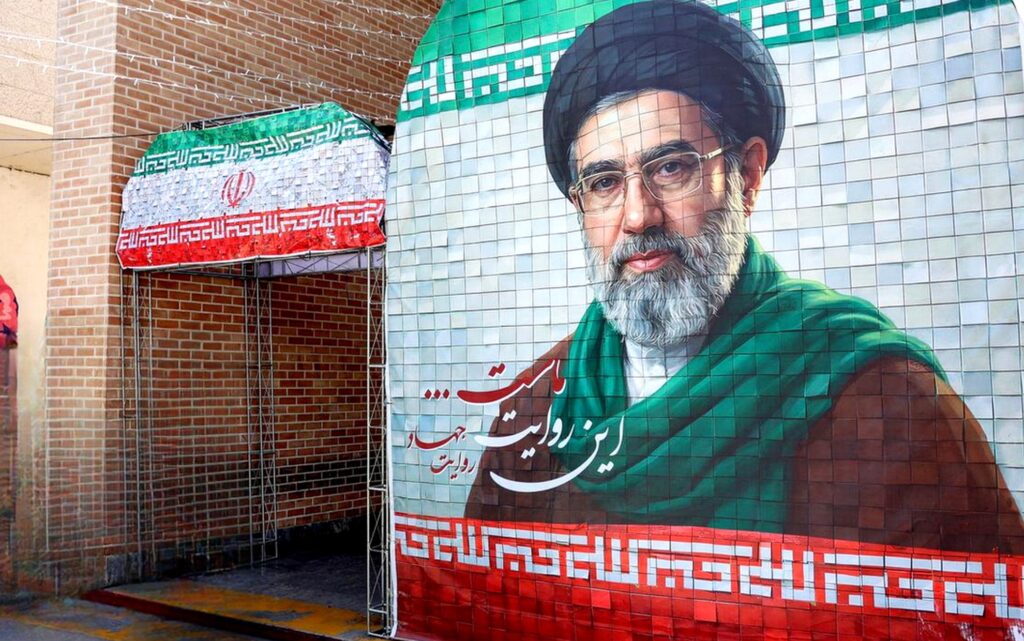
The US intelligence believes Iran’s new Supreme Leader Mojtaba Khamenei is playing a vital role in shaping war strategy alongside senior Iranian officials.
Acording to a US intelligence assessment concluded that the precise scope of power within the now fractured Iranian regime remains unclear; however, estimates suggest that Mojtaba Khamenei is likely to be involved in guiding how Iran manages the ongoing negotiations with the United States aimed at ending the war.
Khamenei hasn’t appeared in public since suffering serious injuries in an attack that killed his father and several of the country’s top military commanders at the start of the war, sparking a wave of speculation about his health and his possible role within the Iranian leadership structure.
The administration of US President Donald Trump continues its efforts to reach a diplomatic solution to the conflict, as the ceasefire extends for more than a month.
US intelligence estimates that Iran is still working to recover from the effects of the US bombing campaign, which, despite its intensity, left significant Iranian military capabilities intact and gave Iran the ability to withstand the US blockade for several more months.
Khamenei was declared the new Supreme Leader of Iran, succeeding his father, just days after the attack that injured him, however, sources stated that US intelligence agencies haven’t yet been able to visually confirm his whereabouts through direct observation.
Part of this uncertainty stems from Khamenei’s refusal to use any electronic devices in his communication; instead, he limits his dealings to people who are able to visit him in person, or by sending messages through intermediaries.
Mojtaba Khamenei remains in isolation while continuing to receive medical treatment for his injuries, which include severe burns on one side of his body, affecting his face, arm, torso and leg.
According to Mazaher Hosseini, the head of protocol at the Supreme Leader’s office, who said on Friday that Khamenei was recovering from his injuries and is now in good health.
He explained that Khamenei’s foot and lower back sustained minor injuries, and that a small piece of shrapnel hit him behind his ear, but that the wounds were healing.
“Thank God, he is in good health… The enemy is spreading all sorts of rumors and false claims… They want to see him and find him, but people should be patient and not rush… He will speak to you when the time is right,” Hosseini told a crowd of people.
Earlier this week, Iranian President Masoud Pezeshkian told Iranian state media that he had held a two-and-a-half-hour meeting with Khamenei; this meeting, according to reports, is the first direct meeting between a high-ranking Iranian official and the new Supreme Leader.
Informed sources stated that the information possessed by US officials regarding Khamenei’s situation is based on data collected from individuals who communicate with him directly.
However, intelligence analysts have some doubts about whether certain individuals within Iran’s power structure claim to have access to Supreme Leader Khamenei, with the aim of exploiting his influence and using his authority to serve their own agendas.
According to US intelligence reports, the war has depleted Iranian military capabilities, though it has not completely destroyed them.
The US intelligence estimates indicated that about half of Iran’s missile launchers had survived the US strikes.
However, a recent report raised this figure to two-thirds, this is partly due, according to sources familiar with intelligence, to the continuation of the ceasefire, which gave Iran enough time to extract launch platforms that may have been buried under the rubble as a result of previous strikes.
Meanwhile, a separate report by the Central Intelligence Agency (CIA) concluded that Iran is likely to be able to withstand up to four more months of continued US sanctions without its economy collapsing completely.
The Washington Post was the first to publish a report on this assessment issued by the Central Intelligence Agency.
US and Iranian military forces have exchanged fire in recent days, despite a ceasefire being in place, while shipping traffic through the Strait of Hormuz has come to a near standstill, with both sides claiming control of this vital waterway.
For its part, the Office of the Director of National Intelligence referred inquiries on this matter to the White House.
While US intelligence estimates that Khamenei is involved in formulating Iran’s negotiating strategy aimed at reaching a diplomatic solution to the war.
There is evidence that he is largely excluded from the decision-making process and can only be reached intermittently.
As a result, senior officials in the Revolutionary Guard are effectively running the day-to-day operations, in conjunction with Iranian Parliament Speaker Mohammad Baqer Ghalibaf.
The US intelligence assessments said that, there are no indications that Khamenei is actively involved and issuing orders on an ongoing basis, but there is no evidence to the contrary.
The sources stated that the questions raised about Khamenei’s health and his standing within the now-divided Iranian regime have posed a challenge to the Trump administration, as senior US officials continue to suggest that it’s not currently clear who has the actual authority to negotiate an end to the conflict.
“Their regime remains deeply divided and dysfunctional, and that could be an obstacle to a solution,” said US Secretary of State Marco Rubio on Friday, while discussing the expected Iranian response to the Trump administration’s latest proposal to end the war.
US intelligence assessments had largely predicted the repercussions of the US-Israeli operations that killed Khamenei’s father and other senior Iranian officials, prior to Trump’s decision to initiate the conflict; those assessments concluded that assassinating the former Supreme Leader was unlikely to bring down the regime.
This prediction is that the Iranian government will remain under the broad control of the Revolutionary Guard and other figures who are ideologically aligned with those who have been eliminated.
Since the death of Khamenei’s father, Trump has consistently boasted that Iran has undergone a regime change, describing those currently negotiating on behalf of Tehran as “sensible people”.
He said in March: “We’re dealing with different people than any other party has ever dealt with before”.
However, the Trump administration’s efforts to reach a negotiated solution have been hampered by what multiple sources have described as a fundamental misunderstanding of how Iranians think and how they respond to threats, regardless of who is in power in the country.
Prior to the start of the first round of negotiations in Islamabad last month, US Vice President J D Vance sought insights from some Gulf partners about which figures among the remaining Iranian political and military leaders still possessed negotiating authority with the United States, and about the best ways to deal with them, according to a source familiar with the details of those discussions .
At that time, officials from at least one Gulf state informed Vance that Ghalibaf was the person who possessed that authority, to a degree that surpassed other senior Iranian figures, whether in the Revolutionary Guard or in the political wing of the government.
Mohammad Baqer Ghalibaf led the first round of negotiations with the United States in Islamabad, and is now seen as one of the most prominent figures representing the Islamic Republic.
The former commander of the Revolutionary Guard – who played a role in suppressing student protests demanding reform – emerged as one of the few Iranian politicians capable of skillfully dealing with both types of people: diplomats in suits and soldiers in field uniforms.
However, Vance left those initial negotiations in Islamabad without any agreement, and the second round of negotiations that had been announced to take place in Pakistan ultimately didn’t materialize.
Trump attributed the collapse of those efforts to the Iranian government being sharply divided, and extended the ceasefire for two weeks to allow time for Iranian leaders to formulate a unified proposal.
In the weeks that followed, the Trump administration continued to insist that the ceasefire between the two countries remained in effect; Trump extended the truce indefinitely, while Iran was still considering the latest US proposals as of Friday.