France: Lafarge convicted of financing terrorism between 2013 and 2014 to keep its factory in Syria running
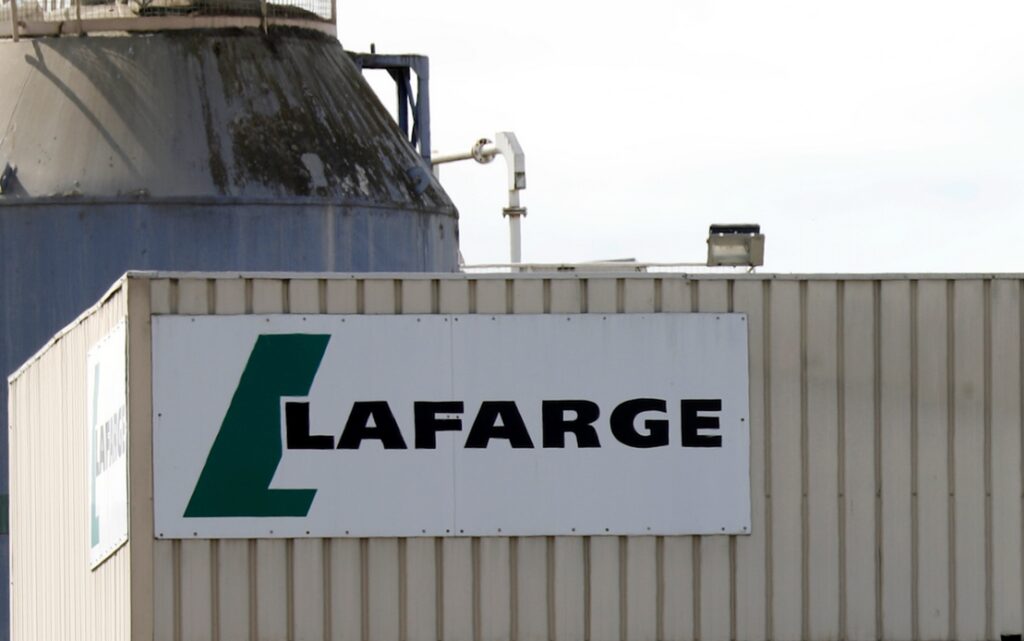
A court in Paris on Monday found French cement company Lafarge guilty of paying money to the Islamic State and other jihadist groups to ensure continued operation of its factory in Syria.
The court concluded that Lafarge, which was acquired by the Swiss group Holcim, paid millions of dollars between 2013 and 2014 through its subsidiary Lafarge Cement Syria, to jihadist groups and intermediaries to protect the cement plant in Jalabiya in northern Syria.
“This method of financing terrorist organizations, and in particular the Islamic State, was essential in enabling the terrorist organization to control natural resources in Syria, which allowed it to finance terrorist acts within the region and those planned abroad, especially in Europe,” said the presiding judge, Isabelle Prevost-Desprez.
The ruling comes after Lafarge pleaded guilty in the United States in 2022 to providing material support to organizations designated in Washington as terrorist and agreed to pay a fine of $778 million, an unprecedented charge for any company.
Lafarge completed the $680 million Jalabiya plant in 2010, before the outbreak of the Syrian civil war the following year, following the brutal crackdown by the regime of ousted President Bashar al Assad on then-government protests.
In 2014, Islamic State militants seized large parts of Syria and neighboring Iraq, where they declared the establishment of a so called “caliphate.”
While other multinational companies left Syria in 2012, Lafarge only evacuated its foreign employees and kept its Syrian employees until September 2014 when Islamic State elements took control of the factory.
Lafarge Cement Syria was accused of paying intermediaries in 2013 and 2014 to obtain raw materials needed to operate the plant from the Islamic State and other groups, and to secure the free movement of the company’s trucks and employees.
Besides Lafarge, the list of defendants includes the company’s former CEO Bruno Lafont, five former executives in the operational or security departments, and two Syrian intermediaries, one of whom was not present at the trial sessions; They are accused of financing terrorism and violating international sanctions.
In its closing arguments in December, the French National Anti-Terrorism Prosecutor’s Office said that Lafarge was guilty of financing terrorist organizations with one objective: profit.
Prosecutors have demanded that Lafarge be fined the maximum amount of 1.12 million euros ($1.3 million) and have assets worth 30 million Euros seized.
They also demanded that Lafont, (69), be imprisoned for six years, while he denies any knowledge of the illicit payments.
Prosecutors said the company’s former president gave clear instructions to keep the plant running in a decision they described as shocking.
During the trial, former deputy managing director Christian Harrow said the decision to keep the factory open was made out of concern for local staff.
He added, “We could have shirked responsibility and walked away, but what would have happened to the factory workers?”
According to the National Anti-Terrorism Prosecutor’s Office, payments to groups classified as terrorist organizations amounted to at least 4.7 million Euros ($5.5 million).
Holcim, which acquired Lafarge in 2015, said it was unaware of the dealings in Syria.
The other case, which concerns accusations of complicity in crimes against humanity, is still ongoing.
In 2019, the Kurdish-led and US-backed Syria Democratic Forces managed to defeat the Islamic State group in its last remaining strongholds in Syria.
In 2017, an investigation was opened in France following several media reports and two legal complaints in 2016, one from the Ministry of Finance over an alleged violation of an economic sanction and the other from non-governmental groups and 11 former Lafarge employees over terrorism financing.
In a case filed in the United States, the Justice Department said that Lafarge sought help from the Islamic State to eliminate competitors by implementing an effective revenue-sharing agreement with them.
At the time, Lafont, who was CEO from 2007 to 2015 when Lafarge was merged into Holcim, denounced the investigation as biased.