The US military has secretly planted high-risk landmines in several Iranian cities
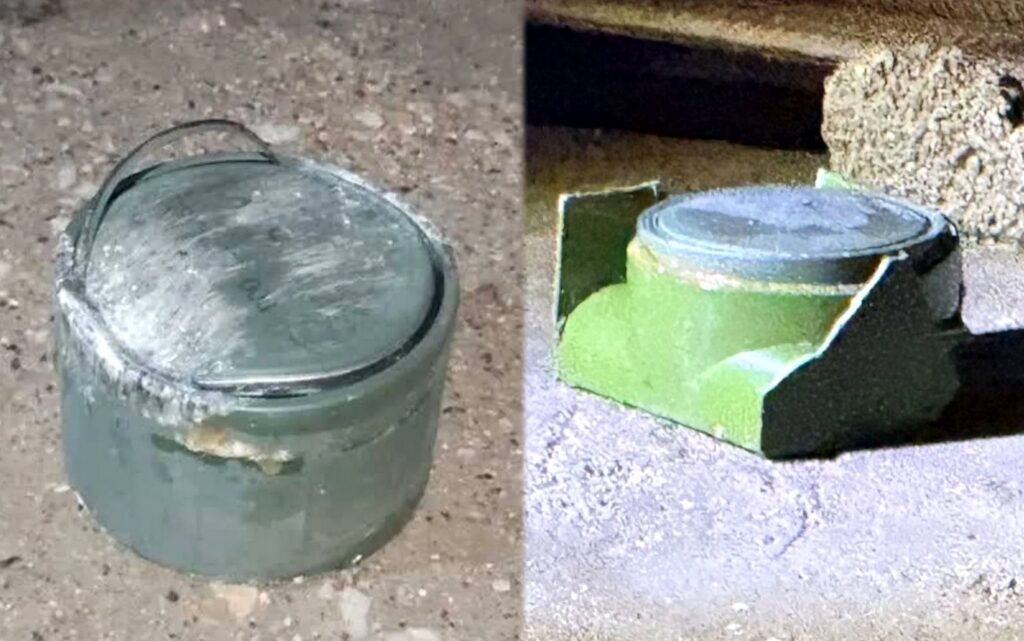
Images posted on social media showed what Western experts described as US landmines deployed in a residential area in southern Iran, in what appears to be the first use by US forces of these weapons in more than two decades, according to a report in the Washington Post.
While the United States is the only known party to the Iran war, the images show US BLU-91/B anti-tank landmines fired from an aircraft as part of the Gator mine-laying system, according to four munitions experts.
The images of the US landmines were posted on social media platforms by Dimitri Lascaris, a Canadian lawyer, and freelance journalist currently covering events from Iran, and the Iranian government’s radio and television network.
The images show no evidence of anti-personnel mines, which are small explosive charges buried in or placed on the ground, along with anti-tank mines.
The landmines were filmed outside the city of Shiraz, about three miles from a nearby Iranian ballistic missile launch site, and experts noted that mobile launchers are often placed near these sites to access the missiles, and that landmines may have been placed to make them more difficult to access.
Brian Kastner, Amnesty International’s weapons investigator, was quoted as saying that although these landmines are designed to target armored vehicles, they still pose a significant risk to civilians.
From its part, Iran’s official news agency reported in a post on Telegram on Thursday that at least one person was killed and others were injured as a result of explosive devices that resemble metal cans, and warned people to stay away from any deformed or unusual metal cans.
The US Army report stated that Gator landmines are primarily used to disrupt, stabilize, divert or prevent the movements of enemy forces, and that these munitions are well-suited for laying minefields in specific concentrations of forces.
According to the report, the average area of the Gator minefield is approximately 650 meters by 200 meters, due to the way it spreads.
Images of what appear to be US mines were first reported by the open-source information reporting group Bellingcat.
This type of landmine is designed to explode when it senses a magnetic signal, such as a large vehicle, but these devices can sometimes inadvertently explode when driven by civilians and are equipped with a self-destructive property that can cause them to explode hours or days after they are planted.
Experts also say the mountains west of the village where the landmine photos were taken contain multiple sites of Iranian ballistic missiles.
Human rights organizations have long called for a global ban on anti-personnel landmines, given their ability to kill, maim or cause blindness to civilians, often years after conflicts have ended.
Last year, the Trump administration rescinded a Biden-era policy that prohibited the use of antipersonnel landmines except on the Korean Peninsula.
The memorandum, signed by War Secretary Pete Hegseth, stated that restrictions on the use of these mines would be determined on a case-by-case basis, and steps would be taken to limit harm to civilians.
According to a US Army report on mine operations and counterins, mine launchers dropped from aircraft to deploy dozens of them at a time often include anti-tank and anti-personnel mines.
The last known use of scatterable anti-tank landmines in US conflicts was during the 1991 Gulf War.
According to Pentagon records, the last known use of US antipersonnel mines was one case in Afghanistan in 2002, when they were used by special operations forces while awaiting evacuation by helicopter.
But, if its confirmed that the US military has used the Gator minesweeping system that has caused civilian deaths and injuries, it explains exactly why decades of work to ban these weapons cannot be unversed without the result being severely harmful.