Attack on Iran raises fears of global oil crisis
The joint attack by the United States and Israel on Iran, a senior member of the Organization of the Petroleum Exporting Countries (OPEC), is raising concerns in global markets about a possible disruption to oil supplies in the Middle East, in a scenario that could lead to a global economic recession if the situation develops for the worse.
Iran is OPEC’s fourth-largest producer, with production exceeding 3 million barrels per day in January, and it overlooks the Strait of Hormuz, the world’s most important oil trade waterway.
Despite the region’s sensitivity, oil markets have long touted the prospect of turmoil, but experts warn that a strong Iranian response could turn the market upside down.
According to Bob McNally, a former White House energy adviser, the price of Brent crude is expected to rise by $5 to $7 per barrel immediately after markets open on Sunday evening, after closing Friday at $72.48 (+2.45%), while WTI crude climbed to $67.02 (+2.78%).
McNally warns that Iran could make the Strait of Hormuz unsafe for navigation, which could push prices above $100 a barrel.
The Iranian regime has large stockpiles of naval mines and short-range missiles, capable of disrupting the vital corridor through which about 14 million barrels per day pass, a third of the world’s offshore oil exports, with 75% of these quantities destined for Asia, especially China, India, Japan, and South Korea.
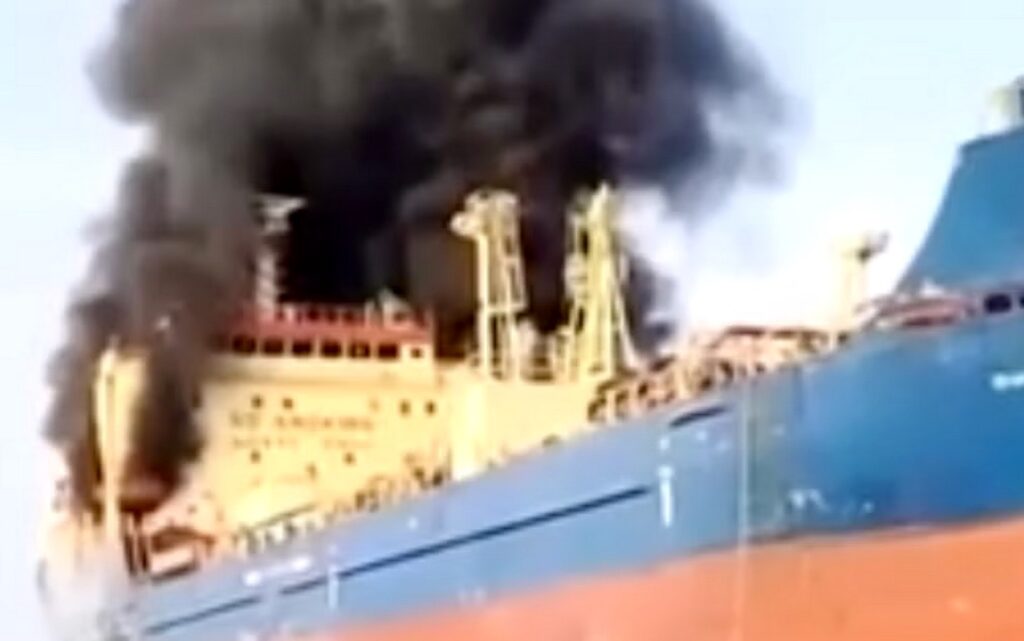
Amid tensions, some major tankers have begun changing routes to avoid passing through the strait, while Kpler data showed more than 20 million barrels of crude were loaded for export from Gulf states, including Saudi Arabia, Iraq, the United Arab Emirates, Kuwait and Qatar.
Iran has also fired missiles at US bases in Qatar, Kuwait, the United Arab Emirates, and Bahrain, increasing the risk to maritime traffic and forcing insurance companies to raise coverage rates by as much as 50 percent.
Although there are alternative pipelines, such as the Saudi line that connects the east and west of the country on the Red Sea, or the Emirates line that ends at the Gulf of Oman, their impact is limited and does not make up for lost supplies through Hormuz.
Experts point out that the US strategic reserve of 415 million barrels won’t be enough to counter a protracted crisis in the strait, even with the International Energy Agency’s reserves, as the length of the crisis may be more impactful than the amount available to make up for the shortfall.
Analysts fear the crisis could trigger a wave of oil hoarding by Asian countries, which could lead to the biggest bidding war over supplies in the market’s history.
Experts believe that prices will rise to levels that may gradually reduce demand, as the only way to rebalance the global market.
The Strait of Hormuz, the main artery for oil and gas supplies, remains the focus of current tensions, amid global anticipation of the repercussions of a military attack on Iran and the resulting disruptions to the global economy and energy markets.