Western move to support the Kurds in Syria
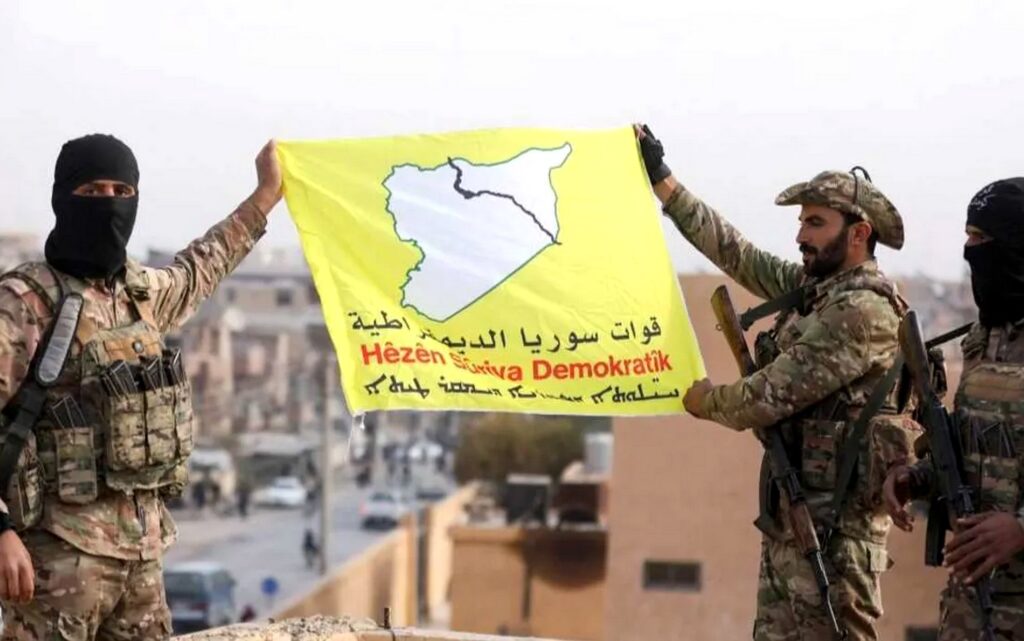
Last week saw intense activity in Washington and Brussels in support of the Kurds in Syria, where the European Parliament held a debate session on the situation in northeast Syria and violence against civilians, in which two Swedish deputies of Kurdish origin who wore traditional Kurdish dress participated.
In Washington, the US House of Representatives debated the “Kurdish Rescue Act” amid harsh language toward the Syrian transitional authorities.
US officials shared their testimony on the humanitarian situation and the treatment of minorities in Syria, as well as an assessment of US policy toward the country.
Brian Mast, chairman of the US Congress Foreign Affairs Committee, described the transition as more difficult than expected, citing incidents of sectarian violence against religious and ethnic minorities.
While he praised the ceasefire agreement between the Syrian government and the Syria Democratic Forces (SDF), he stressed that many previous agreements have not been implemented on the ground.
Mast, who previously opposed the repeal of the Caesar Act, expressed dissatisfaction with Syrian President Ahmed al Sharaa’s progress, calling the measures against the Druze, Kurds and Alawites “steps in the wrong direction”.
He explained that the United States lifted the sanctions under Caesar Act after the disappearance of its reason for existence, which is the Assad regime, however, setting clear conditions that include the integration of military forces, the protection of minorities and cooperation in the fight against terrorism.
Mast also warned of the presence of foreign fighters within the Syrian security forces, many of whom are backed by Türkiye, and called the recent actions against the SDF, “our long-standing partner in the fight against terrorism is unacceptable”.
He welcomed the agreement to merge al Sharaa and SDF Commander Mazloum Abdi, but considered it the third agreement of its kind, stressing that the United States is waiting for actions rather than words.
Democratic Rep. Brad Schneider criticized the administration’s move toward unconditional sanctions relief, praising efforts to include accountability conditions and standards in final legislation.
He stressed the committee’s rejection of giving up the pressure cards without compensation.
Rep. Bill Keating highlighted an article by former Secretary of State Mike Pompeo, who criticized the overly optimistic president and warned against removing sanctions without using them as a future leverage.
The session witnessed widespread criticism of Türkiye’s role, with some lawmakers linking the attack on the SDF to Türkiye’s historical hostility to the Kurds.
Republican Rep. Bill Keating Self-described Türkiye’s shift toward an “Islamic dictatorship” under Erdogan, warning of a future conflict with Israel.
From his part, Rep. Josh Brecheen went further by warning about Erdogan’s ambitions to restore the Ottoman Empire, questioning the sincerity of Sharaa’s intentions and criticizing the appointment of Ambassador Tom Barrack in a dual position as ambassador to Türkiye and special envoy to Syria.
Meanwhile, Nadine Maenza, former head of the US Commission on International Religious Freedom, supported Rep. Josh Brecheen’s position on Ambassador Tom Barrack, and called for, a continued partnership with the SDF during the integration phase, as the Syrian Security Forces fail to consider partners ahead of rigorous scrutiny.
Also, she called for accelerating Passing a bill of “Save the Kurds,” moreover, pressure to end the siege of Kobani (Ayn al Arab) and Swaida.
Maenza called for the importance of removing foreign fighters from the Syrian Security Services.
Mara Karlin, the former assistant secretary of defense, called the humanitarian situation devastating, noting that previous US stabilization tools no longer exist after the closure of the Office of Transition Initiatives, but stressed that Washington still has options to work with European allies to stabilize Syria.
In Europe, the European Parliament voted last week on a resolution calling for a permanent ceasefire in northeastern Syria, lifting the siege on Kobani (Ayn al Arab), and recognizing a clear political status for the so called “Rojava administration” within a future settlement.
NGOs warn that Ankara will block humanitarian aid to on Kobani (Ayn al Arab), where some 150,000 people have been displaced since government forces took control of areas in northeastern Syria.
From her part, the European Commission’s Dubravka Šuica said that northeastern Syria represents a real test of the future government’s commitment to democracy, pointing to a previous agreement that includes the integration of Kurdish forces and the recognition of education in the Kurdish language.
European MPs have lashed out at Türkiye, questioning the double standards in European politics.
MP Jaume Asens Llodra (Spain) said: “Talking about Syria is talking about structural hypocrisy in Europe… We impose sanctions on Iran in the name of human rights and ignore Türkiye’s crimes because it has European borders, and Syria is run by someone we saw as a terrorist and became a useful ally… Europe has a policy based not on human rights but on interests”.