After Mamdani’s victory… Israel is losing its historical influence in one of the world’s most important cities politically
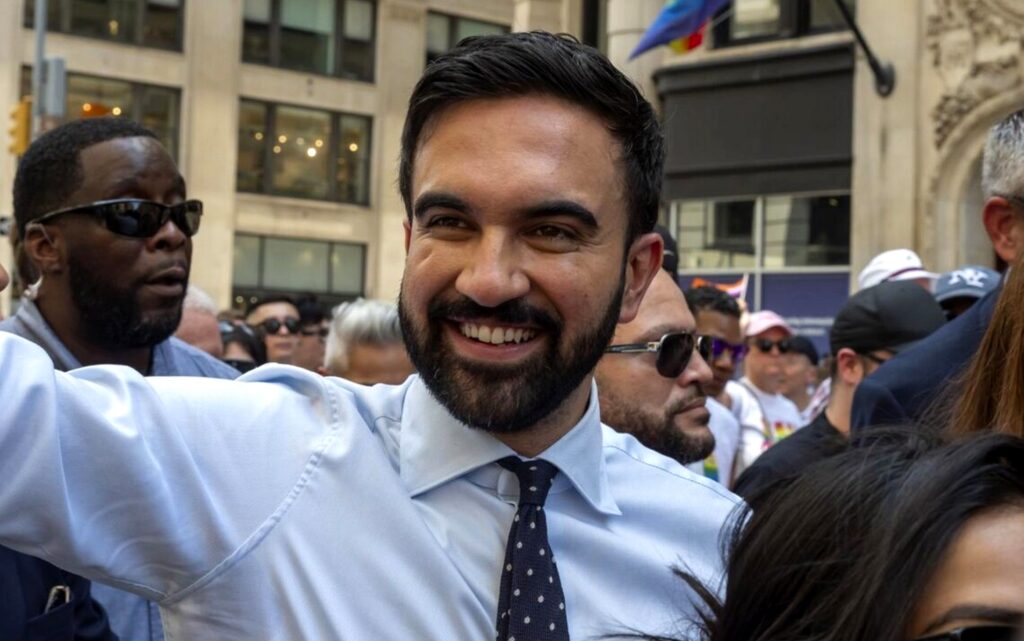
Israel’s political, security and media circles are witnessing a state of severe confusion after the rapid transformations in New York City, which is changing silently, after Israel has considered it for many years as its most symbolic capital.
At the heart of these transformations is Zohran Mamdani, a progressive politician who has become a symbol of the rise of a new generation that links the Palestinian struggle with the political and social movement within the United States.
From an Israeli perspective, Mamdani’s rise is no longer a local event in New York, but rather a “political earthquake” that strikes at the network of influence that Israel has built over decades within universities, funding networks, and decision-making centers.
From the first moment of the student protests against the Israeli aggression on Gaza, Mamdani was present in the university squares, supporting the protesting students, attacking the university administrations that called in the police to suppress them, and stressing that siding with Israel has become part of the security and political structure of American university life.
Mamdani’s presence in the courtyards of Columbia and New York universities gave the protests unprecedented political weight, elevating the Palestinian cause from the level of student activism to the level of a public civil discourse that directly challenged Israeli dominance within the city.
Mamdani didn’t stop with slogans, but also attacked the academic partnerships linking New York universities to Israel’s Technion Institute, saying that they implicate universities in the manufacture of weapons and drones used to kill Palestinians.
Israeli newspapers describe Mamdani’s rise with a recurring sentence: a dangerous breakthrough in a city that was one of our most important political and economic incubators, Israel Hayom warned that Jewish business networks in New York could lose their usual influence, while analysis by Israeli think tanks pointed out that the problem isn’t in Mamdani’s personality alone, but in the generation he represents, a generation of universities that fly the Palestinian flag at Columbia and New York universities, progressive left-wing currents that attack Israel without hesitation, and the decline of the influence of the Israeli lobby within the city’s institutions.
Some voices go so far as to say that New York is turning from a base of support for Israel into a counter-pressure center.
Former Israeli ambassador Dror Idar said Mamdani’s rise represented “a real crisis of influence for Israel within the West,” noting that the election of a figure “so hostile to Israel” wouldn’t have been possible years ago.
Idar stressed that what is happening is the result of social and cultural transformations within universities, as the younger generation is getting closer to Palestine and away from the Israeli narrative.
Mamdani’s statement that he might order Netanyahu’s arrest if he entered New York, based on the International Criminal Court memo, came as a shock in Israel, prompting Israeli officials to warn that the city had become politically unsafe for the Israeli elite.
Some Israeli politicians have come to the conclusion that Jews in New York are calling for immigrants to Israel, reflecting the depth of anxiety in Israel.
For Israel, New York wasn’t just a city, but a base of influence where it dominated for decades through universities, the media, and funding networks, giving birth to pro-New York politicians within both the Democratic and Republican parties.
But the rise of Mamdani, coupled with generational shifts, has gradually made Israel lose that influence.
Israeli analyses suggest that what is happening now may be the beginning of the erosion of traditional US support for Israel in the medium term: Mamdani’s rise isn’t just a victory for one person, but a return to the heart of political life in a city that has for decades been held hostage to Israeli influence.
Israel is aware that it facing a new generation, a generation that isn’t afraid to confront Israeli influence, isn’t subject to the power of lobbies, and sees Palestine as part of its fight against injustice within its own country; It’s a profound change in New York’s political identity that Israel fears.