The Washington Post: New secrets about the case of the American journalist who disappeared in Syria
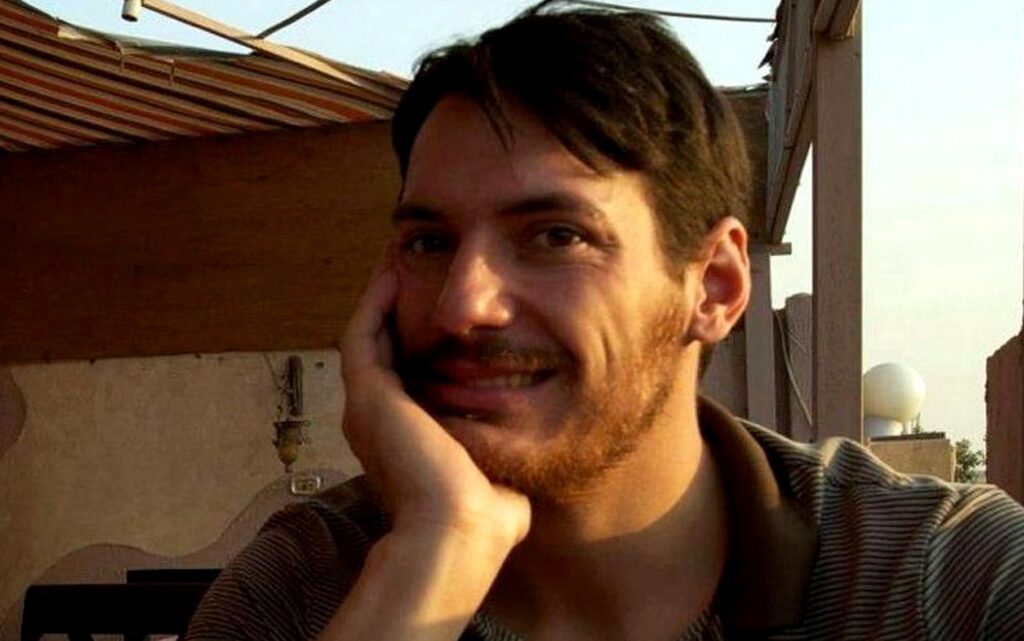
The Washington Post revealed in an extensive report new details regarding the disappearance of American journalist Austin Tice in Syria, which dates back to 2012.
The report sheds light on the role played by Bashar al Assad’s regime in his detention and the methods the regime used to obstruct international efforts to uncover his fate.
Austin Tice, a former Marine, entered Syria in May 2012 via the Turkish border to cover the Syrian revolution.
He traveled through northern Syria with the help of opposition factions, then headed to Damascus, sometimes disguised as a woman.
He stayed in the city of Darayya in the Damascus countryside alongside Free Syrian Army fighters, where he celebrated his last birthday before losing contact on August 13 of the same year, after the last signal his satellite phone received.
According to the report, Tice was arrested at a security checkpoint in Damascus after a taxi driver reported him.
He was transferred to intelligence officer Bassam al Hassan, where he was interrogated in a temporary headquarters near al Hassan’s office.
Later, the Syrian regime broadcast a video showing Tice blindfolded and surrounded by masked men, in an attempt to mislead the public into believing that extremist groups were behind his abduction.
However, international journalists quickly questioned the authenticity of the video, asserting that it was fabricated.
Sources indicate that Tice briefly attempted to escape, but was returned to security custody after entering a neighborhood inhabited by senior regime officers, including Ali Mamlouk.
From the outset, the Syrian regime treated Tice’s case as a political pressure card, offering promises of his release through intermediaries, but these were never fulfilled.
Despite Damascus’s continued denials, several diplomatic sources confirmed that Tice was being held by the intelligence services.
The Czech ambassador to Damascus, Eva Filippi, stated in 2012 that he was still alive, but the regime continued to deny his existence have transformed the issue into a thorny issue that has spanned four US administrations, from Obama to Biden.
Secret meetings were held between US officials and representatives of the Syrian regime in Amman, Muscat, and Damascus, and Lebanese mediators close to Assad were also enlisted.
Washington even offered medical facilities for Asma al Assad as an incentive, but the regime didn’t respond.
Despite the announcement of a $10 million reward for any information leading to the disclosure of his fate, no tangible progress has been achieved.
With the fall of the Assad regime in December 2024, Tice’s family had high hopes for his appearance among the released detainees, but his absence came as a major shock.
In April 2025, the name of officer Bassam al Hassan resurfaced, claiming that Assad had ordered Tice’s execution in 2013.
However, his testimony was met with skepticism, especially after he fled to Iran.
Despite more than a decade having passed since his disappearance, Tice’s family continues to search for him.
His mother, Debra, has been distributing leaflets in the streets of Damascus, accusing the US government of negligence in pursuing the case.
Currently, the new Syrian authorities, in coordination with the US, are pursuing new leads, based on testimonies from those close to Officer Hassan, in an attempt to put an end to this ongoing tragedy.