Reuters: Syria is secretly reshaping its economy by the president’s brother and Sheikh Abu Maryam the Australian!
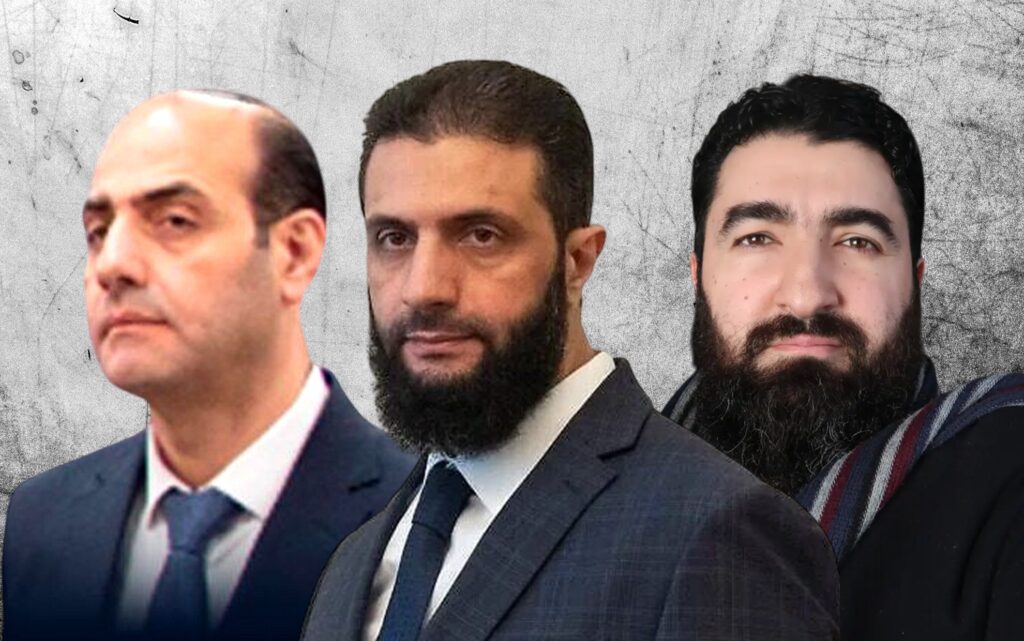
The Syrian president Ahmed al Sharaa is trying to rebuild the country’s war-torn economy, as in order to lead these efforts, he has enlisted the help of his older brother, Hazem, who secretly oversees deals aimed at gaining control of major companies.
A shadowy/secret committee is reshaping the Syrian economy through the covert acquisition of Assad regime companies.
A Reuters investigation has revealed that al Sharaa brother, Hazem al Sharaa, and a sanctioned Australian are responsible for “untangling the tangled threads of corruption”.
To do so, they are striking deals with businessmen whom many Syrians associate with years of ill-gotten gains under the former regime.
In the weeks following the fall of Damascus, a prominent businessman received a late-night phone call asking him to come see “the Sheikh”.
The address was familiar, a building that had been the scene of periodic extortion of businessmen like him under Bashar al Assad’s economic empire, but now, there were new leaders and officials.
With his long, dark beard and a pistol slung over his waist, the sheikh would only give his nickname, “Abu Maryam”.
He is now the head of a committee working to reshape the Syrian economy, and he asked his questions in polite Arabic with a slight Australian accent.
“He asked me about my business and how much money we make… I was looking at the gun the whole time,” the businessman says.
A Reuters investigation has revealed that Syria’s new leadership is secretly working to restructure an economy devastated by corruption and years of sanctions imposed on the Assad regime.
Under the auspices of a group of men whose identities have so far been hidden under pseudonyms, the committee’s mission is to decode the economic legacy of the Assad era and determine what should be restructured and what should be preserved.
Away from public scrutiny, the committee has seized assets worth more than $1.6 billion.
This figure is based on accounts from people familiar with the deals to acquire stakes in companies and confiscate cash, including at least $1.5 billion in assets seized from three businessmen and companies in a conglomerate formerly controlled by Assad associates, such as the country’s main telecommunications company, worth at least $130 million.
The man overseeing the restructuring of the Syrian economy is Hazem al Sharaa, the new president’s older brother.
The committee’s chairman goes by the pseudonym Abu Maryam al Australi (the Australian) or Ibrahim bin Masoud, while his real name is Abraham Sukkarieh.
He’s an Australian of Lebanese origin who is on his country’s list of sanctioned individuals for financing terrorism.
He describes himself as a “cricket- and shawarma-loving businessman”.
The new Syrian government has dismantled the feared security and intelligence services, and people are able to speak more freely than in decades, but the mix of family members and men known only by nom de guerre who now run the Syrian economy has worried many businessmen, diplomats, and analysts, who say they fear one “palace oligarchy” is being replaced by another.
The Reuters investigation was based on interviews with more than 100 businessmen, brokers, politicians, diplomats, and researchers, as well as a trove of documents including financial records, emails, meeting minutes, and new company registrations.
The Syrian government has never publicly announced the work of the committee, nor has it ever announced its existence.
It’s unknown to the Syrian public, and only those who interact with it directly know about its existence, role, and responsibilities.
This role impacts the lives and livelihoods of all Syrians as the country attempts to reintegrate into the global economy.
A committee member told Reuters that the scale of corruption under Assad, built on corporate structures designed to steal assets and make money, left few options for economic reform.
The committee could refer businessmen suspected of illicit gains to court, as many Syrians are demanding, seize companies directly, or strike private deals with Assad-era figures still under international sanctions.
This risks further dividing Syrians, pitting the rich against the poor, and those who prospered under Assad against those who suffered.
Instead of prosecuting businessmen who profited from Assad’s rule or confiscating their companies, the committee decided to negotiate to recover much-needed funds and assert control over the levers of the economy, allowing uninterrupted operations.
The Syrian government, Hazem al Sharaa, and Sukkarieh didn’t respond to repeated requests for comment or questions related to this investigation, while the president’s office referred questions to the Ministry of Information.
Reuters reviewed the findings of this investigation during a personal meeting last week with the Minister of Information, provided details, and posed written questions to the ministry.
However, the Syrian Minister of Information didn’t provide any responses prior to publication of the investigation.
Over the course of seven months, the committee negotiated with Syria’s wealthiest businessmen, including some under US sanctions, and made progress in taking over a group of companies that had been run from Assad’s palace.
Many businessmen linked to Assad, including an aviation magnate sanctioned for drug and arms smuggling, and a businessman accused of collecting and smelting metals from Syrian cities emptied by Assad’s army, are keeping some of their profits and avoiding prosecution by the state, but for a price.
This deal—amnesty in exchange for a combination of cash and corporate control—risks angering Syrians seeking justice.
Four senior Western diplomats said that the concentration of economic power in the hands of shadowy figures with unknown backgrounds could hinder foreign investment and credibility as Syria attempts to rejoin the global financial system.
The committee met with dozens of people, sometimes clearing them and other times seeking to extract a portion of their wealth, according to a source who spoke about the committee’s activities.
Ultimately, the source said, Syrians would benefit when companies were privatized, floated in public-private partnerships, or nationalized, with the proceeds directed to a sovereign wealth fund.
Al Sharaa recently announced the formation of a presidential sovereign wealth fund, which three people familiar with the fund said would be overseen by his brother.
On the same day, al Sharaa revealed the creation of a development fund headed by a longtime associate of Hazem.
The president also recently issued amendments to the investment law by decree, while Hazem and Sukkarieh have not publicly announced their government positions, Reuters has learned that the two drafted the final text of the amendments.
Stephen Heydemann, a professor of Middle East studies at Smith College in Massachusetts, told Reuters that the Syrian sovereign wealth fund was a premature idea, criticizing its reliance on opaque, passive assets and warning that granting independence to the fund’s management undermines accountability.
A prominent role for the committee working to decode the Syrian economy belongs to members of Hay’at Tahrir al Sham, who were responsible for managing funds in Idlib.
There, HTS developed financial and governmental structures, and in 2018, it established the Watad Company, which holds exclusive rights to import fuel derivatives from Türkiye, alongside its own bank, Sham Bank.
Behind HTS’s entry into the business was a man named Abu Abdul Rahman, a former baker turned high-ranking military commander, a committee member and two senior HTS officials told Reuters.
Abu Abdul Rahman established the Idlib Economic Committee, initially an ad hoc group of a few men loyal to Ahmed al Sharaa, and oversaw its development into an institution comprised of dozens of people, from accountants and lawyers to negotiators and enforcers, they say, operating outside the formal state structures.
Sources said the committee established an economic wing focused on generating funds, headed by Abu Maryam, and a financial wing to manage those funds, headed by Abu Abdul Rahman.
Abu Abdul Rahman’s real name is Mustafa Qadeed, according to three HTS sources.
He took up residence on the second floor of the Syrian Central Bank the day after the fall of Damascus.
Qadeed didn’t respond to a request for comment on the information provided by Reuters.
Abu Abdul Rahman became known to some Syrian officials and bankers as the “shadow governor,” with veto power over the decisions of the official governor, who sat in an office two floors above.
When presented with Reuters’ findings on economic restructuring and Abu Abdul Rahman’s role, Abdul Qader Hasri, the governor of the Syrian Central Bank, wrote in a response to Reuters: “This isn’t true,” he didn’t respond to requests for further details.
Reuters sources said that important decisions require the approval of someone referred to as “Sheikh” Abu Abdul Rahman, whom they described as mild-mannered but who favors centralization of power.
One source said, “The situation now is as it was before, when the presidential palace decided everything”.
The other sheikh, Abu Maryam al Australi, left his hometown of Australia in 2013 the day before his brother Ahmed detonated a truck bomb at a Syrian army checkpoint, Australian prosecutors said, becoming the first known Australian suicide bomber in Syria.
A third brother, Omar, was sentenced in 2016 to four and a half years in prison in Australia after pleading guilty to sending tens of thousands of dollars to the Nusra Front.
The brothers’ activities were described in documents submitted by the Australian Attorney General’s Office to the country’s High Court in response to Omar’s appeal against his conviction.
Reuters was unable to locate Omar, and his former lawyer did not respond to a request for comment.
The Australian government confirmed that Abraham Sukkarieh remains under sanctions, but declined to disclose whether it was aware of his current role, citing a policy of not commenting on individuals for privacy reasons.
Abu Maryam didn’t respond to requests for comment regarding his role in reshaping the Syrian economy or other findings of this investigation, sent via direct messages to his X account and to his first assistant.
Hazem al Sharaa (a former PepsiCo general manager in Erbil) now oversees the Economic Committee’s work as part of his broad authority over business and investment affairs in the new Syria.
He holds no publicly stated government position, but he appeared alongside his brother on an official visit to Saudi Arabia.
Hazem was the first person his brother introduced to Saudi Crown Prince Mohammed bin Salman, although his identity was not identified in the official statements of the meeting.
Upon arriving in Damascus in December, the committee initially stayed at the Four Seasons Hotel, the headquarters of the UN mission in Syria and foreign dignitaries, according to a hotel employee and two Syrians familiar with the matter.
Committee members, as well as other HTS officials, were given free rooms and suites, according to two people familiar with the arrangements.
A bar in the Four Seasons’ dimly lit cigar lounge has been removed to accommodate sheikhs and private meetings, including settlement talks, according to hotel staff and several people familiar with the change.
The company said the hotel has been no longer managed by the Four Seasons since 2019, the same year the United States imposed sanctions on its owner, Samer Foz… Foz didn’t comment on this report.
The committee gradually moved into offices previously used by prominent businessmen and Assad’s economic right-hand man, Yassar Ibrahim, who has resided in the UAE since Assad’s ouster and also did not respond to requests for comment.
Members quickly decided not to prosecute businessmen suspected of illicit gains “because that would put us in their shoes,” said one committee member.
Although some judges lost their jobs after Assad’s fall, many remained in their posts.
The new government feared being outmaneuvered by businessmen adept at navigating the judicial system, or that there would be no evidence to convict them in complex financial cases, according to one member and an auditor familiar with the talks.
They said that outright confiscation was rejected to avoid scaring away potential investors, leaving only the option of striking deals with businessmen, getting them to give up their assets in exchange for being allowed to return to work in Syria, and that the new government would benefit from their expertise.
A banker familiar with the talks said that Syria’s new rulers “aren’t Fidel Castro,” the dictator who nationalized much of the Cuban economy… “They are more like Machiavelli”.
In 2020, Assad appeared to be winning the war thanks to Russian and Iranian support.
By then, the palace had established a consortium of more than 100 companies called “Al Ahed,” according to a person involved in the plans from the outset and company documents.
The Assad government officials and his associates shared the companies’ profits with their tycoon owners, with Yasar Ibrahim overseeing all of this… After Assad’s fall, the ownership structure appeared opaquer.
Reuters reviewed an unpublished advertisement from 2020, addressed to the public, that directly links Assad to Al Ahed, describing it as a private company helping Syria recover from the war.
The video ad shows aerial footage of a Syrian city with collapsed buildings and cowering refugees, then transitions to upbeat music and images of construction, lush fields, and production lines.
An internal presentation file presented to Assad’s inner circle in 2021 shows a range of real and shell companies established under the Ahed umbrella to control key economic sectors, including telecommunications, banking, real estate, and energy.
When Damascus fell on December 8, Yassar Ibrahim fled, and his sister, Nisreen, expressed her regret at the group’s loss of control.
“We no longer have any connection to any of the companies… Let them manage these companies as they see fit,” Nasreen wrote to her partners, according to a WhatsApp message seen by Reuters… She couldn’t be reached for comment.
The committee obtained the presentation and used it to guide acquisitions, replacing the Assad-era flag with the new one, according to a copy of the updated document seen by Reuters.
Reinoud Leenders, a professor at King’s College London who is well-versed in Syria’s political economy, said that Ibrahim’s influence has penetrated almost all sectors of the Syrian economy and may control as much as 30% of the country’s gross domestic product by 2024.
The World Bank estimates Syria’s GDP at $6.2 billion in 2023, about a tenth of its pre-war level.
A former CFO of the group estimated the total value of its core operations at up to $900 million, but it also amassed other assets, such as Syria’s main telecommunications company, Syriatel, through partnerships imposed by Assad on prominent businessmen, devastating the economy as the war dragged on. These partnerships included Samer Foz and Mohammed Hamsho, as well as Mohammed and Hussam Qaterji.
Initially, the committee faced difficulty managing the group’s finances because only one person, Ahmed Khalil, one of Ibrahim’s aides, had legal access to the bank accounts, according to three senior managers at the group.
The committee asked Khalil and Ibrahim to give up 80% of the empire in exchange for immunity, according to people familiar with the matter, but negotiations stalled, and neither man responded to requests for comment, nor did the Qatirji brothers… Hamsho has denied any wrongdoing.
Even without Ibrahim’s cooperation, the committee made progress by striking deals with the group’s non-core management, and a key member of Ibrahim’s team said he handed over data in exchange for immunity.
A second financial official in the group, who has also been working with the committee for months, said at least half of Assad’s corporate empire has now been seized, including the main telecommunications company, Syriatel, which the committee now controls through a member appointed as a signatory, according to a company registration document seen by Reuters.
Syriatel company said some of Reuters’ findings were incorrect but didn’t respond to requests for clarification.
Some of the group’s largest companies have resumed operations under new names, according to three sources familiar with the matter and a document reviewed by Reuters.
Among them, Cham Wings, Syria’s only private airline, has been rebranded as Fly Cham under an agreement with its owner, Issam Shamout, according to three senior aviation sources, a company employee, and company records reviewed by Reuters.
The company and its owner, Shamout, are subject to sanctions by the United States and the European Union for their alleged involvement in transporting mercenaries to Libya and illegal migrants to Belarus, as well as transporting weapons and trafficking in Captagon.
According to the document, Shamout relinquished 45% of the company in exchange for immunity from prosecution by the state, paid $50 million, and delivered two aircraft to the state-owned Syrian Airlines.
Samer Foz, who was sanctioned by Washington in 2019 for allegedly profiting from Syria’s post-war reconstruction, handed over about 80% of his business assets, valued at between $800 million and $1 billion, according to a person familiar with the deal.
The deal included one of the largest sugar refineries in the Middle East, an iron smelter, and other factories, the person said.
Mohammed Hamsho, whose family businesses include cable production, metal works, electronics, and film studios, handed over about 80% of his business assets, valued at more than $640 million, according to three people close to the deal.
He was left with about $150 million, and his family members retained their businesses, the people said.
Amr Salem, a former trade minister and advisor to Bashar al Assad, said the new government’s pragmatic approach could benefit a devastated country, but the lack of transparency and clear criteria for settlements risks new abuses of power.
“I was personally asked to make a deal, but I refused because I hadn’t done anything wrong,” he told Reuters.
Hamsho, in a phone call with Reuters, confirmed that he had held talks with the committee, but said he would reserve any further comment until the settlement was announced.
He added, “I encourage business leaders and investors to turn to Syria, as the country embraces a free-market economy and provides fertile ground for diverse and promising investment opportunities”.
The committee is currently in the process of restructuring itself, replacing the titles “Sheikh” with “Sir”.
Calls and meetings still take place late at night, but paperwork is completed during business hours.
A member said committee members have also been asked to wear suits instead of paramilitary trousers or casual clothing, and have been ordered to conceal their pistols from view.