The Pakistani army announced that three of its air bases were attacked by Indian missiles
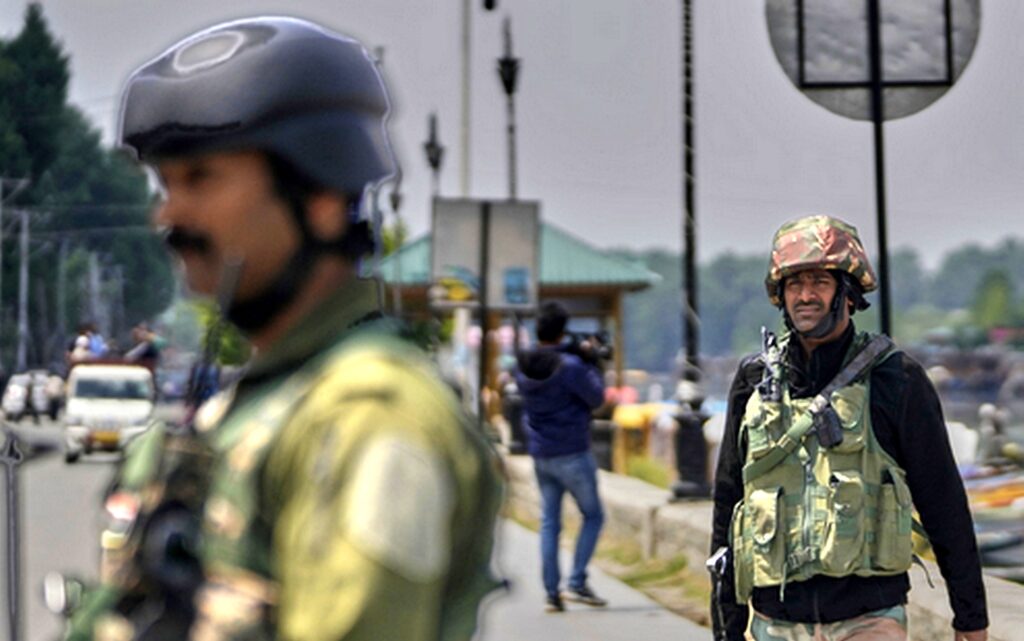
The Pakistani military announced on Saturday that three of its air bases were attacked by Indian missiles, including one on the outskirts of the capital, Islamabad, near the army headquarters.
“India, with its blatant aggression, launched a missile attack targeting the Nur Khan, Murid, and Shorkot airbases,” military spokesman Ahmad Sharif Chaudhry said during a live broadcast on state television, warning New Delhi, “Now you just have to wait for our response”.
Nur Khan Air Base in Rawalpindi, home to the army headquarters, is located about 10 kilometers from the capital, Islamabad.
Pakistan and India traded accusations on Friday over three days of border clashes that have killed around 50 civilians on both sides.
For the second night in a row, India said it was attacked by Pakistani drones targeting parts of Kashmir and Punjab in the country’s northwest.
Omar Abdullah, the chief minister of the disputed Indian-administered Kashmir region, posted on X that he had heard intermittent explosions in Jammu, where he lives, adding that the city was plunged into darkness.
Since Wednesday’s Indian strikes on Pakistani territory in response to the April 22 attack in Indian-administered Kashmir, missile strikes, artillery shelling, and drone attacks have continued.
India accuses Pakistan of supporting a terrorist group suspected of carrying out an attack that killed 26 people in the tourist city of Pahalgam, while Islamabad strongly denies any involvement.
Pakistan quickly responded to the Indian missiles, in the most violent military confrontation between the two nuclear powers in more than two decades.
Indian Prime Minister Narendra Modi held a meeting with his national security adviser, defense minister, and armed forces commanders, his office said on Friday.
India has closed 24 airports, and local media reported that the suspension of air traffic will continue until next week.
On Thursday evening, several explosions rocked the Indian-administered part of Kashmir, over which the two countries have disputed full sovereignty since its partition at independence in 1947.
India confirmed the neutralization of its air defenses in response to a nighttime attack by Pakistani missiles and drones targeting military sites.
Indian Lieutenant Colonel Vyomika Singh said that Pakistan “attempted drone incursions into 36 locations with approximately 300 to 400 drones,” while the Pakistani military said it had shot down 77 drones launched by India into its territory since Wednesday night.
The Indian military official confirmed casualties on both sides, without providing further details.
It’s impossible to independently verify these reports, especially since access to many areas isn’t available.
No signs of a calming down were observed on Friday, as both sides continued to hold each other responsible for the fighting and casualties.
The Pakistani army warned that it wouldn’t work to “de-escalate the situation”.
“After what they (India) did to us, we must respond… So far, we have protected ourselves, but they will respond at a moment of our choosing,” Pakistani military spokesman Lieutenant General Ahmed Chaudhry told reporters on Friday.
In turn, Pakistani Foreign Ministry spokesman Shafqat Ali Khan said on Friday that “India’s irresponsible behavior has put two nuclear-armed states on the brink of a major conflict”.
The Pakistani Foreign Ministry spokesman added, “India’s war hysteria should be a major concern for the world,” as the military confrontation between the two countries continues despite international calls for restraint.
In contrast, senior Indian diplomat Vikram Misra stated that “Pakistan’s provocative actions and escalation target Indian cities and civilian infrastructure, along with military targets”.
The International Crisis Group think tank warned of the risks of escalation due to aggressive rhetoric and a logic of extreme escalation between the two neighbors.
While leaders and high-ranking officials on both sides of the border issue threats, local residents bury their dead, confirming that they are preparing for the worst.
As the attacks continued, international calls for calm continued.
British Foreign Secretary David Lammy urged his Pakistani counterpart, Ishaq Dar, during a phone call that “both sides must exercise restraint and move towards de-escalation,” according to Dar’s office.
US Vice President Jay D. Vance called for “de-escalation” on Thursday.
He stated in an interview with Fox News, “We’ll not engage in a war that has nothing to do with us”.
Iranian Foreign Minister Abbas Araghchi visited Islamabad and New Delhi this week and affirmed Tehran’s readiness to exert all efforts to help reduce tensions.
The confrontation between the two countries has also ignited the media front.
India on Thursday ordered the X to block more than 8,000 accounts, including those belonging to international media outlets.
The social media network’s management revealed that it reluctantly complied with the directives, denouncing a censorship campaign.
India has previously demanded that the accounts of several Pakistani political figures, celebrities, and media outlets be blocked.