The Forgotten Atrocities: Italy’s Colonial Crimes

By: Contribution for Syrializm
History often remembers the horrors of Nazi Germany, but the brutal colonial campaigns of Fascist Italy under Benito Mussolini have been largely overlooked.
From Libya to Ethiopia to Yugoslavia, Italian forces committed massacres, used chemical weapons, and established concentration camps, leaving behind a trail of death and suffering.
Yet, these crimes remain in the shadows, overshadowed by the focus on Nazi war crimes, with fact that Italy’s dark colonial legacy and the leaders who orchestrated these a hence atrocities, no lesser horrible than the ones committed by the Germens.
The rise of Mussolini and his Colonial Ambitions
 Benito Mussolini seized power in Italy in 1922, promising to restore order after years of chaos, with his vision to revive the Roman Empire, and resurrecting it from ashes, not by building monuments, but by the same method was originally used by the Romans to expand their Empire, and that through military expansion.
Under his rule, Italy launched brutal invasions of Libya, Ethiopia, and Yugoslavia, using extreme violence to suppress resistance.
Mussolini’s Italy was seeking “imperial glory” through expansion, with a historical justification, of course, since the areas of expansion had previously been within the territories of the Roman Empire, which extended for nearly 1,500 years, if we consider its entire lifespan from the traditional founding of Rome until the fall of Constantinople.
The legendary early Roman Kingdom (753-509 BC), the Roman Republic (509-27 BC), and the Roman Empire (27 BC-476 AD in the West / 1453 AD in the East).
The Western Roman Empire (27BC-476 AD) collapsed in 476 AD when Emperor Romulus Augustulus was deposed by Odoacer.
The Eastern Roman (Byzantine) Empire (330-1453 AD) lasted until the fall of Constantinople to the Ottomans in 1453.
Ironically, this expansion began in Africa, specifically in Libya, which was part of the Ottoman Empire and was experiencing its final days during that period.
Therefore, since the emperor had leaders who dreamed of achieving the glory of Rome, Mussolini had a group of Italian officers who were assigned the task of leading expansion campaigns and controlling these regions.
The Butcher of Libya: Rodolfo Graziani
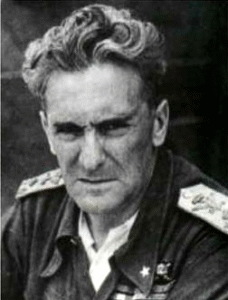 One of Mussolini’s most notorious generals, was Rodolfo Graziani, who was among most vicious Italian military commanders, who carried out the most bloody and barbaric operations, to “proudly” obtain the glory of Rome that he aspired to, by subjugating Libya to Rome.
Since taking command of the Italian forces in Libya, Graziani has carried out all kinds of systematic oppression, killing, and destruction against the Libyans, and he has deservedly earned a number of titles, the most famous of which are: Butcher of Fezzan (named after the Fezzan region in the desert in southeastern Libya) and “The Butcher of Libya” for his ruthless suppression of Libyan resistance.
Graziani pursued a series of brutal measures against both Libyan resistance fighters and civilians, making no distinction between men and women, children and the elderly.
Mass executions: Under the instructions of their General Graziani, the Italians followed a method of execution that had been used during the Roman Empire.
This method was known as the “Tenth”, meaning the random execution of one in ten Libyans, under the pretext of rebelling against Italian authority, or supporting resistance fighters to the Italian occupation with food and weapons, and even those who are a suspected rebel, fighting the Italians.
In fact, this method was not discriminatory; it was random, and a woman or a child might be executed.
Storming and destroying Libyan villages: This is one of the methods that distinguished the Italian forces, as they would storm Libyan villages and carry out random arrests of men and women.
They also burned cultivated lands, confiscated their walking equipment, burned half of the residents’ stored provisions, and destroyed water wells by pouring cement into them.
Systematic torture and rape of Libyan women: The arrest of Libyan women, especially those of relatively young age, was a common practice among Italian forces.
These girls were arrested from villages and taken to detention camps, where they were subjected to various forms of violence and rape, and may have been used as objects of entertainment for Italian soldiers. Pregnant women were also subjected to slitted bellies and killed.
Concentration camps: This is a method very similar to what Nazi Germany used to do, where Italian forces would evacuate Libyan villages of their inhabitants after destroying them, and people would be taken to camps in tents, in the heart of the desert, surrounded by barbed wire and constant surveillance by Italian soldiers, through patrols and watchtowers, where they were forced to do various jobs, in exchange for little food and medical care, which led to the death of thousands.
Dropping prisoners from airplanes: It was the most brutal method of execution ever, as the Italians would tie up the Libyan and throw him from the plane.
However, the road was not easy for the Italians in Libya. When their forces landed on the Libyan coast in 1911, they encountered fierce resistance from the Libyans and the Ottoman garrison in the country.
This forced Italy to freeze its operations, especially as Europe and the world entered the throes of World War I.
With Mussolini’s rise to power in 1922, Italian advances in Libya began to gain momentum.
This marked the beginning of a ten-year period (1923-1932) that devastated Libyan communities, in which the Italians faced fierce resistance from the Libyans, who fought to defend their land.
During this period, Mussolini sent Graziani to Libya, who began a series of bloody measures to suppress the resistance and subjugate the country and its people, as he did not hesitate to use all of the measures mentioned above, in addition to the advanced military force during that period, as he used poison gases and starvation policies against the population.
He was also the first to make extensive use of aircraft in military operations, and he also launched tanks into the desert and mountains of Libya.
In Libya, Graziani faced a stubborn opponent in the form of a 73-year-old man, Omar al Mukhtar, who led the armed resistance against the Italians.
During this period, the Italians suffered humiliating defeats, which in turn led to increased brutality against Libyan civilians.
During this period, the Italians attempted various forms of threats and inducements to al-Mukhtar, to no avail.
Mukhtar continued to resist the Italians until he was captured during the fighting, then he was given a sham trial and sentenced to death by hanging in September 1931.
After the execution of Mukhtar, the momentum of the Libyan resistance varied, and it was subjected to a violent siege campaign to cut off supplies from Libya’s neighboring countries.
It appeared that the situation had stabilized for the Italians there, which encouraged Mussolini to move to his new destination.
Ethiopia: Chemical Warfare and Mass Slaughter
 In 1935, Mussolini ordered the invasion of Ethiopia, one of the few independent African nations at the time.
The Horn of Africa region was of great strategic importance to the superpowers, especially after World War I, when Italy’s quest for greater influence became crucial.
Italy considered its share of the spoils of World War I, being on the side of the victorious Allies at the time, not to be commensurate with its ambitions.
This was especially true with the rise of Mussolini to power, as Mussolini viewed British and French influence as dangerous and a threat to his expansionist ambitions.
Therefore, access to the Horn of Africa, which was the gateway to the Suez Canal, was of paramount importance.
To subjugate Ethiopia, which was then called the Abyssinian Empire, under the rule of Haile Selassie, Mussolini sent to Ethiopia another Italian criminal, namely Pietro Badoglio, who became infamous for Excessive and unlimited brutal practices represented by a set of measures, such as the usage of:
Large-scale use of chemical weapons: As it became the first of its size, after it was being tested in Libya in Africa—mustard gas bombs were dropped on villages, killing civilians, livestock, and even insects.
Bombing Red Cross hospitals: The Italian killing machine, under the hands of the criminal Badoglio, did not discriminate, striking everything in its path.
Even hospitals, especially those run by international organizations or entities such as the Red Cross, were not safe from bombing and destruction, and that resulted in massacres of mass medical staff and patients.
The number of victims of the Italian killing machine in Ethiopia has reached frightening numbers, and within a short period of time, as it was estimated 700,000 Ethiopian deaths in just six months of fighting.
This was something that even Badoglio was unable to control on his own, and Mussolini had no choice but to provide him with more troops led by the butcher of Libya, Graziani, who came to Ethiopia himself to help his colleague subjugate the country.
By May 1936, Italy declared victory, but Ethiopian guerrilla resistance continued for years.
Yugoslavia: Death Camps and Ethnic Cleansing
 Italy’s occupation of the Balkans during World War II was part of Benito Mussolini’s imperial ambitions to expand fascist influence in the region.
Following the Axis invasion of Yugoslavia in April 1941, Italy annexed or occupied significant territories, including parts of Slovenia, Dalmatia, Montenegro, Kosovo, and western Macedonia, while maintaining control over Albania, which it had invaded in 1939.
For the Balkans, Mussolini chose another criminal to carry out the mission, where Mario Roatta, known as “The Black Beast,” carried out his master’s task, by adapting a series barbaric measure.
Mass executions: This is the same procedure that Graziani followed in Libya, namely the “execution of the tithe” (the Roman punishment for rebels), but at a more violent, comprehensive and intense pace, in order to punish civilians in retaliation for partisan attacks.
Concentration camps: same as in Libya as well. (like the Rab camp in Slovenia), where thousands died of starvation, disease, and torture.
Scorched-earth policies: Burning villages, destroying crops, and slaughtering livestock to starve resistance fighters.
Inciting ethnic violence: Mario Roatta pursued a set of policies that were, in their nature, aimed at inciting hostility between Orthodox Serbs and Catholic Croats, which led to the deaths of 500,000 Orthodox Serbs.
One of the worst massacres occurred in the village of Batajnica (Batajnica is an urban neighborhood of Belgrade, the capital city of Serbia today), where Italian forces slaughtered hundreds in a single day.
In Slovenia, Italy pursued a policy of forced Italianization, suppressing Slovene culture and deporting thousands to concentration camps.
In Dalmatia (Croatia), Italy annexed coastal regions, expelling Croat and Serb populations to make way for Italian settlers.
Montenegro was placed under a puppet administration, but fierce resistance led to brutal reprisals, including mass executions and village burnings.
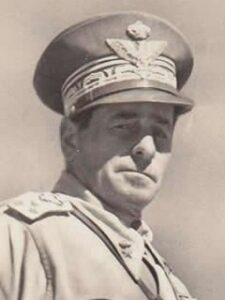 Speaking of Montenegro, as an “dishonorable mention”, as one of the Italian criminals, who carried out criminal practices in the region against the population, indiscriminately, using insane inflammatory language.
The Italian military governor of Montenegro, “The Hate-Mongering Governor”, Alessandro Pirzio Biroli.
Alessandro Pirzio Biroli encouraged Italian soldiers under his command in Montenegro, to commit atrocities with speeches like: “Kill these dogs without mercy… Let hatred and spite be your creed… It is better that these people fear you than despise you”.
Under his command, Italian troops carried out mass shootings, village burnings, and systematic repression.
In Kosovo and Albania, Italy supported Albanian collaborators while persecuting Serbs and other non-Albanian groups.
Italian forces established several concentration camps, such as Rab in Croatia and Gonars in Slovenia, where thousands of Yugoslav civilians—primarily Slovenes, Croats, and Serbs—died from starvation, disease, and mistreatment.
While Italy’s occupation was less systematically brutal than Nazi Germany’s or the Ustaše regime in Croatia, it still engaged in war crimes, including summary executions, forced labor, and ethnic persecution.
The Yugoslav Partisans, led by Josip Broz Tito, mounted strong resistance, leading to harsh Italian counterinsurgency operations.
After Italy’s surrender in September 1943, Germany seized most of its Balkan holdings, and Italian troops were either disarmed or joined the Allies.
Post-war Yugoslavia accused Italy of numerous atrocities, but few Italian officials faced prosecution.
Italy’s occupation remains a controversial and often understudied aspect of World War II in the Balkans, overshadowed by the larger-scale crimes of Nazi Germany and the Ustaše.
Why Italy’s Crimes were Forgotten?
In this piece, we have only mentioned a small portion, a sample of Italian crimes, as it may be sufficient to give a complete idea of the size and type of crimes committed by Italy.
Despite overwhelming evidence, Italy’s colonial atrocities were largely ignored after World War II, and that return to a couple of aspects, like, the so-called “Post-War Politics”, as the Allies needed Italy as a buffer against communism, leading to leniency for war criminals.
Added to that, the Media Focus on Nazi Crimes, with the Holocaust against Jews dominated the entire historical narratives of crimes committed during that period, while Italian colonial crimes mysteriously were sidelined.
Also, we need to remember, that racism factor, against other nationalities and peoples, not classified in the list of the “European elite” was always existed in the Western mindset.
The Racism against African and Balkan victims were deemed less important than European ones.
Thus, many Italian war criminals, including Badoglio and Graziani, never received their due share of shame, and documentation of their actions in Africa and the Balkans, as did their counterparts in Germany.
Here we ask, has anyone held the Italians accountable for their crimes?
A Call for Historical Justice
The massacres in Libya, Ethiopia, and Yugoslavia were not “collateral damage”—they were systematic acts of genocide and ethnic cleansing.
Yet, unlike Nazi leaders, Italy’s war criminals escaped global condemnation.
Today, as historians revisit colonial atrocities, it’s crucial to acknowledge these forgotten victims and challenge the selective memory of World War II.
Like the crimes of Nazi Germany, the crimes Fascist Italy must no longer remain in the shadows.
In any case, the fate of these Italian criminals, starting with Mussolini and his officers, was harsh, as they all ended up in prisons and dead by the end of World War II.
The names of Rodolfo Graziani, Pietro Badoglio, Italo Gariboldi, Mario Roatta, Ettore Bastico, Pirzio Biroli, Emilio De Bono, and many other Italian criminals, human history will never forget their atrocities.
Today, we are witnessing the same scenes again, from criminals who have become role models for Hitler and Mussolini.
Hence, we hope that the Nazis and criminals of this era will meet the same dark fate.
However, their end was less brutal than their barbaric practices… as they say: “History is written by the victors, but truth, it belongs to the oppressed”.