What are the complexities that challenge establishing a new Syrian army?
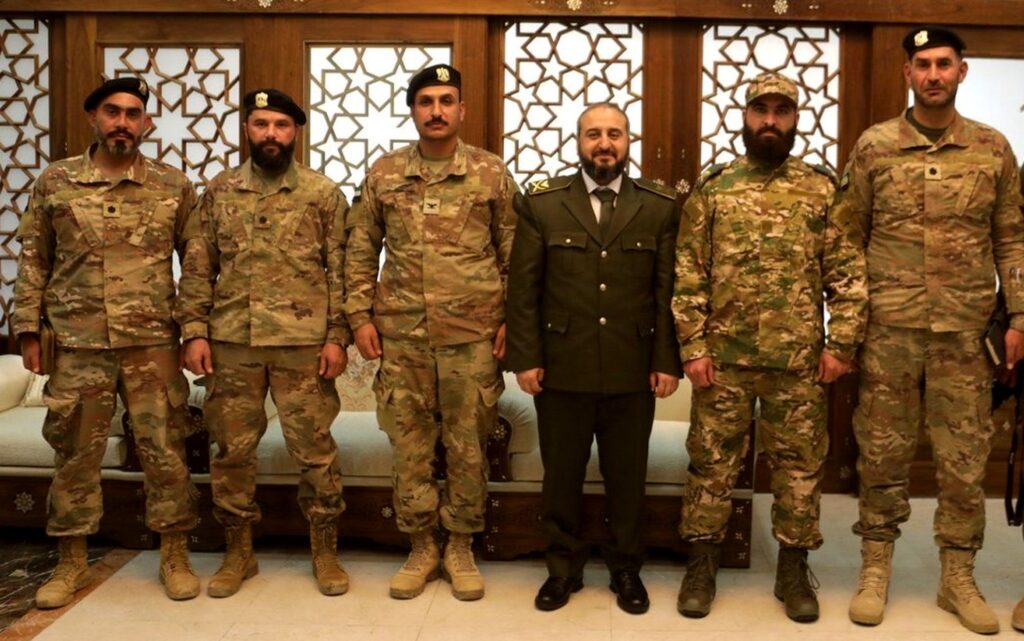
The Syrian Ministry of Defense is laying the foundations for the formation of a new army, following the announcement of the dissolution of the former army and security services of the ousted Assad regime on January 29, during what was dubbed the “victory speech”.
Many questions are being raised about how the new army will be built and the difficulties facing this process, particularly regarding the integration of armed factions and the inclusion of the SDF in this project.
At the same time, Syrian-Turkish relations are witnessing significant developments on the security and military fronts, with the Turkish military attaché, Lieutenant Colonel Hasan Goz, officially assuming his duties in Damascus on March 5, and Ankara has also repeatedly affirmed its readiness to support the Syrian army if Damascus requests it.
Although the Syrian Ministry of Defense hasn’t issued official statements regarding the progress of the restructuring process, leaks have indicated the appointment of a number of armed faction leaders to leadership positions within the new army, including Mohammed al Jassem (Abu Amsha) and Saif al Din Bulad (Abu Bakr).
On March 16, Brigadier General Mohammad Mansour, head of officer affairs at the Syrian Ministry of Defense, stated that the ministry is working on mechanisms to effectively utilize the expertise of defected officers, emphasizing that they are an integral part of the military establishment and are entitled to the honor and status they deserve.
Mansour explained, in an interview with the official news agency SANA, that the rebuilding of the Syrian army will combine experience and modernization, noting that the defected officers will be employed according to their specializations, ensuring that their expertise is passed on to future generations, enhancing combat readiness and consolidating the military doctrine for defending the homeland and its sovereignty.
In turn, Syrian Defense Minister Muhraf Abu Qasra revealed in an interview with The Washington Post on February 7 that nearly 100 armed factions in Syria had agreed to join the Ministry of Defense.
The Syrian Defense Ministry also held repeated meetings between the defense minister and the Syrian Chief of Staff, Ali al Naasan, to follow up on the steps to integrate the factions into the new army.
On January 21, Syrian Defense Minister Muhraf Abu Qasra explained, during an interview, that work is underway to build an army that commands the respect of the people, and that the restructuring will be conducted according to clear laws that outline the contours of the new military institution.
He emphasized that the current priority is to absorb the armed factions into the army, while distributing forces strategically according to Syria’s geography.
Abu Qasra indicated that he is adopting phased plans, setting goals to be achieved every six months, stressing that the transition from meetings with factions to practical steps is the greatest challenge.
According to several expers, the most significant obstacles to the formation of the new Syrian army lie in the multiplicity of factions and military fragmentation.
There was no unified military force during the combat operations, but rather several factions participated, such as Hay’at Tahrir al Sham, the National Army, the National Front, and the Free Syrian Army, in addition to the southern factions, al Tanf fighters, and the SDF, as each faction has its own organizational nature, making their reintegration into a single military entity a complex process requiring significant time and effort.
Although many factions expressed their willingness to merge during the “Victory Conference,” the technical and administrative aspects remain unresolved, while work has already begun on forming military brigades and assigning leadership to them.
As for the defected officers, they were categorized in two groups:
The first includes defectors who joined the fighting alongside armed factions;
The second includes those who resided in camps on the Turkish border and hadn’t engaged in military action for years.
Thus, the reintegration of these individuals requires a careful assessment to determine the extent to which the army can benefit from their expertise, noting that not all defectors should be included in the new military establishment.
Among the strategies proposed for restructuring the Syrian army, the concept of “DDR” (disarmament, demobilization, and reintegration) stands out.
This is a military program implemented in situations of transition from conflict to stability, as its components include:
Collect weapons from all groups and put in place mechanisms to prevent their reuse.
Demobilizing fighters from armed factions and rehabilitating them to integrate into society.
Providing vocational training programs for former combatants and engaging them in economic projects to ensure their social stability.
What about the SDF integration?
Integrating the Syria Democratic Forces (SDF) into the new Syrian army poses an additional challenge, given its complex composition, which includes the People’s Protection Units (YPG), Arab formations, Asayish forces, the Deir ez-Zor military councils, and others.
On March 10, Syrian transitional President, Ahmed al Sharaa, and SDF commander Mazloum Abdi signed an agreement to integrate the SDF’s civilian and military institutions into the Syrian state administration.
On March 13, Mahmoud Habib, the official spokesman for the Northern Democratic Forces, confirmed that negotiations were underway to find a compromise formula for integrating the forces, stressing the need to achieve a balance that satisfies all parties.
What about the Turkish-Syrian cooperation?
The potential military cooperation between Syria and Türkiye could contribute to the development of the new Syrian army by leveraging Turkish combat experience, and Turkish military capabilities.
Therefore, signing a joint defense agreement between the two countries would enhance the capabilities of the Syrian army, both through officer training and supporting the military establishment with advanced combat systems, according to experts.
On March 17, the Turkish Hürriyet newspaper revealed Ankara’s intention to appoint a military advisor to the new Syrian army as part of its pledge to support its security and defense capabilities.
The Turkish newspaper also confirmed that Türkiye plans to contribute to the restructuring of the Syrian army and provide it with advanced military technologies to enhance its capabilities.
While efforts to rebuild the Syrian army continue, the biggest challenge remains achieving balance among the various military factions, ensuring the absorption of defecting officers, and improving combat doctrine and organizational structure.
With internal and international negotiations ongoing, the question remains as to the new Syrian army’s ability to achieve security and military stability in the coming period.