The first phone call between Biden and Netanyahu in more than a month
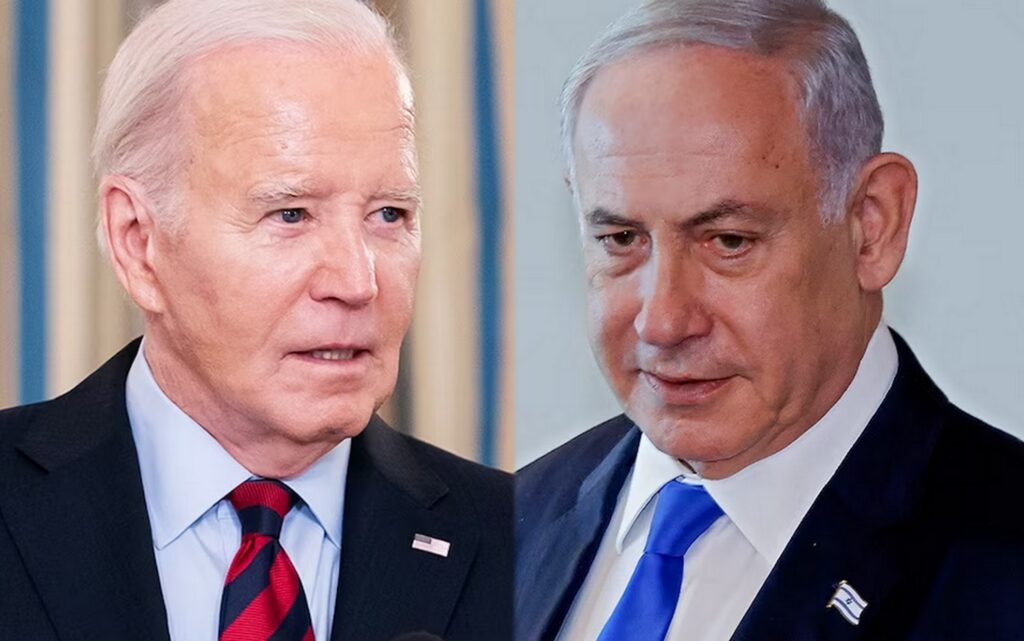
US President Joe Biden and Israeli Prime Minister Benjamin Netanyahu held telephone discussions on Monday, as the White House announced, for the first time in more than a month amid increasing tension over the Israeli attack in Gaza.
The White House said in a statement, “President Biden spoke with Israeli Prime Minister Benjamin Netanyahu to discuss the latest developments in Israel and Gaza, including the situation in Rafah and efforts to increase humanitarian aid to Gaza”.
According to the White House, Biden discussed with Netanyahu “the recent developments in Israel and Gaza, including the situation in Rafah in the south of the Strip and efforts to increase humanitarian aid to Gaza”.
The call comes after Republicans in Washington and Israeli officials expressed their anger, after Senate Majority Leader Chuck Schumer strongly criticized Netanyahu’s handling of the war in Gaza, accusing him of “violating the unwritten rule against interfering in the electoral politics of a close ally”.
Last Thursday, US Senate Majority Leader Chuck Schumer called on Israel to hold new elections, and considered that Netanyahu had lost his way and had become an obstacle to peace in the region, amid a growing humanitarian crisis in Gaza.
On Sunday, Netanyahu stressed, during his speech at the beginning of the weekly government meeting, that international pressure on Israel wouldn’t prevent it from continuing the war on Gaza.
He said, “We’re fighting on two fronts: military and political, and on the political level, the pressure on us is increasing”.
Biden didn’t endorse Schumer’s election call, but said he thought he gave a good speech that reflected the concerns of many Americans.
Earlier Monday, the press release for the report in question showed that 70% of the population of the northern Gaza Strip, or about 210,000 people, are facing catastrophic hunger.
Israel restricts humanitarian access to Gaza, where approximately 2.3 million Palestinians live; This caused a scarcity of food, water, medicine, and fuel supplies and created a famine that claimed the lives of children and the elderly, in light of the presence of about two million displaced people in the besieged sector for 17 years.
This situation prompted the international community, including Israel’s allies, led by the United States, to demand that Israel allow humanitarian aid to enter the Gaza Strip, especially to the north, which has been subjected since the beginning of the war to a strict siege that has led to real famine.